Best Anime Adaptations: From Manga, Light Novels, and Games to Must Watch Series
Anime fans love a good adaptation. Many of us watch a season, get obsessed, and then run straight to the manga, light novel, or game to see what happens next. The best anime adaptations do more than just copy the story. They bring characters to life, turn panels into motion, and use music and voice acting to make scenes unforgettable.
In this blog, we will look at some of the best anime adaptations from manga, light novels, and games. We will talk about why certain series work so well, what makes an adaptation “good,” and where some anime went wrong when they changed too much. You will see names like Fullmetal Alchemist: Brotherhood, Demon Slayer: Kimetsu no Yaiba, Attack on Titan, Re:Zero, Steins;Gate, Hunter x Hunter (2011), and more.
If you love anime and want to know which adaptations are worth your time, this guide will help you. We will focus mainly on anime themselves, with simple explanations of the source material only when needed. The goal is to keep you hooked, informed, and ready to find your next favorite series.
What Is an Anime Adaptation and Why Does It Matter?
An anime adaptation is an animated version of a story that originally appeared in another format. The source can be a manga, a light novel, a visual novel, or a video game. The anime studio takes that story and turns it into episodes with art, animation, music, and voice acting.
Not all anime adaptations are the same. Some are very faithful to the source. They follow the manga chapter by chapter. Others change scenes, reorder events, or even write a completely original ending. Some anime skips entire arcs because of time or budget. A few go so far that they barely resemble the original work.
Adaptations matter a lot to fans. For many people, the anime is the first way they discover a story. For example, a lot of new fans discovered Demon Slayer: Kimetsu no Yaiba through the anime, then went back to read the manga. The same is true for Attack on Titan, Haikyuu!!, Jujutsu Kaisen, and My Hero Academia. In some cases, the anime becomes more famous than the source. When that happens, people treat the anime as the main version of the story.
Good anime adaptations can boost manga and light novel sales. They can also shape how the world sees a series. A bad or rushed adaptation can do the opposite and turn people away, even if the original manga or novel is very good. This is why fans care so much when their favorite series gets picked up by an anime studio.
In the next sections, we will look at what makes a good adaptation and then explores examples of some of the best anime adaptations across different categories.
What Makes a Good Anime Adaptation?
Before we dive into specific titles, it helps to know what makes an adaptation work. Fans often debate which version is better, the manga or the anime. Still, some basic points can help us judge if an anime adaptation is strong.
Balance Between Faithfulness and Creativity
One key factor is the balance between staying true to the source and making changes that fit the anime format. Manga, light novels, and games all tell stories in different ways. A scene that works on a page or with player choices might not translate well as a 23 minute episode.
A good anime adaptation respects the main story, characters, and themes. It does not randomly change personalities or important moments. However, it can still adjust pacing, add small scenes, or combine events to make the story flow better on screen. Fullmetal Alchemist: Brotherhood is a good example of this balance. It is faithful to the Fullmetal Alchemist manga but still uses anime timing to make certain scenes hit harder.
Key Criteria of a Strong Adaptation
Here are some things that usually define the best anime adaptations:
- Consistent characterization. Characters feel the same as in the source. They do not act out of character just to create cheap drama.
- Solid pacing. The story does not feel rushed or stretched. Important arcs have enough time to breathe.
- High quality animation and fight choreography, especially in action series like Demon Slayer, Attack on Titan, Jujutsu Kaisen, and Fate/stay night: Unlimited Blade Works.
- Memorable soundtrack and voice acting that fit the tone. Think of series like Violet Evergarden, Your Name, or Steins;Gate.
- Emotional impact that matches or surpasses the original. Scenes that made you cry or cheer in the manga should feel just as strong, or stronger, in the anime.
- Accessible to new viewers who have not read the source. A new fan should still understand what is going on.
Why Some Adaptations Fail
On the other hand, some anime adaptations feel weak or disappointing. Common problems include:
- Cutting crucial arcs or characters.
- Rushed endings to catch up with an ongoing manga or light novel.
- Low or inconsistent animation quality.
- Strange story changes that break the tone or themes.
Examples of controversial or weaker adaptations include Tokyo Ghoul √A, The Promised Neverland Season 2, and parts of Sword Art Online that some fans feel were rushed. These cases are important because they show what can go wrong.
With that in mind, let us look at some of the best anime adaptations that actually get it right.
Faithful Manga to Anime Adaptations
Manga to anime is the most common type of adaptation. Fans often read the manga first and then wait years for an anime announcement. Expectations are high. People want to see their favorite panels animated exactly how they imagined them.
Here are some standout faithful manga to anime adaptations.
Fullmetal Alchemist: Brotherhood
Fullmetal Alchemist: Brotherhood is often at the top of lists of the best anime adaptations. It is based on the Fullmetal Alchemist manga by Hiromu Arakawa and follows the manga closely from start to finish.
The story follows brothers Edward and Alphonse Elric, who use alchemy to try to bring their mother back. The attempt fails, and they pay a heavy price. The anime shows their journey to regain what they lost and uncover a huge conspiracy. The pacing in Brotherhood is tight and focused. Every arc, from the early episodes in Lior to the intense battles in Central, feels impactful.
Fans love Fullmetal Alchemist: Brotherhood because:
- It adapts the complete manga story.
- It keeps character arcs for Edward, Alphonse, Mustang, Scar, and others strong and meaningful.
- It blends action, comedy, drama, and philosophy in a natural way.
It also “corrected” the earlier Fullmetal Alchemist 2003 anime, which had to create its own ending. Brotherhood is now considered by many to be one of the best anime adaptations ever made.
Demon Slayer: Kimetsu no Yaiba
Demon Slayer: Kimetsu no Yaiba is based on the manga by Koyoharu Gotouge. The anime quickly became a global hit. One of the main reasons is the animation quality. The studio Ufotable gave the battles stunning movement and color. The famous battle scenes like Tanjiro’s Water Breathing forms and Nezuko’s Blood Demon Art look incredible on screen.
The anime stays faithful to the manga story. It follows Tanjiro Kamado as he joins the Demon Slayer Corps and searches for a way to turn his sister Nezuko back into a human. Key arcs like the Mount Natagumo arc and the Mugen Train arc are adapted almost panel by panel, but the anime adds fluid animation and dramatic music that make them even more powerful.
The success of the Demon Slayer anime boosted manga sales worldwide and turned the series into a household name.
Attack on Titan
Attack on Titan adapts the Shingeki no Kyojin manga by Hajime Isayama. The anime became famous for its intense atmosphere, shocking twists, and brutal action.
The story follows Eren Yeager, Mikasa Ackerman, and Armin Arlert as they join the Survey Corps to fight giant humanoid creatures called titans. The anime brings the manga’s dark world to life with strong direction, sharp animation, and a powerful soundtrack.
While there have been debates about the pacing and the way the final season was split into parts, Attack on Titan remains one of the most iconic manga to anime adaptations. Scenes like the Colossal Titan appearing over Wall Maria, Levi’s fights, or the basement reveal are unforgettable in anime form.
Haikyuu!!
Haikyuu!! is a sports anime based on the volleyball manga by Haruichi Furudate. It follows Shoyo Hinata, Tobio Kageyama, and the Karasuno High School volleyball team. The anime is popular because it makes volleyball exciting even for viewers who do not follow sports.
The adaptation is faithful to the manga. It keeps all the major matches, character development, and emotional moments. At the same time, it uses movement, sound effects, and music to raise the tension during matches. Each serve, spike, and block feels impactful.
The anime also captures the personalities of the team members, like Tsukishima, Nishinoya, Daichi, and others. This strong character focus makes Haikyuu!! one of the best anime adaptations in the sports genre.
These series show how powerful faithful manga to anime adaptations can be when handled with care and respect.
Light Novel Adaptations That Surpassed Expectations
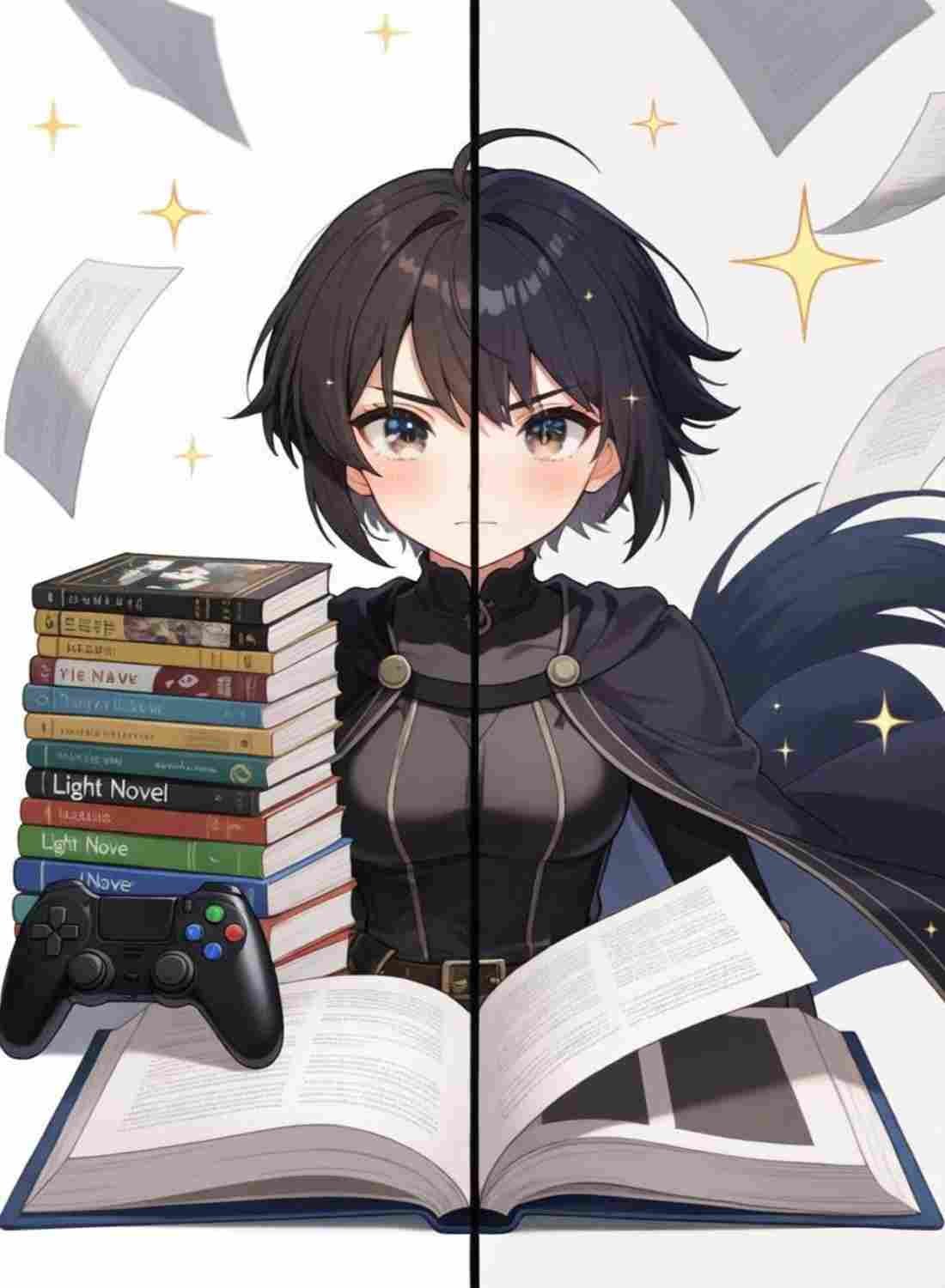
Light novels are another big source of anime. They are prose stories, often with some illustrations, and they can be hard to adapt because they include a lot of inner thoughts and detailed explanations.
Still, some light novel anime adaptations became more famous than the books themselves.
Re:Zero − Starting Life in Another World
Re:Zero − Starting Life in Another World is based on the light novels by Tappei Nagatsuki. The anime follows Subaru Natsuki, who gets transported to another world. He discovers that when he dies, he returns to a certain point in time, which is called “Return by Death.”
The anime adaptation stands out because of its emotional intensity. Subaru’s repeated deaths and failures are not just used as a gimmick. They show his mental breakdown and slow growth. The voice acting, especially in scenes where Subaru is desperate or panicking, adds a lot of impact.
The pacing is also smart. The anime uses its episodes to build tension over multiple loops. When things finally go right, it feels very satisfying. Many viewers first experienced Re:Zero through the anime and only then went to read the light novels.
The Melancholy of Haruhi Suzumiya
The Melancholy of Haruhi Suzumiya is adapted from the light novels by Nagaru Tanigawa. The anime introduced many viewers to the eccentric character Haruhi Suzumiya, who unknowingly has godlike powers, and the normal but sarcastic narrator Kyon.
One of the interesting parts of this anime adaptation is the episode order. The broadcast order did not follow the story in a straight line. This created mystery and discussion among fans. The anime also produced iconic scenes like the cultural festival performance and the “Hare Hare Yukai” dance.
The anime was so influential that it helped light novel anime gain more global popularity. It is a strong example of how creative direction can make a light novel adaptation stand out.
Sword Art Online
Sword Art Online comes from the light novels by Reki Kawahara. The anime focuses on Kirito and Asuna, trapped in a virtual reality MMORPG where dying in the game means dying in real life.
The idea of a death game inside an online world caught a lot of attention. While some fans criticize certain arcs for pacing or character issues, there is no doubt that Sword Art Online became one of the most influential light novel anime adaptations. It opened the door for many other isekai and game themed anime.
The adaptation works best when it focuses on the emotional bond between Kirito and Asuna and the sense of danger inside the game. The early Aincrad arc in particular is often praised.
These examples show how good anime adaptations can take a light novel and turn it into a global anime hit.
Game and Visual Novel to Anime Adaptations
Adapting games and visual novels into anime is a major challenge. Games are interactive. Players choose routes, make decisions, and can spend dozens of hours in the world. An anime cannot copy this directly, so it must pick one path and tell a focused story.
Despite the difficulty, some of the best anime adaptations come from games and visual novels.
Steins;Gate
Steins;Gate is based on a visual novel. The anime follows Rintarou Okabe, a self proclaimed mad scientist, and his friends as they accidentally create a way to send messages to the past. This leads to changes in the timeline and serious consequences.
The Steins;Gate anime is praised for its tight and well structured story. It starts with a slow, comedy driven tone, then gradually becomes a psychological and emotional thriller. The relationship between Okabe and Kurisu Makise is handled very well. The voice acting and soundtrack help sell the shifting moods.
This adaptation is often cited as one of the best game to anime adaptations because it takes a complex interactive story and turns it into a clear, powerful anime narrative without losing depth.
Fate/stay night: Unlimited Blade Works
Fate/stay night: Unlimited Blade Works adapts one specific route from the Fate/stay night visual novel. It focuses on Shirou Emiya, Rin Tohsaka, and Archer during the Holy Grail War.
The anime by Ufotable is known for high production values, especially during battles. Fights like Archer vs Lancer, or the Unlimited Blade Works reality marble, show how strong animation can enhance a story. The adaptation also explores ideals and conflicts, particularly between Shirou and Archer, in a clear and engaging way.
Because the Fate visual novels have multiple routes, there are other anime adaptations too, like Fate/Zero, Heaven’s Feel films, and Carnival Phantasm. However, Unlimited Blade Works is often highlighted as a clean and strong route adaptation.
Persona 5: The Animation and Others
Persona 5: The Animation adapts the Persona 5 role playing game. It keeps the main story of the Phantom Thieves, led by the protagonist often called Joker, fighting corruption by stealing hearts in the Metaverse.
The anime keeps the stylish designs, music, and basic plot of the game. However, because the original game is very long and full of side content, the anime has to compress many scenes. Some fans feel it loses some depth compared to playing the game. Still, it works as a companion for people who loved the original.
Other notable game or visual novel adaptations include:
- Clannad and Clannad: After Story
- The World Ends With You The Animation
- Higurashi: When They Cry
These show how varied game adaptations can be, from emotional slice of life to horror and mystery.
Reboot and Remake Anime Adaptations
Sometimes a series gets adapted more than once. Advances in technology, changes in staff, or the completion of the original manga can inspire studios to try again. Reboots and remakes can fix past issues and give fans a more complete version of the story.
Hunter x Hunter (2011)
Hunter x Hunter (2011) is a reboot of the earlier Hunter x Hunter (1999) anime. Both adapt the manga by Yoshihiro Togashi, but the 2011 version covers more arcs and has more consistent modern animation.
The story follows Gon Freecss as he aims to become a Hunter and find his father. Along the way he meets Killua, Kurapika, and Leorio. The 2011 anime adapts major arcs like the Hunter Exam, Yorknew City, Greed Island, and the Chimera Ant arc.
Fans praise Hunter x Hunter (2011) because:
- It follows the manga more completely at that time.
- The action scenes and emotional moments are well directed.
- The tone shifts from light adventure to deep, dark themes smoothly.
This reboot is often recommended as one of the best anime adaptations and one of the best shonen anime in general.
Fruits Basket (2019)
The original Fruits Basket anime adapted only part of the manga, and it changed or softened some story elements. In 2019, the series received a complete remake that followed the manga from beginning to end.
The new Fruits Basket anime tells the full story of Tohru Honda and the cursed Sohma family. It explores themes of trauma, acceptance, and healing in much more depth than the older version. The updated art and direction, along with strong voice acting, give every character room to grow.
The remake turned Fruits Basket (2019) into a modern classic and a great example of how a second adaptation can surpass the first.
Other notable remakes and reboots include Sailor Moon Crystal and Dororo (2019). These show how revisiting an older series with new tools and a complete source can produce one of the best anime adaptations for a new generation.
Adaptations That Diverge From the Source
Not every adaptation stays close to the original. Some anime go in a completely different direction. This can lead to mixed results. In some cases, fans appreciate the unique take. In others, they feel disappointed or even angry.
Fullmetal Alchemist (2003)
Before Fullmetal Alchemist: Brotherhood, there was the 2003 Fullmetal Alchemist anime. It started by following the manga but later diverged because the manga was still ongoing.
The 2003 anime creates its own storyline and ending. It has a darker, more tragic tone in some places and introduces different themes. Many fans still love this version for its emotional weight and original ideas, even though it is not faithful to the manga.
This shows that an anime that diverges from the source can still be respected if it offers a strong and coherent story.
Tokyo Ghoul
Tokyo Ghoul is based on the manga by Sui Ishida. The first season is fairly close to the manga, but Tokyo Ghoul √A diverges heavily. It changes character choices, skips important development, and rushes through events.
Because of this, many fans recommend reading the Tokyo Ghoul and Tokyo Ghoul:re manga instead of relying on the anime. This is a case where the adaptation is seen as weaker, even though the source material is very popular and well regarded.
The Promised Neverland
The Promised Neverland had a strong first season that adapted the Grace Field House arc closely. The anime captured the tension and fear of the children trying to escape.
However, The Promised Neverland Season 2 skipped several manga arcs and compressed the story heavily. Many scenes and characters that were important in the manga were removed. As a result, the anime felt rushed and less emotional. Fans often mention this series when talking about disappointing anime adaptations.
These examples highlight the risks of changing too much. When an anime adaptation ignores key arcs or themes, it can damage the reputation of both the anime and the original work.
How to Choose What to Watch or Read First
With so many anime adaptations out there, it can be hard to decide whether you should start with the anime or go straight to the manga, light novel, or game.
Here are some simple tips.
If You Are New to a Series
If the anime is widely praised and known as one of the best anime adaptations, it is usually safe to start with the anime. Examples include:
- Fullmetal Alchemist: Brotherhood
- Demon Slayer: Kimetsu no Yaiba
- Steins;Gate
- Hunter x Hunter (2011)
- Haikyuu!!
These anime give you a complete or satisfying experience on their own.
If an adaptation is known to cut a lot, like Tokyo Ghoul √A or The Promised Neverland Season 2, you may want to consider reading the manga first or at least keeping in mind that the anime does not tell the full story.
If You Loved the Anime
If you already watched and loved an anime, reading the manga or light novel can give you more. You might find:
- Extra scenes and side stories
- More internal thoughts and world building
- Arcs that the anime did not have time to adapt
For example, if you liked Re:Zero, the light novels go further and deeper into the story. If you enjoyed Haikyuu!!, the manga covers the entire journey of Hinata and Kageyama.
If You Were Disappointed by the Anime
If you watched an anime and felt something was missing, do not write off the entire series. Try the original source. Many people who felt let down by Tokyo Ghoul or The Promised Neverland anime later discovered that the manga versions were much stronger.
You can also check community recommendations. Fans often discuss which version is best for each series and can guide you to the most satisfying experience.
Conclusion: Why the Best Anime Adaptations Stand Out
The best anime adaptations do not just copy their source. They respect it, understand it, and then use the strengths of animation, music, and voice acting to bring it to life in a new way.
Whether we look at faithful manga adaptations like Fullmetal Alchemist: Brotherhood, Demon Slayer: Kimetsu no Yaiba, Attack on Titan, and Haikyuu!!, or light novel hits like Re:Zero and The Melancholy of Haruhi Suzumiya, or game based series like Steins;Gate and Fate/stay night: Unlimited Blade Works, one thing is clear. When studios care about the story and characters, they can create some of the best anime adaptations of all time.
At the same time, divergent series like Fullmetal Alchemist (2003), Tokyo Ghoul, and The Promised Neverland remind us that change is risky. It can lead to something unique and beloved, or it can leave fans wishing for a more faithful version.
In the end, “best” is always subjective. Some viewers want strict faithfulness to the manga or light novel. Others enjoy bold rewrites, remakes, and reboots. What matters is that you find the versions that speak to you.
If you are looking for your next watch, use this blog as a starting point. Try some of these anime adaptations, then explore their manga, light novels, and games if you want more. And do not forget to share your own list of the best anime adaptations with other fans. Your favorite might inspire someone else’s next obsession.