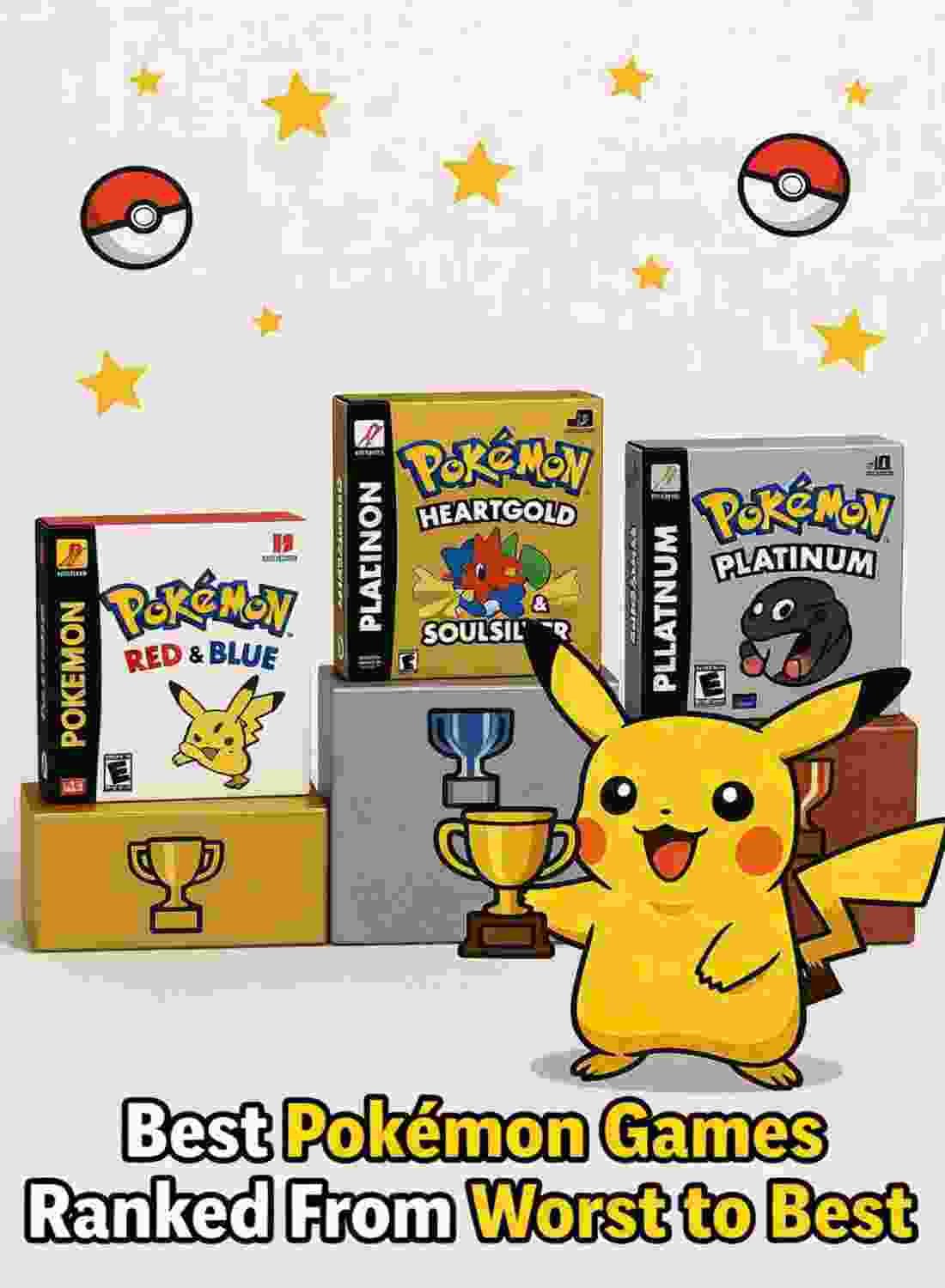
Best Pokémon Games Ranked From Worst to Best
Why Ranking Pokémon Games Still Matters Today
Few video game franchises have lasted as long or reached as many players as Pokémon. Since the release of Pokémon Red and Blue in the late 1990s, the series has grown into a global phenomenon. Pokémon games have shaped childhoods, inspired competitive communities, and introduced millions of players to role playing games.
Over the years, Pokémon has released many mainline titles across multiple generations. Each game introduced new regions, Pokémon, mechanics, and stories. Some games became instant classics. Others struggled to meet expectations. This has led to endless debate among fans about which Pokémon games are truly the best and which ones fall short.
Ranking Pokémon games is not easy. Older titles deserve respect for laying the foundation, but not all of them aged well. Newer games bring modern features but sometimes lose the charm that made Pokémon special in the first place. Nostalgia plays a role, but it should not be the only factor.
This Pokémon games ranked list aims to be fair and honest. It looks at gameplay, story, innovation, replay value, and fan reception. Every mainline Pokémon game is evaluated based on how it performs today, not just how it felt at launch.
This ranking is for everyone. New players who want to know where to start. Returning fans who want to revisit the series. Long time trainers who enjoy debating Pokémon history. By the end of this guide, you will have a clear picture of how Pokémon games evolved and which titles stand above the rest.
How This Ranking Was Decided
To create a meaningful Pokémon game ranking, each title was judged using consistent criteria. This ensures that older and newer games are compared fairly.
- Gameplay and Core Mechanics
Gameplay is the heart of every Pokémon game. This includes turn based battles, catching Pokémon, training teams, and exploring regions. Games that refined battles, improved pacing, and offered balanced difficulty ranked higher. Titles that felt slow or repetitive ranked lower.
- Story and World Design
Early Pokémon games had simple stories, but later generations expanded narrative depth. Games were evaluated on region design, memorable characters, villains, and how immersive the world felt. A strong story added emotional weight and replay value.
- Innovation and New Features
Each generation introduced new ideas. Abilities, held items, Mega Evolution, Z Moves, Dynamax, and open world mechanics all shaped the series. Games that took smart risks and improved the formula ranked higher than those that played it safe.
- Replay Value and Longevity
Post game content matters. Battle facilities, legendary hunts, rematches, and competitive play keep players engaged. Games with strong post game content earned higher placement.
- Fan Reception and Legacy
Community response and long term impact were also considered. Some Pokémon games improved the franchise. Others caused division. Legacy plays a key role in ranking Pokémon games from worst to best.
Ranking the Pokémon Games From Worst to Best
- Lowest Ranked Pokémon Games: The Most Flawed Entries
Pokémon Red and Blue
Pokémon Red and Blue started everything, but they show their age. Limited graphics, slow menus, broken mechanics, and numerous bugs make them difficult to revisit today.
The Kanto region is iconic, but the game lacks polish. Psychic types dominate battles, moves often malfunction, and quality of life features are missing. While Red and Blue deserve respect, they are among the weakest Pokémon games by modern standards.
They rank low due to aging limitations, not because they failed in their time.
Pokémon Yellow
Pokémon Yellow attempted to follow the anime by adding Pikachu as a partner. While this was charming, the core problems from Red and Blue remain.
The game did improve sprite work and added small story changes, but gameplay issues persist. Pikachu refusing to evolve limits strategy, and technical flaws remain untouched.
Yellow is memorable, but still one of the weakest Pokémon games.
Pokémon Diamond and Pearl
Diamond and Pearl introduced the Sinnoh region, but performance issues hurt the experience. Battles are slow, animations drag, and pacing suffers.
While Sinnoh introduced great Pokémon and lore, these games feel unfinished compared to later titles. Platinum would later fix many problems.
Diamond and Pearl rank low due to technical frustrations rather than poor ideas.
Pokémon Brilliant Diamond and Shining Pearl
These remakes aimed to modernize Diamond and Pearl but failed to improve key flaws. Faithful design limited innovation. Movement felt stiff, difficulty was inconsistent, and features from Platinum were missing.
While visually updated, these games disappointed fans who expected meaningful improvements. They rank low among Pokémon remakes.
- Lower Mid Tier Pokémon Games: Good but Limited
Pokémon Gold and Silver
Gold and Silver expanded Pokémon with a day night cycle, breeding, and a second region. These features were impressive at the time.
However, level scaling issues and weak Pokémon distribution hurt replay value. Johto feels empty compared to later regions.
Despite innovation, these games show their age and sit in the lower mid tier.
Pokémon Ruby and Sapphire
Ruby and Sapphire introduced abilities, double battles, and Hoenn. These additions shaped modern Pokémon.
However, limited post game content and removal of older Pokémon caused backlash. While solid, they lack the depth of later games.
They remain good Pokémon games but not among the best.
Pokémon X and Y
X and Y brought Pokémon into full 3D and introduced Mega Evolution. Kalos is visually appealing, and battles feel smooth.
The downside is low difficulty, shallow post game, and an underdeveloped story. X and Y had potential but did not fully realize it.
They rank as mid tier Pokémon games with missed opportunities.
- Mid Tier Pokémon Games: Solid and Enjoyable
Pokémon FireRed and LeafGreen
These remakes improved Kanto with better graphics, mechanics, and stability. Quality of life updates made the experience smoother.
FireRed and LeafGreen respected the originals while fixing many issues. Post game content added value.
They rank as some of the best Pokémon remakes.
Pokémon Omega Ruby and Alpha Sapphire
ORAS reimagined Hoenn with modern mechanics, Mega Evolution, and expanded story elements. The games are polished and fun.
However, missing features from Emerald limit replay value. Despite this, they remain strong remakes.
Pokémon Sun and Moon
Sun and Moon changed the formula by removing gyms and focusing on island trials. The story is emotional and character driven.
While cutscenes interrupt pacing, the narrative depth and regional identity stand out. These games feel fresh and ambitious.
- Upper Mid Tier Pokémon Games: Almost the Best
Pokémon HeartGold and SoulSilver
These remakes expanded Johto with modern features, Pokémon following the player, and massive content.
Two regions, strong nostalgia, and deep post game content make these fan favorites. Minor pacing issues keep them from the top.
Pokémon Black and White
Black and White offered the strongest story in Pokémon at the time. Themes of truth and ideals added depth.
Limiting early Pokémon to new species was controversial but bold. These games aged well and influenced future titles.
Pokémon Sword and Shield
Sword and Shield introduced the Wild Area and modern competitive tools. Quality of life improvements are excellent.
However, limited story depth and controversial Pokédex cuts divided fans. Despite flaws, gameplay remains strong.
- Top Tier Pokémon Games: The Best of the Franchise
Pokémon Black 2 and White 2
These sequels refined everything from Black and White. Expanded regions, deeper post game content, and improved pacing make them outstanding.
They represent peak classic Pokémon design with modern depth.
Pokémon Legends Arceus
Legends Arceus reinvented Pokémon gameplay. Open exploration, real time catching, and research focused mechanics feel fresh.
While visuals are basic, innovation carries the experience. This game changed expectations for Pokémon’s future.
Pokémon Emerald
Emerald perfected Hoenn. The Battle Frontier added unmatched post game depth. Story improvements and balance changes elevated the experience.
Emerald remains one of the best Pokémon games ever made.
Pokémon Platinum
Platinum fixed Sinnoh’s flaws. Faster pacing, improved story, and better Pokédex balance transformed the region.
It stands as the definitive Sinnoh experience.
The Number One Pokémon Game of All Time
Pokémon HeartGold and SoulSilver
HeartGold and SoulSilver earn the top spot. They combine nostalgia, depth, polish, and content better than any other Pokémon game.
Two full regions. Pokémon following the player. Strong post game challenges. Balanced gameplay. Emotional connection.
These games represent Pokémon at its best.
How Pokémon Games Have Evolved Over the Years
Pokémon games evolved from simple turn based RPGs into complex experiences. Early generations focused on exploration and collection. Later games emphasized story, balance, and online features.
Visuals improved from pixel art to full 3D. Mechanics grew deeper. Player expectations increased.
Recent games like Legends Arceus suggest Pokémon’s future lies in experimentation. Evolution remains ongoing.
Which Pokémon Game Should You Play First
For beginners, Pokémon FireRed and LeafGreen offer a smooth introduction.
Story lovers should start with Black and White or Sun and Moon.
Competitive players benefit from Sword and Shield.
Nostalgia seekers should play HeartGold and SoulSilver.
Each Pokémon game offers something unique.
Final Verdict: The Definitive Pokémon Games Ranking
Ranking Pokémon games is subjective, but meaningful. Some games shaped the franchise. Others struggled to adapt.
The best Pokémon games balance innovation, gameplay, and emotional connection. HeartGold and SoulSilver stand above the rest, but every game has value.
Whether you are new or experienced, Pokémon continues to offer adventures worth exploring.