
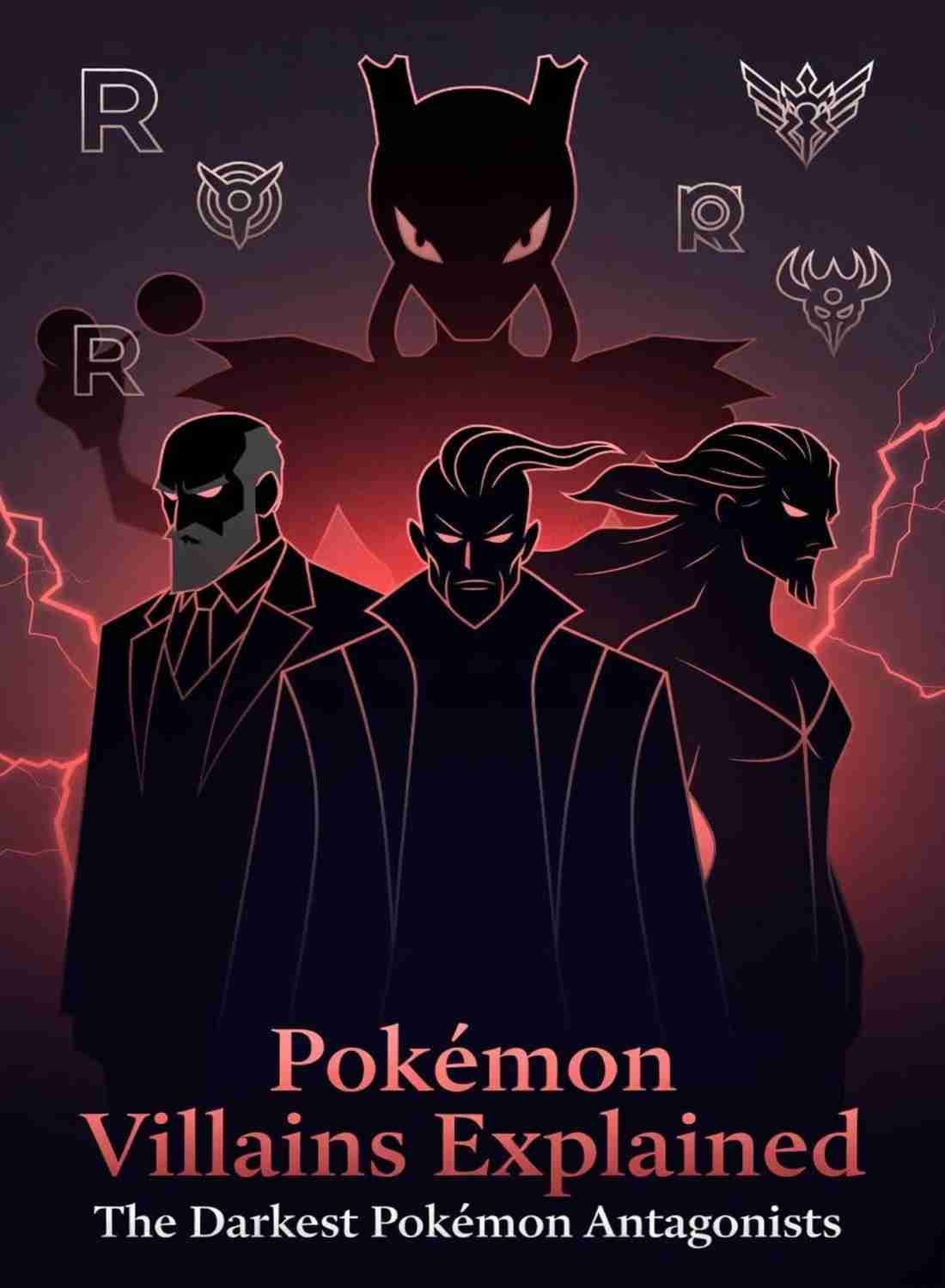
Pokémon Villains Explained: The Darkest Pokémon Antagonists
The Allure of Pokémon Villains
The world of Pokémon is often seen as a story of friendship, adventure, and exciting battles. Trainers travel across regions, catch Pokémon, and aim to become champions. However, the Pokémon universe is not only about heroes. Villains play a crucial role in shaping the story, creating conflict, and testing the limits of Trainers and their Pokémon. Without antagonists, the journey would lack tension and challenge. The darkest Pokémon villains bring danger, moral dilemmas, and unexpected obstacles that make the Pokémon world thrilling.
From the comedic yet persistent Team Rocket to the calculating leaders of Team Galactic and Team Flare, villains add depth and excitement. They are more than mere obstacles. Many have goals, personalities, and even complex backstories. Their actions force Trainers to grow, rethink strategies, and sometimes make difficult ethical choices. Pokémon battles against villains become more than a test of strength. They become lessons in teamwork, strategy, and courage.
Villains in Pokémon come with varied motives. Some, like Giovanni, pursue power and control over Pokémon and the world. Others, like Lysandre, have idealistic goals but extreme methods. Characters such as N show moral ambiguity, making players question what is right or wrong. This variety keeps Pokémon stories engaging across games, anime, and movies. Villains challenge heroes in different ways and keep players invested in their journey.
This blog will explore the most infamous and influential Pokémon villains. It will cover well-known groups like Team Rocket, Team Magma, and Team Aqua, as well as individual villains such as N, Cyrus, and Lysandre. It will analyze their goals, strategies, and the legendary Pokémon they manipulate. By understanding these characters, readers will gain insight into how villains shape the Pokémon universe and why they are essential to the story.
By the end, readers will have a clear understanding of the darkest Pokémon villains. They will see how these antagonists challenge heroes, drive plotlines, and make the Pokémon world dynamic and memorable. This guide shows that villains are not just enemies but integral parts of what makes Pokémon stories exciting and unforgettable.
Team Rocket – The Iconic Criminal Trio
Team Rocket is one of the most recognizable villain groups in the Pokémon universe. They appear in both the games and anime, creating challenges for Trainers and Pokémon alike. The anime trio of Jessie, James, and Meowth are known for their humorous failures, but beneath the comedy lies a persistent criminal organization with a serious goal: stealing rare and powerful Pokémon to further the ambitions of their boss, Giovanni.
Giovanni, the leader of Team Rocket, is a calculating villain with a desire for control. In the games, he serves as the Gym Leader of Viridian City and secretly operates Team Rocket to gain power over the Pokémon world. He uses Pokémon like Rhydon and Persian to execute his plans and remains a constant threat to the protagonists. Team Rocket’s operations include theft, illegal experiments, and manipulation of Trainers, which often leads to battles against iconic Pokémon like Pikachu, Charizard, and Mewtwo.
The anime portrays Team Rocket as more comedic, yet they are capable of dangerous actions. Jessie and James consistently attempt to capture Ash’s Pikachu, showing persistence and ingenuity despite repeated failures. Meowth, a talking Pokémon, adds depth to their story with loyalty and cleverness. In the games, Team Rocket’s influence is more serious, including attempts to control legendary Pokémon such as Mewtwo.
Team Rocket’s impact goes beyond immediate conflicts. They show how organized villainy can affect an entire Pokémon region. Trainers must navigate obstacles created by the group, making battles more than physical challenges. Team Rocket teaches players the importance of strategy and awareness. Keywords like Team Rocket villains, Giovanni Pokémon, Pokémon criminal organizations apply naturally as their actions define their role as some of the most iconic Pokémon antagonists.
Overall, Team Rocket combines humor, persistence, and threat. They are an entry point for players to experience Pokémon villainy and set the standard for future antagonists in both games and anime.
Team Magma and Team Aqua – The Environmental Extremists
Team Magma and Team Aqua are the primary villains in the Hoenn region. They represent opposing ideologies about the natural world. Team Magma wants to expand land to help humans and Pokémon thrive on solid ground. Team Aqua seeks to increase the oceans to favor aquatic life. Both groups use extreme methods to pursue their goals, which threatens the balance of nature in Hoenn.
Team Magma, led by Maxie, often works to awaken the Legendary Pokémon Groudon. Their actions cause droughts and volcanic activity that endanger the environment. Team Aqua, led by Archie, targets Kyogre to flood the region, which risks destroying towns and harming Pokémon populations. Both organizations manipulate people and Pokémon to achieve their aims, showing the lengths villains will go for their vision.
These teams reflect real-world environmental themes, emphasizing the consequences of extreme ideology. Players face moral dilemmas, as the goals of Team Magma and Team Aqua are understandable but their methods are dangerous. Trainers must confront these villains, prevent disasters, and battle powerful Legendary Pokémon. In the games, these conflicts drive key storylines and often involve epic encounters that challenge even experienced players.
The anime also portrays these villains, showing their plans in action and the threat they pose to Pokémon and humans alike. Battles with Groudon or Kyogre illustrate how villains’ actions directly impact the world. These encounters reinforce the idea that Pokémon villains are more than just opponents in battle; they affect ecosystems, communities, and the balance of power in the Pokémon universe.
Team Magma and Team Aqua are memorable because they combine ideology, strategy, and Pokémon power. Keywords like Team Magma villains, Team Aqua villains, Pokémon legendary threats, Hoenn Pokémon villains naturally apply here. Their storylines emphasize that Pokémon villainy can be complex, tied to personal beliefs and environmental consequences, rather than simple greed or malice.
Team Galactic – The Cosmic Conquerors
Team Galactic is the main antagonist organization in the Sinnoh region. Led by Cyrus, the group aims to create a new universe according to Cyrus’s vision. Unlike earlier villains, Team Galactic is highly organized and operates on a global scale, posing a serious threat to Pokémon, humans, and reality itself.
Cyrus is cold, calculating, and emotionless. He believes the current world is flawed and seeks to use Legendary Pokémon such as Dialga and Palkia to remake it. Team Galactic’s plans are methodical, involving manipulation, theft of powerful Pokémon, and the creation of technology to capture and control legendaries. Their schemes create suspense and high stakes for players, making encounters more intense than earlier games.
In the anime, Team Galactic maintains this sense of danger. Their organization is disciplined, and their soldiers are loyal and capable. Cyrus’s personality and philosophy set him apart from more humorous or straightforward villains, showing that Pokémon antagonist motives can be deeply ideological. He represents a darker and more serious type of villain who challenges not only strength but moral perspective.
Team Galactic changed the tone of Pokémon storytelling. Players encounter moral questions about power, creation, and control. The Legendary Pokémon involved are not just tools for battle but key to the villain’s ultimate goal. Keywords like Team Galactic villains, Sinnoh antagonists, Cyrus Pokémon, Pokémon universe villains emphasize their significance in the franchise.
Overall, Team Galactic represents a shift toward more complex villainy in Pokémon. They combine ambition, intellect, and a philosophical worldview that creates epic confrontations. Trainers face battles that test strategy, moral judgment, and their connection to Pokémon. Team Galactic remains one of the most iconic groups in Pokémon history because of their scope, vision, and the cosmic scale of their threat.
Perfect! Here are Sections 5 to 8, each around 400 words, Pokémon-focused, clear, and SEO-friendly:
Team Plasma – Ideals and Deception
Team Plasma is the main antagonist organization in the Unova region. Unlike other villain groups, Team Plasma claims to act for the good of Pokémon. Their stated goal is to “liberate” Pokémon from human trainers. However, beneath this idealistic message lies manipulation, deception, and self-interest. Their actions challenge players to consider moral questions about the role of Trainers and the ethics of using Pokémon in battles.
The central figure in Team Plasma is N, a young and idealistic leader who genuinely believes Pokémon should be free. N forms strong bonds with Pokémon, treating them as equals rather than tools. His perspective is rare among villains, as it shows moral ambiguity. Players are often conflicted because N’s ideals are understandable, yet his association with Ghetsis, the true mastermind, complicates matters. Ghetsis manipulates N to further his own ambitions, aiming to control Unova by enforcing obedience to Team Plasma.
Team Plasma’s schemes include kidnapping Pokémon, manipulating leaders, and attempting to seize powerful Legendary Pokémon like Reshiram and Zekrom. The group’s philosophy adds depth to Pokémon villainy. They are not motivated purely by greed or power, but by ideology, which makes them more complex and thought-provoking. Trainers must confront these challenges and navigate both physical battles and moral dilemmas.
The anime also highlights Team Plasma’s ideals and conflicts. Episodes often explore the tension between N’s compassion and Ghetsis’s manipulation, showing that villainy can be layered and nuanced. Players witness Pokémon fighting for their bonds with trainers rather than for domination, emphasizing the emotional stakes of these encounters.
Team Plasma remains a standout villain group because they combine ideology, strategy, and emotional engagement. Keywords like Team Plasma villains, N Pokémon, Unova antagonists, morally gray Pokémon villains reflect their unique role in Pokémon storytelling. By exploring their motives and actions, fans see that villainy in Pokémon is not always black and white, and moral complexity can create compelling conflicts that enhance the adventure.
Team Flare – The Visionaries of Kalos
Team Flare is the antagonist group in the Kalos region. Their leader, Lysandre, presents a vision of a “beautiful world.” Unlike traditional villains who seek wealth or power, Team Flare’s goal is perfection. They believe that the current world is flawed and that destruction is necessary to rebuild it according to their ideals. This obsession with beauty and order makes them a modern example of complex Pokémon villains.
Team Flare uses advanced technology and powerful Pokémon to achieve their goals. Their ultimate weapon is the Legendary Pokémon Xerneas, capable of life-giving energy. They plan to eliminate most of humanity to create a new world that aligns with their vision. This extreme method emphasizes the danger of obsession. Trainers face battles that test both strategy and ethics, as defeating Team Flare involves confronting catastrophic threats that could harm countless Pokémon and humans.
Lysandre is particularly compelling as a villain. He is charismatic, intelligent, and persuasive, inspiring loyalty from Team Flare members. His motivations are not purely selfish. He believes his actions will ultimately save the world from imperfection. However, his methods, including mass destruction, show the danger of extreme ideals when applied without consideration for consequences.
The anime portrays Team Flare as stylish and deadly, with visually striking designs that reflect their obsession with beauty and precision. Their presence challenges Ash and his friends to think beyond simple battles, emphasizing the stakes of human ambition and Pokémon loyalty.
Team Flare’s narrative shows that villains can be ideologically driven, with personal beliefs shaping their actions. Keywords like Team Flare villains, Lysandre Pokémon, Kalos antagonists, Pokémon villains with motives highlight their importance in Pokémon storytelling. They demonstrate that even well-intentioned visions can become dangerous when taken to extremes, adding moral depth and dramatic tension to the Pokémon universe.
Legendary Villains Across Generations
Not all Pokémon villains operate in organized teams. Many individual antagonists leave lasting marks across generations of games, anime, and movies. Giovanni, the leader of Team Rocket, is one of the most iconic examples. He combines his Gym Leader role with criminal ambitions, using Pokémon like Rhydon and Mewtwo to achieve dominance. His calculated approach and obsession with control set a standard for future villains.
Other notable individual villains include Grimsley, a member of the Unova Elite Four with a cold and cunning demeanor, and Alder’s adversaries in the anime who manipulate Pokémon to test Trainers. These characters show that villainy in Pokémon can vary widely, from organized crime to psychological manipulation. Each villain has unique motivations and strategies, reflecting the evolution of storytelling in Pokémon.
The evolution of villains across generations highlights a trend toward deeper backstories and psychological depth. Early Pokémon games presented clear-cut evil figures whose goals were simple and often selfish. Modern games and anime provide layered antagonists with moral complexity. Some villains have relatable motivations, while others combine ambition, obsession, or revenge with personal tragedy. Legendary Pokémon often serve as focal points of these conflicts, amplifying the stakes and testing Trainers’ skills.
Movies also contribute to legendary villains. Characters like Team Rocket’s Giovanni in Pokémon: The First Movie or Deoxys-related threats demonstrate how villains can have global consequences. These stories emphasize that Pokémon villains are essential to plot development and world-building. They provide tension, growth, and lessons for both characters and players.
Keywords like Pokémon game villains, Pokémon movie villains, evolution of Pokémon villains fit naturally here. Legendary villains across generations show that Pokémon storytelling evolves while maintaining the excitement of confrontation, moral choice, and epic battles. They are essential for making Pokémon adventures memorable and emotionally engaging.
Common Themes Among Pokémon Villains
Across all regions and generations, Pokémon villains share recurring themes that make them compelling. Greed, ambition, obsession, revenge, and moral ambiguity are traits often seen among antagonist characters. These elements allow villains to challenge heroes in meaningful ways and provide engaging storylines that captivate players.
Greed is a common motive. Villains like Giovanni or Team Rocket seek wealth and power through the exploitation of Pokémon. Ambition drives groups like Team Galactic and Team Flare, who pursue grandiose goals such as reshaping the universe or creating a “perfect world.” Obsession is evident in characters like Lysandre, whose fixation on ideals pushes them to dangerous extremes. Revenge motivates some villains, adding personal stakes that intensify conflicts. Moral ambiguity, as seen in N and Team Plasma, makes players question what is right and wrong, adding depth to Pokémon storytelling.
Legendary Pokémon are often central to these themes. Villains manipulate Pokémon like Groudon, Kyogre, Xerneas, or Dialga to achieve their plans. These encounters force players to strategize and consider both moral and practical implications. The interplay between villain ambition and Pokémon power heightens drama and ensures that challenges are engaging and meaningful.
These themes also reflect real human flaws, making villains relatable. Players can understand why a villain seeks power, control, or change, even if their methods are extreme. This complexity adds emotional weight to battles and storylines. Pokémon villains are memorable not just because of their actions, but because their traits resonate with players on a personal level.
Keywords like Pokémon villain themes, dark Pokémon characters, compelling Pokémon antagonists naturally apply here. By examining these recurring traits, fans can see patterns in villainy that enhance the narrative. Pokémon villains are not simply opponents; they are essential to building tension, teaching lessons, and keeping the Pokémon universe dynamic and exciting.
Perfect! Here are the final Sections 9 and 10, each around 400 words, keeping the focus on Pokémon, engaging, and SEO-friendly:
Why Pokémon Villains Resonate with Fans
Pokémon villains have a lasting appeal because they are more than simple obstacles. Fans connect with their personalities, motivations, and the challenges they create for heroes. Whether it is Team Rocket’s humor, Team Flare’s ideological obsession, or N’s moral ambiguity, villains provide tension and drama that make Pokémon stories exciting and memorable. They are essential in shaping the journeys of Trainers and their Pokémon.
One reason villains resonate is their diversity. Some, like Jessie and James, provide comedic relief while still posing challenges. Others, such as Cyrus or Lysandre, present serious threats that test a player’s strategy, patience, and morality. This range allows fans of all ages to engage with the Pokémon world in different ways. Players can enjoy a lighthearted chase, a moral dilemma, or a high-stakes confrontation with Legendary Pokémon, depending on the villain involved.
Another factor is the backstory and depth of villains. Modern Pokémon games often provide context for their actions, making players understand their motives. For example, N’s compassion for Pokémon and his manipulation by Ghetsis shows a morally gray villain who is relatable and sympathetic. Team Galactic and Team Flare demonstrate how ambition and obsession can escalate to dangerous extremes, making villains more believable and compelling. Legendary Pokémon are often central to these conflicts, amplifying the stakes and emotional impact.
Villains also create stakes that make victories more satisfying. Battling Team Magma or Team Aqua to prevent environmental disaster, confronting Team Plasma to save Pokémon from forced “liberation,” or stopping Team Flare from mass destruction gives players a sense of accomplishment. Their presence ensures that Pokémon adventures are not just about collecting badges, but about making meaningful choices and protecting the Pokémon world.
Finally, villains resonate because they challenge both characters and fans. They push Trainers to think strategically, understand Pokémon strengths and weaknesses, and sometimes make ethical decisions. Keywords like most memorable Pokémon villains, Pokémon villains explained, fan-favorite antagonists apply naturally here. Fans remember villains not only for their actions but also for how they elevate the story and deepen the Pokémon experience. Pokémon villains make the world dynamic, challenging, and emotionally engaging.
Conclusion – The Legacy of Pokémon Villains
Pokémon villains are a vital part of the franchise’s enduring appeal. They provide conflict, tension, and challenges that shape the journeys of Trainers and their Pokémon. From Team Rocket’s iconic schemes to the calculated plans of Team Galactic and the idealistic extremes of Team Flare, villains make the Pokémon world dynamic, exciting, and memorable. They are not just obstacles; they are central to storytelling and world-building.
The legacy of Pokémon villains lies in their diversity and depth. Villains range from humorous and persistent, like Jessie and James, to serious and complex, like Cyrus and Lysandre. They have unique goals, strategies, and connections to Legendary Pokémon, which makes each confrontation distinct and engaging. These antagonists challenge players to think strategically, consider moral choices, and bond more deeply with their Pokémon.
Recurring themes such as ambition, obsession, revenge, and moral ambiguity create characters that resonate with fans. Players can understand motivations even when methods are extreme, making villains memorable and relatable. Their presence ensures that Pokémon adventures are never simple, transforming battles into meaningful and emotionally impactful experiences.
Pokémon villains also evolve across generations. Early games often featured clear-cut evil figures, while modern entries provide nuanced backstories and psychological depth. Legendary Pokémon often amplify their threat, making encounters epic and unforgettable. Fans remember villains not only for the battles but also for the tension, stakes, and lessons they bring to the story.
In the end, the darkest Pokémon villains are as essential as heroes in defining the franchise. They challenge characters, drive the plot, and leave a lasting impression on fans. Keywords like darkest Pokémon villains, Pokémon antagonists explained, iconic Pokémon villains highlight their significance in the Pokémon universe. Understanding villains gives fans insight into the complexities of Pokémon storytelling, showing that these antagonists are central to why the Pokémon world remains exciting, engaging, and unforgettable.