
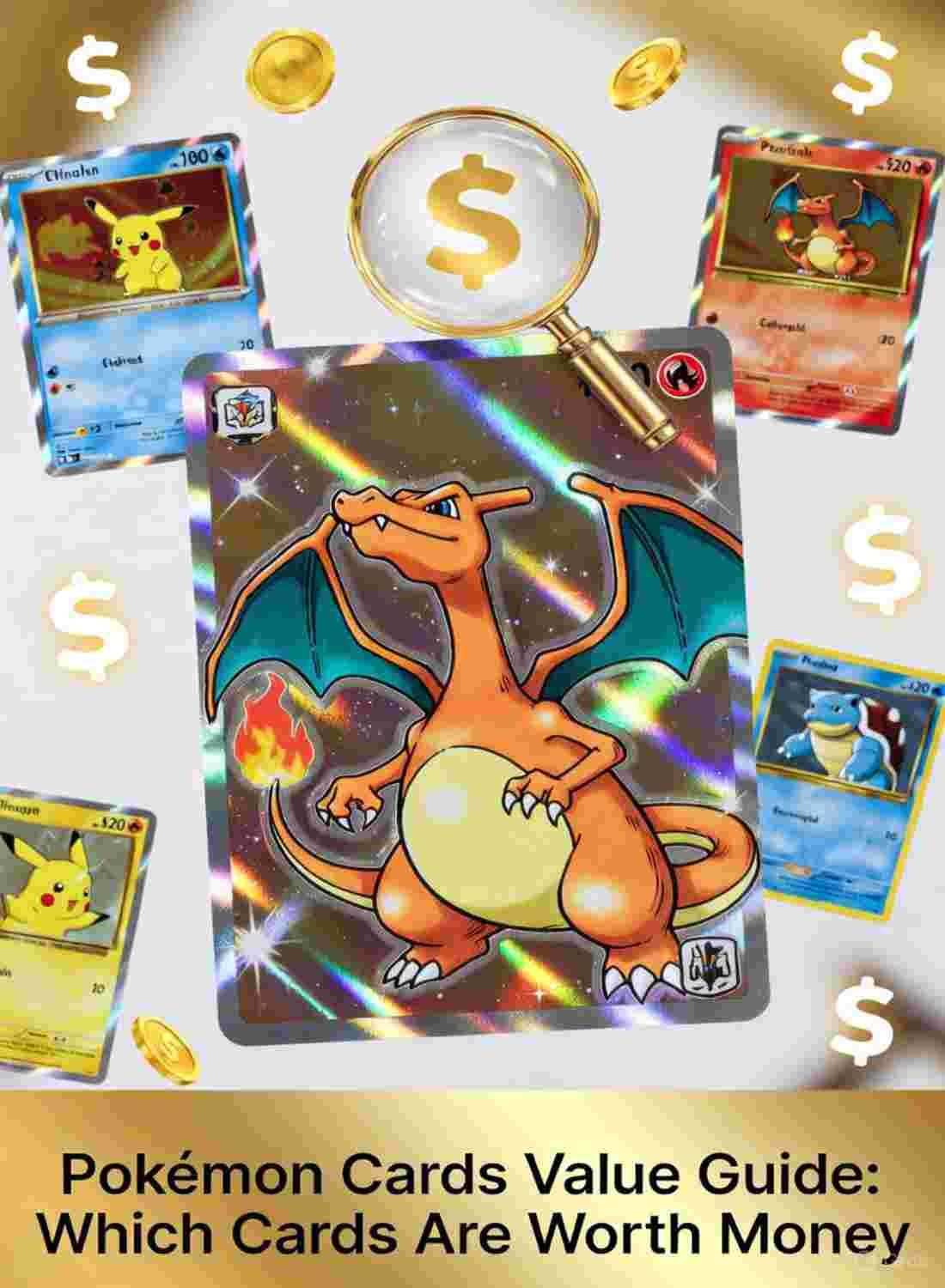
Pokémon Cards Value Guide: Which Cards Are Worth Money
Why Pokémon Cards Are Worth More Than Ever
Pokémon cards started as a fun hobby for kids in the late 1990s. Many people collected them for trading, playing games, or simply enjoying the artwork. At the time, few imagined that these small cardboard cards would one day become valuable collectibles. Today, Pokémon cards value has reached record levels, with certain cards selling for thousands or even millions of dollars.
The Pokémon Trading Card Game was first released in 1996 in Japan and shortly after worldwide. Early sets like the Base Set introduced iconic Pokémon such as Charizard, Pikachu, and Blastoise. These cards became part of childhood memories for an entire generation. As those collectors grew older, nostalgia brought them back to Pokémon. This renewed interest played a major role in driving demand for valuable Pokémon cards.
Over the past decade, the Pokémon card market has grown rapidly. High profile sales, online auctions, and social media exposure helped bring attention to Pokémon cards worth money. Influencers, investors, and longtime fans began competing for rare cards. This surge in interest caused prices to rise, especially for older and limited cards.
This guide is designed to explain why some Pokémon cards are valuable and others are not. It breaks down the factors that affect Pokémon cards value in a simple and clear way. You will learn how rarity, condition, age, and popularity influence prices. The guide also highlights specific Pokémon cards that collectors actively search for today.
Whether you are a beginner who just found an old binder or a serious collector looking to grow a valuable collection, this guide will help you make informed decisions. Understanding what makes a Pokémon card valuable is the first step toward collecting smarter. Before looking at specific cards, it is important to understand the core factors that determine value. Those factors are explained in the next section.
What Makes Pokémon Cards Valuable
Not all Pokémon cards are worth money. Some are printed in large quantities and remain common, while others become rare and highly desirable. Understanding what makes Pokémon cards valuable helps collectors avoid mistakes and recognize real opportunities.
Several key factors affect Pokémon card value. These include rarity, condition, age, demand, and the popularity of the Pokémon featured on the card. When these factors come together, a card can increase significantly in value over time.
Rarity and Print Runs
Rarity is one of the most important value factors. Pokémon cards are printed in different levels such as common, uncommon, rare, and ultra rare. Cards with limited print runs are harder to find, which increases demand. Older sets and discontinued prints often become more valuable because no new copies are being produced.
Card Condition and Wear
Condition plays a major role in determining value. Collectors prefer cards that look clean and well preserved. Small issues like scratches, whitening on the edges, bent corners, or surface marks can reduce a card’s value. A card in mint or near mint condition will always be worth more than the same card with visible wear.
Age and Set History
Older Pokémon cards tend to hold higher value, especially those from the original Base Set era. These cards represent the beginning of Pokémon history. Nostalgia strongly influences demand, and many collectors want to own a piece of that early era. Newer cards can also be valuable, but age adds long term appeal.
Popularity of the Pokémon
Some Pokémon are more popular than others. Charizard, Pikachu, Mewtwo, and Rayquaza consistently appear in high value sales. Fan favorites attract collectors, which keeps prices strong. Competitive play and media exposure also help maintain demand.
Understanding these factors helps collectors identify which Pokémon cards are worth money and why.
Pokémon Card Grading Explained (PSA, CGC, Beckett)
Pokémon card grading is one of the most important concepts for serious collectors. Grading provides an official evaluation of a card’s condition and authenticity. A graded Pokémon card often sells for much more than an ungraded one.
Grading companies examine cards carefully and assign a numerical score, usually from 1 to 10. This score reflects the card’s condition, including corners, edges, surface, and centering.
What Card Grading Means
When a card is graded, it is sealed inside a protective case with a label showing its grade. This protects the card from damage and confirms it is genuine. Buyers trust graded cards because the condition is clearly verified.
PSA vs CGC vs Beckett
PSA, CGC, and Beckett are the most well known grading companies. PSA graded Pokémon cards are the most popular in the market and often command higher prices. CGC is known for consistency and clear labels. Beckett is respected for strict grading and detailed subgrades.
How Grading Affects Card Value
A PSA 10 graded card can be worth many times more than the same ungraded card. However, grading costs money and time. Grading is usually worth it for rare, older, or high demand Pokémon cards. Understanding grading helps collectors decide when it makes sense to submit a card.
Types of Pokémon Cards That Are Worth Money
Some types of Pokémon cards are consistently more valuable than others. Knowing these categories helps collectors focus on cards with strong demand and long term value.
First Edition Pokémon Cards
First edition cards come from the earliest print runs of a set. These cards are marked with a first edition symbol and are highly sought after. They represent the earliest version of a card and are often much rarer.
Shadowless Base Set Cards
Shadowless cards come from early Base Set printings. These cards lack a shadow effect on the artwork frame. Shadowless cards are valued for their limited availability and historical importance.
Holographic Pokémon Cards
Holographic cards feature reflective artwork and were considered special even in early sets. Older holographic cards often carry higher value, especially when they feature popular Pokémon.
Promotional and Event Cards
Promotional cards were released through movies, tournaments, or special events. Many were produced in limited numbers, making them rare. Event exclusivity adds significant value.
Most Valuable Pokémon Cards Ever Sold
Some Pokémon cards have achieved legendary status due to their extreme value. These cards represent the highest level of Pokémon collecting.
The Base Set Charizard is one of the most famous Pokémon cards ever. First edition versions in perfect condition have sold for enormous prices. Charizard remains the most recognizable high value Pokémon card.
The Pikachu Illustrator card is considered the rarest Pokémon card ever printed. It was awarded to winners of an illustration contest and was never sold publicly. Its limited distribution makes it incredibly valuable.
Trophy and tournament prize cards are also among the most expensive Pokémon cards. These cards were given to winners of official competitions and exist in very small quantities.
These record-breaking sales show how powerful rarity, history, and demand can be in the Pokémon card market.
Pokémon Characters That Consistently Hold High Value
Certain Pokémon consistently appear at the top of the market when it comes to Pokémon cards value. These characters have strong fan recognition, long history, and repeated high demand across multiple generations of cards. Collectors often prioritize cards featuring these Pokémon because they tend to hold value better over time.
Charizard Cards
Charizard is the most dominant Pokémon in the card market. Since the Base Set era, Charizard cards have been the most chased and expensive. The original holographic Base Set Charizard became a symbol of Pokémon card collecting. Even today, modern Charizard cards often become the most valuable cards in new sets.
Charizard’s appeal comes from its powerful design, limited early availability, and emotional connection with fans. First edition, shadowless, and graded Charizard cards command the highest prices. Even newer Charizard cards can be valuable if they feature special artwork or low pull rates.
Pikachu Cards
Pikachu is the face of Pokémon and has a different type of value appeal. Pikachu cards often gain value through promotional releases, anniversary cards, and exclusive events. While many Pikachu cards are common, rare promotional versions can be extremely valuable.
Special Pikachu cards released in Japan or tied to Pokémon Center events are often sought after by collectors worldwide. Pikachu’s popularity ensures long term demand, even if prices rise more slowly than Charizard.
Legendary and Mythical Pokémon
Pokémon like Mewtwo, Rayquaza, Lugia, Umbreon, and Mew also perform well in the market. These Pokémon often appear in powerful card designs and special rarity slots. Legendary Pokémon cards appeal to both collectors and competitive players, which helps maintain value.
Cards featuring these Pokémon from older sets or special releases often see steady price growth. Their importance in Pokémon lore adds to their appeal.
Valuable Modern Pokémon Cards You Should Not Ignore
While older Pokémon cards dominate headlines, modern Pokémon cards can also be worth money. Newer sets continue to produce valuable cards, especially those with unique artwork and limited pull rates.
Modern Pokémon cards often gain value through scarcity rather than age. Cards that are difficult to pull from booster packs quickly become chase cards. Alternate art cards are a major example. These cards feature full scene artwork instead of standard poses and are highly popular among collectors.
Low pull rates play a major role in modern Pokémon cards value. Some ultra rare cards appear only once in several hundred packs. This scarcity creates immediate demand. If the featured Pokémon is popular, prices can remain strong even years after release.
Certain modern sets are known for producing high value cards. Sets that introduce new mechanics or special card types often attract more attention. Collector demand increases when artwork quality is high and print runs are limited.
It is important to separate long term value from short term hype. Some modern cards spike quickly and then drop once interest fades. Others slowly increase in value as supply decreases. Cards featuring iconic Pokémon, unique art, and low availability have better long term potential.
Collectors who understand modern trends can find valuable Pokémon cards without relying only on vintage collections.
Japanese Pokémon Cards vs English Cards
Japanese Pokémon cards often differ significantly from English versions in terms of value, quality, and release timing. Many collectors prefer Japanese cards because Pokémon originated in Japan and many exclusive cards are released there first.
Japanese Pokémon cards are usually printed earlier than English versions. This gives collectors access to cards before international release. Early access and limited distribution can increase value, especially for exclusive promos.
Print quality is another important factor. Japanese Pokémon cards often have better centering, sharper edges, and higher quality foil. These details matter to collectors, especially those seeking high grade cards.
Many valuable Pokémon cards exist only in Japanese releases. Tournament prize cards, Pokémon Center exclusives, and magazine promos are often Japan only. These cards can be difficult to obtain outside Japan, which drives international demand.
English cards, however, benefit from a larger global market. Some English releases achieve higher prices due to wider recognition. Both markets offer opportunities, but Japanese Pokémon cards value often benefits from exclusivity and superior print quality.
How to Check Pokémon Card Values Accurately
Knowing how to check Pokémon card value accurately is essential for collectors. Prices can vary widely depending on condition, grading, and current demand.
Online marketplaces are one of the best tools for value research. Looking at sold listings provides realistic price information. Asking prices are not always reliable because they do not reflect actual sales.
Price guide websites and collector databases also help track trends. These tools show historical pricing, which helps identify whether a card is rising or falling in value.
Graded cards should always be compared by grade. A PSA 10 card can be worth many times more than a PSA 8 version. Condition matters greatly when checking value.
It is important to update research regularly. Pokémon card prices change as demand shifts. Avoid using outdated values from old articles or forums. Accurate research protects collectors from overpaying or underselling valuable Pokémon cards.
Where to Sell Valuable Pokémon Cards
Once you identify Pokémon cards worth money, choosing where to sell them is important. Different selling methods offer different benefits.
Online marketplaces provide access to a global audience. They allow sellers to reach collectors worldwide. However, fees and competition can reduce profits.
Local card shops and collectors offer faster sales. Prices may be lower, but transactions are simple and secure. Auctions are ideal for rare and high value cards. Competitive bidding can drive prices higher, especially for graded cards.
Direct sales through collector communities can reduce fees but require trust and experience. Each method has advantages and risks. Choosing the right option depends on the card’s value and the seller’s goals.
How to Protect and Store Pokémon Cards for Future Value
Proper storage is essential if you want to maintain or increase Pokémon cards value over time. Even the rarest Pokémon cards can lose value quickly if they are not protected correctly. Condition plays a major role in pricing, so storage should always be a priority for collectors.
The first step in protecting Pokémon cards is using sleeves. Soft penny sleeves prevent surface scratches and fingerprints. For more valuable cards, placing the sleeved card inside a rigid top loader or card saver adds another layer of protection. These holders help prevent bending and corner damage.
Binders are useful for organizing collections, but not all binders are safe. Use binders with side loading pockets and avoid tight rings that can press into cards. Pages made from acid free materials help preserve card quality. Never store valuable Pokémon cards loosely inside boxes without protection.
The storage environment also matters. Pokémon cards should be kept in a cool, dry place away from direct sunlight. Heat and humidity can warp cards and damage foil surfaces. Moisture can cause mold or sticking, which permanently reduces value.
Handling cards carefully is another important habit. Always hold cards by the edges and avoid touching the surface. Oils from hands can leave marks that lower grade potential. When showing cards to others, keep them in protective holders.
Small mistakes can cause long term damage. Stacking cards without protection, storing them in wallets, or leaving them exposed can all reduce value. Protecting Pokémon cards properly ensures that their condition remains strong, which helps preserve their future worth.
Common Pokémon Card Scams and Mistakes to Avoid
As Pokémon cards worth money become more popular, scams and mistakes have increased. New collectors are often targeted because they lack experience. Knowing common risks helps protect both your cards and your money.
Fake Pokémon cards are one of the biggest problems. Counterfeit cards often have incorrect colors, blurry text, or wrong card backs. Buying from unknown sellers without reviews increases the risk of receiving fake cards. Always compare cards with verified examples when unsure.
Grading scams are another concern. Some sellers falsely claim cards are graded or use fake slabs. Always verify grading numbers through official grading company databases. Legitimate PSA, CGC, and Beckett slabs can be checked online.
Overpaying due to hype is a common mistake. Some modern Pokémon cards spike in price shortly after release but drop later. Buying during peak hype without research can lead to losses. Checking past sales helps avoid overpaying.
Beginners also make mistakes by selling too quickly. Some cards increase in value over time. Selling without understanding demand trends can result in missed profits. Taking time to research helps collectors make better decisions.
Avoiding scams and mistakes requires patience, research, and caution. Knowledge is one of the strongest tools in Pokémon card collecting.
Is Collecting Pokémon Cards a Good Investment
Many people wonder if Pokémon cards are a good investment. The answer depends on goals, knowledge, and expectations. Pokémon cards can increase in value, but they also carry risks.
One advantage of Pokémon cards as an investment is strong global demand. Pokémon is one of the most recognized franchises in the world. This popularity supports long term interest in valuable Pokémon cards.
However, the market can be unpredictable. Prices can rise and fall based on trends, media attention, and economic factors. Not every card will increase in value. Some cards remain common even after many years.
Collectors who succeed often focus on quality rather than quantity. Rare cards, graded cards, and iconic Pokémon tend to perform better over time. Long term holding usually produces better results than short term flipping.
It is important to balance collecting and investing. Buying cards you enjoy reduces risk because enjoyment remains even if prices fluctuate. Treat Pokémon cards as a long term hobby with investment potential rather than a guaranteed profit strategy.
Conclusion: Turning Knowledge Into Smart Pokémon Collecting
Understanding Pokémon cards value helps collectors make smarter choices. Not all Pokémon cards are worth money, but knowing what to look for makes a big difference. Rarity, condition, age, grading, and popularity all play important roles.
This guide explained how Pokémon cards became valuable, what factors affect pricing, and which cards collectors seek most. It also covered modern cards, Japanese releases, grading, selling options, and storage practices.
Whether you are just starting or already collecting, knowledge is your greatest advantage. Research before buying, protect your cards properly, and avoid common mistakes. Pokémon card collecting is more rewarding when driven by both passion and understanding.
With patience and informed decisions, collecting Pokémon cards can be enjoyable and meaningful. Some collections may even grow into valuable assets over time. Smart collecting begins with knowing which Pokémon cards are worth money and why.