Marvel Phase 6 Timeline Explained: The Ultimate Guide to the Multiverse Saga Finale
If you thought the Infinity Saga was massive in scale, Marvel Phase 6 is preparing to raise the stakes even higher.
The conclusion of the Multiverse Saga inside the Marvel Cinematic Universe is shaping up to be the most ambitious chapter in superhero storytelling. With timelines collapsing, universes colliding, and long running story arcs finally converging, fans are searching for clarity. What exactly is the Marvel Phase 6 timeline? How do the films connect? And how does this phase bring the Multiverse Saga to an end?
This guide breaks down everything in a clear and detailed way. If you want a complete understanding of Marvel Phase 6 explained in chronological and narrative order, you are in the right place.
Why Marvel Phase 6 Is the Most Important MCU Phase Yet
The Marvel Phase 6 timeline represents the final act of the Multiverse Saga. After the Infinity Saga built toward a single universal threat, this new era has focused on fractured realities and unstable timelines. Phase 4 introduced the idea that the multiverse exists and can be broken. Phase 5 showed the consequences of that instability. Now MCU Phase 6 is where everything comes together.
Unlike earlier phases, this one carries the weight of resolution. The Multiverse Saga ending depends entirely on how Phase 6 unfolds. Every branching timeline, every variant, and every incursion hinted at in earlier stories is moving toward a collision point.
What makes Marvel Phase 6 explained so compelling is its scale. The Infinity Saga centered on one villain and one universe. Phase 6 centers on infinite possibilities. The threat is no longer about wiping out half of existence. It is about reality itself collapsing.
There is also an emotional layer. Many characters introduced after Endgame are still defining their roles. The Avengers are no longer a stable team. Leadership is unclear. Trust between heroes has been tested. Phase 6 forces these heroes to unite under extreme pressure.
Two major crossover films anchor the Marvel Phase 6 timeline. These events are designed to rival and possibly surpass the emotional impact of Endgame. Fans expect large scale battles, unexpected alliances, and irreversible consequences.
This is not just another chapter in the MCU. It is the convergence of every thread introduced since the multiverse was first mentioned. That is why Marvel Phase 6 is the most important phase since the franchise began.
Where Phase 6 Fits in the MCU Timeline
Understanding the Marvel Phase 6 timeline requires stepping back and looking at the broader MCU chronological order.
Phase 4 disrupted the idea that the MCU follows a simple linear path. Time travel, alternate dimensions, and branching realities created multiple active timelines. These events fractured continuity in ways the Infinity Saga never did. By the time Phase 5 concluded, the multiverse was unstable.
This instability sets the stage for MCU Phase 6. In terms of in universe chronology, Phase 6 likely follows the major multiversal disruptions established in earlier phases. However, it may not unfold in a straight line. Because branching realities exist simultaneously, some events may occur outside normal time progression.
A key concept shaping the Marvel Phase 6 order is the idea of incursions. An incursion happens when two universes collide. If neither universe is destroyed, both risk total annihilation. This raises the stakes beyond a single planet or galaxy. Entire realities are at risk.
Release order and chronological order may also differ. Marvel often places stories at different points in the timeline. With the multiverse in play, films can explore alternate realities that exist parallel to the main continuity. This makes the Marvel Phase 6 timeline fluid rather than strictly sequential.
In simple terms, Phase 6 sits at the point where the multiverse can no longer sustain itself. The branching realities created in earlier phases are now overlapping. Heroes must respond not only to threats within their world but to threats across existence itself.
This is why understanding where Phase 6 fits is essential. It is not just the next set of movies. It is the tipping point of the entire MCU chronological timeline.
Fantastic Four: The Cosmic Foundation of Phase 6
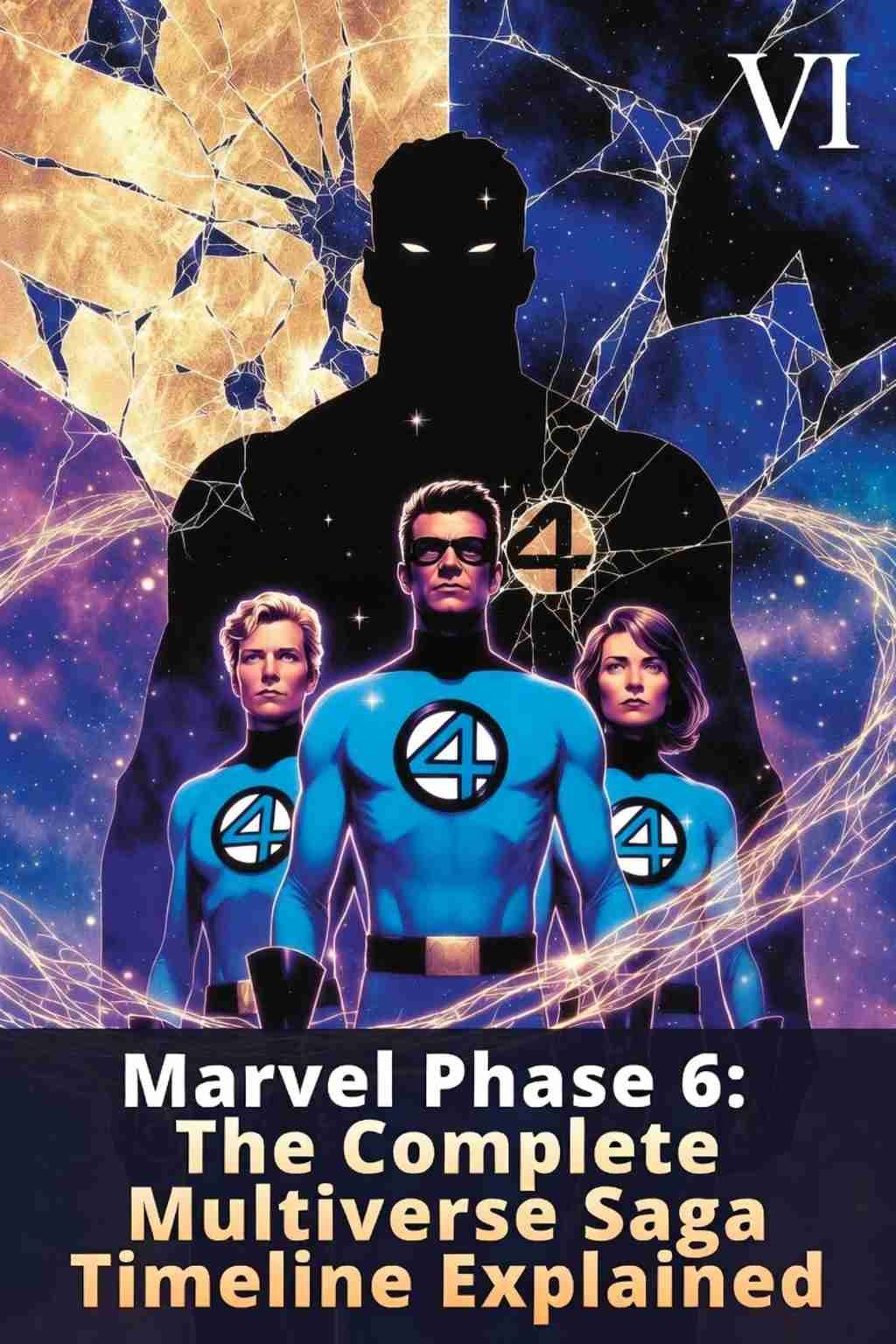
The Marvel Phase 6 timeline officially begins its final ascent with Fantastic Four. This is not just another superhero origin story. It is the intellectual and cosmic foundation of MCU Phase 6.
For years, the MCU focused on grounded science and mystical threats. Now the story shifts toward high level cosmic theory and multiversal mechanics. That shift begins with Marvel’s First Family. The arrival of Reed Richards, Sue Storm, Johnny Storm, and Ben Grimm brings scientific depth to the Marvel Phase 6 explained narrative.
Reed Richards in particular plays a crucial role in understanding incursions and multiversal instability. As one of the most brilliant minds in Marvel lore, Reed represents the bridge between chaotic events and logical explanation. If the multiverse is collapsing, Reed is the character most likely to recognize the pattern.
The Fantastic Four MCU debut also expands the scope of the Marvel Phase 6 timeline beyond Earth. Their stories often explore cosmic radiation, alternate dimensions, and powerful beings that operate outside normal reality. This cosmic expansion is necessary because Phase 6 is not confined to one planet or one timeline.
There is also the possibility of setting up Victor Von Doom, one of Marvel’s most complex antagonists. Even subtle hints toward Doom could reshape the future of the franchise. However, in the context of Phase 6, the Fantastic Four primarily serve as the scientific anchor that explains why reality is breaking down.
Emotionally, the film may focus on family dynamics. That grounding element is important. When the multiverse feels overwhelming, the audience needs personal stakes. The Fantastic Four provide both large scale science and intimate character relationships.
As the opening chapter of MCU Phase 6, this film signals a shift. The story is no longer about isolated heroes reacting to chaos. It is about understanding the structure of existence itself. That foundation is essential before the Marvel Phase 6 timeline escalates into full scale multiversal war.
The Rise of Kang and the Multiversal War
If Fantastic Four provides the science, then Kang the Conqueror provides the threat.
The Marvel Phase 6 timeline cannot be explained without understanding Kang. Unlike previous villains, Kang is not a single individual operating in one timeline. He exists as countless variants across infinite realities. Each version has different motives, resources, and levels of power.
This is what makes the Kang variants MCU storyline so dangerous. Defeating one Kang does not end the threat. It may even trigger worse consequences. Removing one variant can create a power vacuum that another variant fills.
Earlier phases introduced the idea that timelines can branch when certain events occur. Kang has mastered this branching system. He manipulates history, controls advanced technology, and views time as a battlefield. By the time Phase 6 begins, the damage caused by these manipulations has become impossible to ignore.
The Kang Dynasty explained within the Marvel Phase 6 context is not just about invasion. It is about control over reality itself. Kang understands how to weaponize incursions. He knows how to collapse timelines strategically. This turns the multiverse into a chessboard.
What raises tension in MCU Phase 6 is the realization that the heroes are reacting while Kang plans ahead. His variants may disagree with one another, but they share a core belief in domination through time control. That shared ambition destabilizes multiple universes at once.
The Marvel Phase 6 timeline escalates because Kang is not a traditional villain seeking destruction for its own sake. He seeks order under his rule. In a fractured multiverse, that promise of order may even appear logical to some.
As Phase 6 progresses, the multiversal war shifts from theoretical risk to active crisis. Timelines begin to collide. Universes approach incursion. And the Avengers are forced to confront an enemy who exists everywhere and nowhere at the same time.
Avengers: The Kang Dynasty Breakdown
The Marvel Phase 6 timeline reaches its first massive collision point with Avengers: The Kang Dynasty. This is the moment where the multiversal threat stops being a distant concept and becomes an immediate war.
By this stage of MCU Phase 6, the Avengers are no longer the same unified team seen during the Infinity Saga. Leadership is uncertain. Several original members are gone. New heroes have emerged, but they have not yet faced a threat of this magnitude together. The Avengers Kang Dynasty timeline is expected to explore how this new generation steps into responsibility.
One of the central questions is who forms the core lineup. Characters introduced in Phases 4 and 5 are likely to take leading roles. The absence of familiar faces increases tension. The audience does not know if this team can function under pressure. That uncertainty strengthens the impact of Marvel Phase 6 explained through conflict.
The Kang Dynasty movie will likely showcase battles across multiple realities. Unlike previous Avengers films that centered on Earth, this story may unfold on collapsing timelines and fractured universes. Different variants of Kang may attack simultaneously. Each confrontation could feel like a separate war within a larger war.
The scale is expected to rival Infinity War. However, the emotional stakes may feel different. Infinity War was about survival against overwhelming force. The Kang Dynasty is about preventing the collapse of existence itself. Heroes are not only fighting for their world. They are fighting to preserve reality.
There is also the possibility of major sacrifices. Phase 6 must raise the cost of failure. Character deaths or permanent losses would reinforce the seriousness of the Marvel Phase 6 timeline. The audience needs to feel that this conflict cannot be undone easily.
Most importantly, this film sets the stage for what follows. The Kang Dynasty may not resolve the crisis fully. Instead, it could push the multiverse to its breaking point. That fracture prepares the path for the final event of the Multiverse Saga.
Incursions Explained: The Key to Secret Wars
To fully understand the Marvel Phase 6 timeline, you must understand incursions. This concept is the backbone of the Secret Wars setup and the driving force behind the multiversal collapse.
An incursion occurs when two universes begin to overlap within the same space. When this happens, both realities face destruction. If one universe is destroyed in time, the other survives. If neither is eliminated, both may collapse. This simple idea carries massive consequences for the MCU chronological order.
In earlier phases, multiversal travel seemed exciting and adventurous. By Phase 6, it becomes dangerous. Every jump between realities increases instability. Every interference risks triggering another incursion. The Marvel Phase 6 explained narrative shifts from exploration to survival.
Incursions matter because they create moral dilemmas. Heroes may face impossible choices. To save their own universe, they might have to allow another to fall. That conflict deepens the emotional weight of MCU Phase 6. The threat is not just physical. It is ethical.
This concept also explains why the Marvel Phase 6 timeline becomes fluid. When universes collide, events no longer follow a clear chronological order. Characters from different realities can interact. Alternate versions of heroes may appear. The boundaries of continuity blur.
The Secret Wars setup depends entirely on this instability. As incursions multiply, the multiverse approaches total collapse. The Avengers and their allies must confront a reality where traditional solutions may not work.
In simple terms, incursions transform the multiverse from a playground into a ticking clock. Every collision pushes existence closer to annihilation. That pressure drives the urgency of Marvel Phase 6 and prepares the stage for the ultimate confrontation ahead.
Avengers: Secret Wars – The Ultimate MCU Event
The Marvel Phase 6 timeline reaches its climax with Avengers: Secret Wars. This is the event that defines the Multiverse Saga ending and potentially reshapes the entire Marvel Cinematic Universe.
Avengers Secret Wars explained in simple terms is about survival after collapse. If The Kang Dynasty pushes the multiverse to the edge, Secret Wars is what happens when it finally breaks. In Marvel Comics, Secret Wars involved the merging of realities into a single patchwork world often referred to as Battleworld. While the MCU may adapt this concept differently, the core idea remains powerful. Multiple universes collide and fragments of them are forced to coexist.
This opens the door for massive multiversal crossover potential. Characters from different timelines, alternate versions of familiar heroes, and even legacy figures from older Marvel films could appear. The Marvel Secret Wars MCU adaptation carries the promise of cinematic history coming together in one story.
Beyond spectacle, this film must deliver emotional payoff. The Marvel Phase 6 timeline has built tension around fractured identities and unstable leadership. Secret Wars gives characters the chance to define who they are when reality itself has no clear structure. Loyalty, sacrifice, and redemption will likely shape the narrative.
Secret Wars also provides resolution. The Multiverse Saga ending cannot simply restore everything to normal. There must be consequences. Some universes may disappear. Certain characters may not return to their original timelines. The outcome could permanently alter the MCU chronological order moving forward.
At its core, Avengers Secret Wars MCU is about convergence. Every timeline thread introduced since Phase 4 meets here. Every incursion leads to this moment. The scale may be enormous, but the story must remain focused on character choices.
When Secret Wars concludes, the Marvel Phase 6 timeline will not just close a chapter. It will define what the Marvel Cinematic Universe becomes next.
Will the MCU Reboot After Secret Wars?
One of the biggest questions surrounding the Marvel Phase 6 timeline is whether the franchise will reboot after Secret Wars.
The MCU reboot theory has gained traction because Secret Wars offers a logical opportunity for restructuring. When universes collide and merge, continuity can shift. Characters from different realities could end up in a single unified timeline. This would allow Marvel to refresh certain storylines without erasing everything that came before.
A full hard reboot seems unlikely. The emotional investment in long running characters is too strong. Instead, a soft reboot is more realistic. A merged universe could streamline continuity while preserving key events from earlier phases. This approach would respect the past while creating flexibility for the future.
Another possibility involves introducing new teams more naturally. Mutants and the X Men, for example, could emerge as part of a merged timeline rather than being explained through complicated retcons. This would allow the Marvel after Secret Wars era to expand organically.
New casting opportunities also become possible in this scenario. Alternate versions introduced during the Marvel Phase 6 timeline could transition into permanent roles. At the same time, legacy characters might step aside to make room for the next generation.
Ultimately, whether or not there is a reboot, Phase 6 is clearly a turning point. The Multiverse Saga ending creates space for a new direction. It allows Marvel to refine its universe, clarify its stakes, and reset narrative momentum.
Secret Wars is not just about ending a saga. It is about preparing the ground for whatever story comes next in the Marvel Cinematic Universe.
How Phase 6 Changes the Future of the MCU
The Marvel Phase 6 timeline does more than conclude the Multiverse Saga. It sets the direction for everything that follows. Once Avengers Secret Wars MCU resolves the multiversal collapse, the franchise enters a new era.
One major shift will likely involve scale. The Multiverse Saga has focused on infinite realities and time manipulation. After such a massive conflict, Marvel may choose to narrow its focus. A more grounded but interconnected storyline could help rebuild emotional investment. At the same time, the universe will feel larger than ever because multiple realities may now exist within a unified framework.
The Marvel Phase 7 future could explore entirely new threats. With Kang defeated or removed from power, another central antagonist must rise. Possibilities include cosmic level entities, mutant focused conflicts, or technologically driven global threats. Whatever direction Marvel chooses, it must feel distinct from the multiverse chaos that defined Phase 6.
There is also the question of team structure. The Avengers may be redefined. Younger heroes introduced in earlier phases could step into leadership roles. The Marvel Phase 6 timeline has emphasized instability and fragmentation. The next saga may focus on rebuilding unity.
From a storytelling perspective, Phase 6 provides flexibility. If universes merged during Secret Wars, characters from previously separate timelines can now coexist. This opens the door for crossovers that once seemed impossible. It also simplifies long term planning within the MCU chronological order.
Franchise longevity depends on evolution. The Infinity Saga built the foundation. The Multiverse Saga expanded the boundaries. Now Marvel must refine and stabilize its universe. The choices made during Marvel Phase 6 will determine how fresh and sustainable the next decade of films feels.
In many ways, Phase 6 acts as both an ending and a launchpad. It closes a complex chapter while creating narrative space for the next Marvel saga.
11. Final Thoughts: The Convergence of Everything
The Marvel Phase 6 timeline is ultimately about convergence. Every branching reality, every variant, and every fractured alliance leads to this point.
Marvel Phase 6 explained in its simplest form is the story of collapse and reconstruction. The Multiverse Saga ending forces heroes to confront not just villains, but the fragile nature of existence itself. Incursions blur the lines between worlds. Kang’s manipulations test the limits of time. Secret Wars brings everything together in one final confrontation.
Yet the purpose of MCU Phase 6 is not only destruction. It is transformation. By the time Avengers Secret Wars concludes, the Marvel Cinematic Universe will not look exactly the same. Some chapters will close. New paths will open.
For fans following the MCU chronological order since the beginning, Phase 6 represents a historic moment. It connects the legacy of the Infinity Saga with the possibilities of the future. It honors what came before while preparing for what comes next.
The Marvel Phase 6 timeline is more than a sequence of films. It is the turning point of an entire cinematic era. And once the dust settles, a new saga will begin.