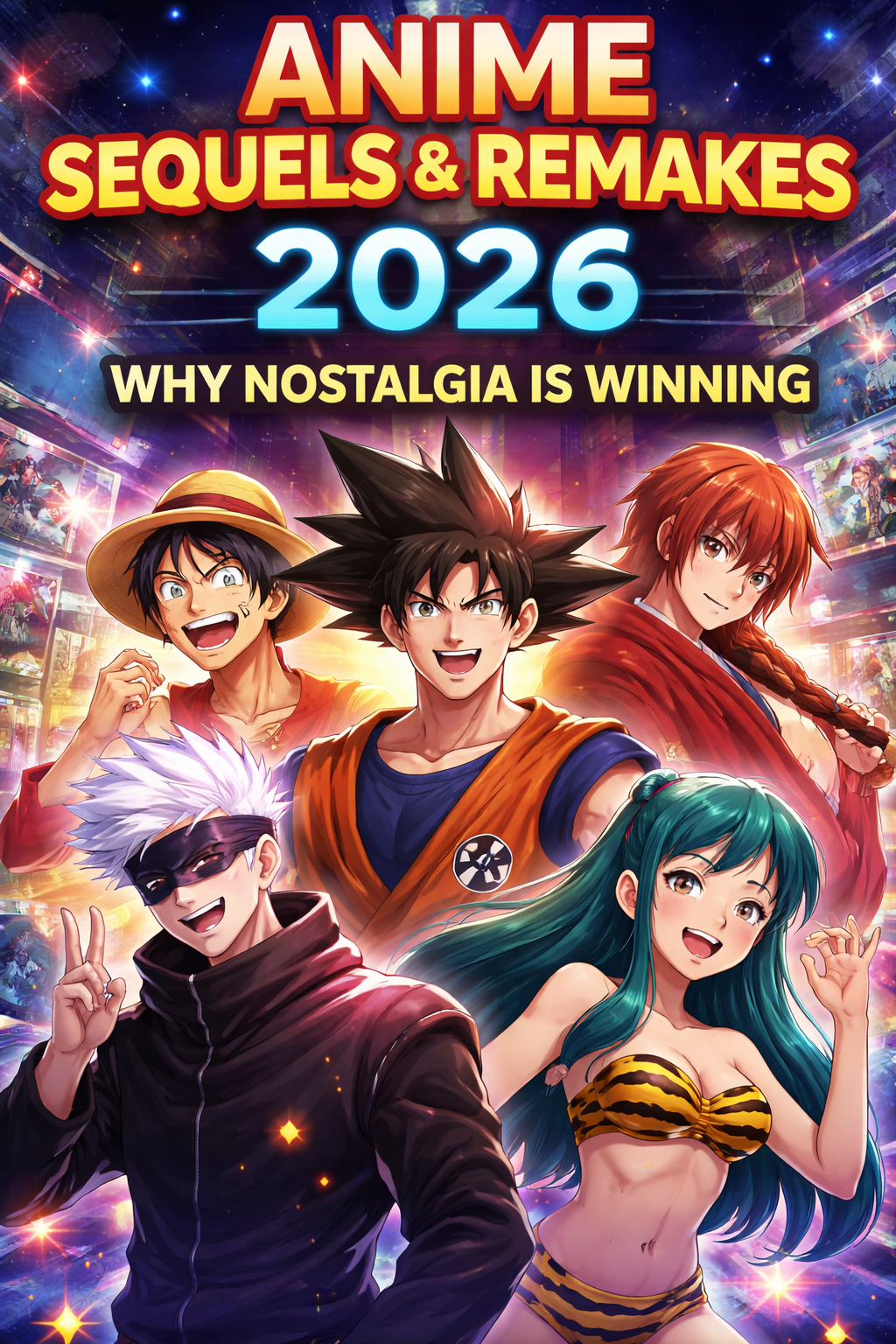
Anime Sequels & Remakes 2026: Why Nostalgia Is Winning
Why are so many anime in 2026 sequels or remakes instead of brand-new stories? This question captures one of the most interesting trends in the anime industry today. Sequels and remakes are dominating release schedules across major streaming platforms and television networks. From long-awaited continuations of beloved series to polished reimaginings of classic shows, nostalgia is proving to be one of the most powerful forces in anime production.
Anime sequels 2026 and anime remakes 2026 are not just about revisiting old stories. They are carefully planned strategies designed to appeal to both older fans and new viewers. Many fans who grew up watching certain series are now adults with disposable income. They are eager to relive the worlds and characters they loved as children. At the same time, new viewers are discovering these stories with modern animation quality and more engaging storytelling. This combination of old and new creates a larger and more profitable audience than original series often do.
The financial aspect of nostalgia cannot be ignored. Continuing a known story is less risky for studios than launching a completely new series. Sequels benefit from built-in fanbases, existing merchandise opportunities, and global visibility through streaming platforms. Remakes allow studios to take classic IPs and present them in a way that fits modern trends while retaining the emotional core that made them successful.
This trend also reflects broader anime industry trends 2026. The industry is learning to balance creativity with predictability. Fans want high-quality content, but they also crave familiarity. Sequels and remakes satisfy both needs. They offer a sense of trust. Viewers already know the characters, the settings, and the tone of the story. This familiarity reduces hesitation and encourages engagement.
In this blog, we will explore why nostalgia is winning in 2026. We will look at how sequels and remakes shape the anime landscape, the psychology behind nostalgic appeal, and how global streaming platforms drive these trends. We will also consider whether this focus on familiar content is helping or limiting creative innovation. By the end, it will be clear why anime sequels and remakes continue to dominate the industry while retaining emotional power for fans around the world.
The Rise of Anime Sequels – Safe, Profitable, and Addictive
One of the most notable trends in 2026 is the rapid rise of anime sequels. Popular franchises are no longer limited to a single season or storyline. Studios are investing heavily in long-term storytelling that keeps fans engaged for years. Sequels are no longer seen as follow-ups. They are central to how studios plan, market, and monetize anime.
Series like Jujutsu Kaisen and Attack on Titan provide clear examples of how sequels can build massive audiences. Both shows began as successful series but expanded with multi-season arcs that keep fans coming back. Jujutsu Kaisen continues to introduce new characters, battles, and storylines while maintaining the emotional stakes of the original. Attack on Titan has managed to keep its narrative compelling even as the story extends over multiple seasons. These sequels show that fans respond positively when studios maintain consistency and deliver quality content.
From a business perspective, sequels are highly profitable. They reduce the risk associated with original anime because there is already an established audience. Marketing costs are lower, as fans are already invested in the franchise. Streaming platforms can predict viewership more accurately, and merchandise tied to popular series sells consistently. This makes sequels not only safer but also more financially appealing to production committees.
Sequels also create a strong emotional bond with viewers. Once fans are invested in a story, they rarely leave. This loyalty drives binge-watching, fan discussions, and community engagement. Studios benefit from this active fanbase because sequels generate steady traffic on streaming platforms. Social media buzz and online engagement further strengthen the franchise.
In 2026, the trend of anime continuation series is more refined than ever. Studios carefully plan arcs, character development, and release schedules to ensure that fans remain engaged for long periods. Popular anime sequels are no longer just extensions of stories; they are carefully engineered experiences designed to maximize both emotional impact and financial return.
Anime Remakes – Rebuilding Classics for a New Generation
Anime remakes 2026 are another major trend reshaping the industry. Remakes bring older titles back to life with modern animation, updated pacing, and improved storytelling. They allow studios to introduce classic stories to new audiences while retaining the emotional appeal that made the originals successful.
Remakes differ from reboots because they respect the core story rather than changing it completely. Shows like Rurouni Kenshin and Urusei Yatsura demonstrate this approach. Rurouni Kenshin has been reintroduced with refined fight choreography, smoother animation, and subtle updates that align with modern storytelling standards. Urusei Yatsura preserves its quirky humor while updating visuals and pacing to appeal to today’s viewers. Both examples show that remakes can satisfy older fans while attracting new ones who may not have experienced the original series.
For long-time fans, remakes offer a sense of nostalgia. Watching a familiar story with modern animation is like meeting an old friend again but with fresh energy. For new viewers, remakes remove barriers like outdated visuals, slow pacing, or cultural references that may not resonate today. This makes remakes accessible and enjoyable for everyone.
From a strategic perspective, remakes are valuable to studios. Existing IP reduces financial risk and comes with a built-in fanbase. Studios can capitalize on merchandise, streaming, and international distribution. Global fans, who are now central to anime industry trends, can engage with classic series in ways that were not possible when the originals first aired.
The success of anime remakes in 2026 proves that nostalgia works in anime as both an emotional and commercial driver. By bridging the gap between past and present, remakes create experiences that feel familiar, exciting, and rewarding. They are a key reason why the industry continues to thrive while connecting fans across generations and geographies.
Why Nostalgia Works – The Psychology Behind the Trend
Why does nostalgia work so well in anime? The answer lies in human psychology. Nostalgia connects people to memories, emotions, and moments from their past. When viewers watch anime sequels or remakes, they are not just consuming content. They are reconnecting with a version of themselves from years ago. This emotional connection is one of the strongest reasons behind the success of anime sequels 2026 and anime remakes 2026.
Nostalgia creates comfort. In a world where new content is constantly being released, many viewers prefer something familiar. Known characters, established storylines, and recognizable worlds reduce the effort needed to decide what to watch. This is called decision fatigue. When a viewer sees a sequel or remake, they already know what to expect. This makes the viewing experience easier and more enjoyable.
Another reason why nostalgia works in anime is trust. Audiences trust stories they already love. If a previous season or original series left a strong impression, viewers are more likely to return for sequels or remakes. This trust is extremely valuable in an industry where new shows often struggle to gain attention.
Nostalgia also enhances emotional engagement. When viewers revisit a story they once loved, they often feel stronger emotions. This can include excitement, sadness, or even inspiration. These emotions deepen the connection between the viewer and the anime, making the experience more meaningful.
Here are a few key psychological reasons why nostalgia is powerful in anime:
- Familiar characters feel like old friends
- Emotional memories increase engagement
- Reduced risk makes choices easier
- Stronger connection leads to higher loyalty
In addition, nostalgia creates a shared experience among fans. When people discuss anime sequels or remakes online, they are often sharing memories and opinions about stories they all know. This builds community and keeps older titles relevant in modern discussions.
Overall, nostalgia is not just a trend. It is a deeply rooted psychological response. It explains why anime sequels 2026 and anime remakes 2026 continue to dominate the industry. Viewers are not only looking for entertainment. They are looking for connection, familiarity, and emotional satisfaction.
Streaming Platforms Are Fueling the Nostalgia Boom
Streaming platforms play a major role in the rise of anime sequels and remakes. Services like Netflix and Crunchyroll are not just distributing anime. They are actively shaping what gets produced. Their data-driven approach is one of the biggest reasons why nostalgia is winning in 2026.
These platforms collect large amounts of user data. They track what viewers watch, how long they watch, and which shows they complete. They also analyze rewatch patterns and search trends. When older anime consistently perform well, it sends a clear message. There is strong demand for sequels and remakes.
This is where streaming anime trends become important. Platforms prefer content that guarantees engagement. Sequels and remakes already have proven popularity, which makes them a safer investment. Instead of taking risks on unknown stories, streaming platforms support franchises that have already succeeded.
Another key factor is global accessibility. Streaming platforms allow anime to reach audiences worldwide. A sequel or remake of a popular series can instantly gain international attention. This global reach increases demand for familiar titles, which further strengthens the trend of nostalgia.
Streaming platforms also promote anime strategically. They place sequels and remakes on the homepage, recommend them through algorithms, and highlight them in curated lists. This increases visibility and encourages more viewers to watch. As more people engage with these shows, the algorithm continues to prioritize similar content.
This creates a cycle:
- Popular anime gets more views
- Platforms promote it more
- More viewers watch it
- Demand for similar content increases
This cycle explains why anime industry trends 2026 are heavily focused on sequels and remakes. The data supports nostalgia, and the platforms respond accordingly.
In many ways, streaming platforms act as the driving force behind modern anime consumption. Their influence ensures that anime sequels 2026 and anime remakes 2026 remain at the center of the industry. As long as nostalgia continues to perform well in data, platforms will continue to invest in it.
The Business Strategy – Why Studios Prefer Familiar Stories
From a business perspective, anime sequels and remakes are one of the safest investments in the industry. Studios and production committees are always looking for ways to reduce risk while maximizing profit. This is where familiar stories come into play.
Creating a completely new anime involves uncertainty. There is no guarantee that a new series will succeed. It requires heavy investment in production, marketing, and promotion. Even with high-quality animation, success is never certain. This makes original anime a risky choice for many studios.
In contrast, sequels and remakes come with built-in advantages. First, they already have an established fanbase. Fans of the original series are likely to watch the continuation. This ensures a baseline level of viewership from the start.
Second, marketing becomes easier. When a series is already popular, studios do not need to introduce the world or characters from scratch. They can focus on promoting new content, which reduces costs and effort.
Third, merchandise plays a major role. Popular anime franchises generate significant revenue through products like figures, clothing, and collectibles. Sequels and remakes revive interest in these products, increasing overall profitability.
This is why anime industry trends 2026 show a strong preference for familiar intellectual properties. Production committees prioritize projects that are more predictable. These committees often include multiple investors, and they all prefer lower-risk opportunities.
Another important factor is long-term planning. Studios now design anime as multi-season franchises rather than standalone projects. This allows them to build a consistent revenue stream over time. Instead of relying on a single hit, they focus on maintaining successful series across multiple seasons.
In addition, global popularity has changed the way anime is produced. International audiences are more likely to engage with known series. This further encourages studios to invest in sequels and remakes rather than taking risks on entirely new concepts.
Overall, the business strategy behind anime sequels 2026 and anime remakes 2026 is clear. Familiar stories reduce risk, increase profitability, and ensure long-term success. This strategic approach is one of the main reasons nostalgia continues to dominate the anime industry today.
Is Original Anime Dying? The Creativity Debate
Is original anime disappearing in 2026? This is one of the most debated questions in the anime industry today. With the rise of anime sequels 2026 and anime remakes 2026, many fans feel that original stories are being pushed aside. However, the reality is more balanced than it seems.
Original anime is not dying. Instead, it is becoming more selective and competitive. Studios are still creating new stories, but they are focusing on quality rather than quantity. This shift is largely due to the financial risks involved. Unlike sequels or remakes, original anime does not come with an existing fanbase. This makes success harder to predict.
At the same time, original anime plays a crucial role in keeping the industry fresh. Without new ideas, anime would eventually become repetitive. Original works introduce new worlds, characters, and concepts that can later evolve into major franchises. In fact, many popular anime today started as original ideas before becoming sequels or long-running series.
The challenge lies in balancing risk and creativity. Studios must decide whether to invest in something new or rely on something proven. This is why anime industry trends 2026 show a mix of both. While sequels and remakes dominate, original anime continues to appear, especially in niche or experimental formats.
Here is how the current landscape looks:
- Sequels and remakes dominate mainstream releases
- Original anime focuses on unique storytelling
- Experimental projects target specific audiences
- Successful originals can later become sequels
Another important factor is audience expectations. Viewers today are more selective. With so many options available, new anime must stand out quickly. This puts pressure on creators to deliver high-quality content from the beginning.
Despite these challenges, original anime remains essential. It is the foundation of innovation in the industry. Without it, there would be no new franchises to turn into future sequels or remakes.
So, instead of asking whether original anime is dying, a better question is how it is evolving. The industry is adapting to audience demand while still making space for creativity. This balance between familiarity and innovation defines the future of anime.
Global Fans and the Power of Shared Nostalgia
Anime is no longer limited to Japan. It has become a global phenomenon, and international fans now play a major role in shaping anime industry trends 2026. The rise of anime sequels and anime remakes 2026 is strongly influenced by this worldwide audience.
Global fans connect with anime in different ways, but nostalgia is a universal feeling. Many international viewers discovered anime through older series. These shows created lasting impressions and emotional connections. As a result, when sequels or remakes are released, global audiences respond with excitement and loyalty.
Social media has amplified this effect. Platforms allow fans from different countries to share their thoughts, reactions, and memories. This creates a shared experience that goes beyond language and culture. When a nostalgic anime returns, it often trends worldwide within hours.
Streaming platforms also contribute to this global engagement. Services like Netflix and Crunchyroll make anime accessible to millions of viewers across different regions. This accessibility ensures that both new and old fans can watch the same content at the same time.
This shared viewing experience strengthens the impact of nostalgia. When people across the world watch the same anime sequels or remakes, it creates a sense of global community. Fans discuss theories, share reactions, and relive memories together.
Another important factor is influence. Global audiences now have a voice. Their reactions can affect which anime gets renewed or continued. Studios and streaming platforms pay close attention to international demand, which increases the chances of sequels and remakes being produced.
Here are a few ways global fans influence anime trends:
- Increased demand for familiar titles
- Strong online engagement and discussions
- Global streaming boosts popularity
- Fan feedback impacts production decisions
This global connection ensures that nostalgia remains a powerful force. It is not limited to one country or culture. Instead, it is shared across millions of fans worldwide.
As a result, anime sequels 2026 and anime remakes 2026 continue to thrive, driven by a passionate and connected global audience.
The Future of Anime – Balance Between Nostalgia and Innovation
What does the future of anime look like? As anime sequels 2026 and anime remakes 2026 continue to dominate, the industry is entering a new phase where balance is more important than ever.
The future will likely follow a hybrid model. Studios will continue producing sequels and remakes because they are safe and profitable. At the same time, they will also invest in original anime to introduce fresh ideas and new stories. This combination ensures both stability and creativity within the industry.
One key trend is selective innovation. Studios are becoming more strategic about which original projects they pursue. Instead of producing large numbers of new series, they focus on a few high-quality originals that have strong potential. This allows them to manage risk while still encouraging creativity.
At the same time, sequels and remakes will continue to expand. Many popular anime will grow into long-running franchises with multiple seasons, spin-offs, and adaptations. This trend is already visible in anime industry trends 2026 and is expected to continue for years.
However, there is a potential challenge. If the industry relies too heavily on nostalgia, it may lead to oversaturation. Audiences could eventually lose interest if too many similar stories are released. This is why maintaining balance is essential.
The future of anime depends on how well the industry can combine:
- Familiar stories that audiences love
- New ideas that push creative boundaries
- High-quality production across all projects
Streaming platforms will continue to play a major role in shaping this future. Their data-driven decisions will guide which series get renewed, remade, or created from scratch. Global audience demand will also influence these decisions.
In the end, the future belongs to studios that can adapt. Those that understand both nostalgia and innovation will thrive. Those that rely too heavily on one will struggle to keep up.
The evolution of anime is ongoing, and the balance between the past and the future will define the next generation of storytelling.
The future of anime is being shaped by a constant push and pull between nostalgia and innovation. On one side, anime sequels 2026 and anime remakes 2026 continue to dominate because they are reliable, familiar, and profitable. On the other side, original anime remains essential for introducing new ideas, fresh storytelling, and creative risks. The real question is not which one will win, but how both will coexist.
Studios in 2026 are becoming more strategic in how they plan content. Instead of choosing between sequels and originals, they are building portfolios that include both. This means continuing successful franchises while also investing in carefully selected original projects. This hybrid approach allows studios to reduce financial risk while still pushing creative boundaries.
Another key factor shaping the future is audience behavior. Viewers today expect high-quality animation, strong storytelling, and emotional depth. Sequels and remakes must meet these expectations to succeed. A poorly executed sequel can damage a franchise, while a well-made original can become a global hit. This pressure is forcing studios to raise their standards across all types of anime.
Technology is also influencing anime industry trends 2026. With advanced animation tools and digital production techniques, studios can produce visually stunning anime more efficiently. This makes remakes especially appealing because older series can be transformed with modern visuals while preserving their original story.
At the same time, global demand continues to grow. International audiences are now a major driving force behind anime popularity. Platforms like Netflix and Crunchyroll ensure that anime reaches viewers worldwide. This global reach encourages studios to invest in content that appeals to both longtime fans and new audiences.
However, balance remains the biggest challenge. If the industry relies too heavily on nostalgia, it risks becoming repetitive. If it focuses too much on originality, it risks losing financial stability. The future of anime depends on finding the right mix between these two approaches.
In the end, anime sequels 2026 and anime remakes 2026 are not replacing originality. They are shaping a new ecosystem where both can exist together. The studios that succeed will be the ones that understand how to respect the past while building the future.
Nostalgia Is More Than a Trend
Nostalgia is not just a passing trend in anime. It has become a powerful force that shapes how stories are told, how studios make decisions, and how audiences engage with content. Anime sequels 2026 and anime remakes 2026 are leading the industry because they combine emotional connection with financial stability.
Fans are drawn to familiar characters and worlds because they already hold meaning. These stories are not just entertainment. They are memories, experiences, and emotional anchors. This is why why nostalgia works in anime is such an important concept. It explains both the emotional and strategic success behind this trend.
At the same time, the industry continues to evolve. New ideas are still being created, and original anime remains a vital part of the ecosystem. The balance between nostalgia and innovation will define the future of anime industry trends 2026 and beyond.
As the industry moves forward, one question remains. Will anime continue to rely on familiar stories, or will new classics emerge to define the next generation?
The answer will shape the future of anime, but one thing is clear. Nostalgia is not fading. It is becoming stronger, more influential, and more essential than ever before.