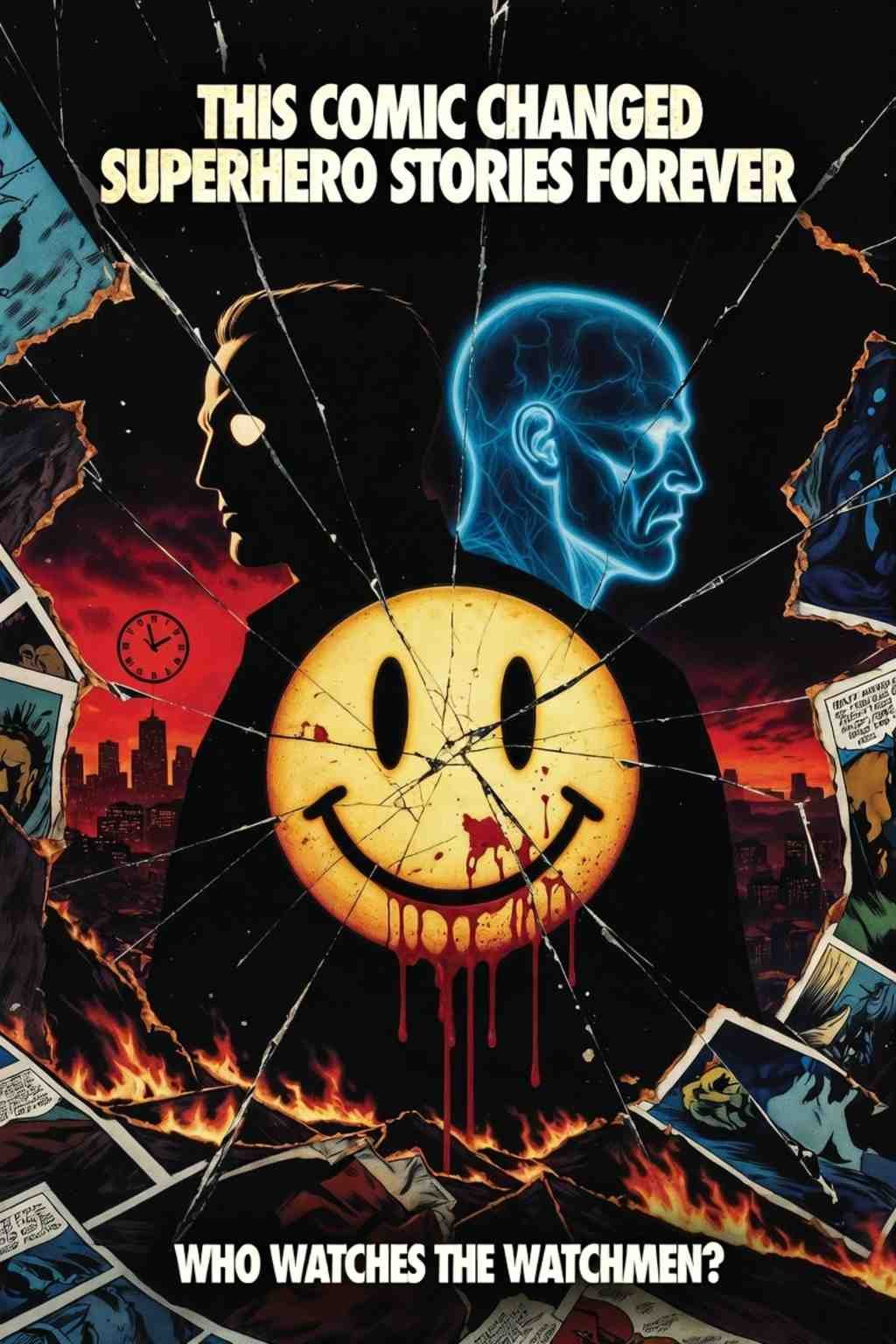
This Comic Just Changed Superhero Stories Forever
What if the heroes you admired were not truly heroic? What if behind the masks and symbols, they were flawed, broken, and even dangerous?
For decades, superhero stories followed a simple pattern. Heroes saved the day. Villains were defeated. Justice always won. Readers knew what to expect, and that familiarity made these stories easy to enjoy. But it also kept them limited.
Then came Watchmen.
This was not just another comic. It was a complete shift in how superhero stories were told and understood. Instead of idealized heroes, it introduced characters who felt real. They had fears, biases, and moral conflicts. Some of them were not even likable.
Created by Alan Moore and illustrated by Dave Gibbons, Watchmen challenged everything readers believed about superheroes. It asked difficult questions. Can power corrupt even the strongest heroes? Is justice always right? What happens when heroes stop being heroes?
This blog explores how Watchmen changed superhero storytelling forever. You will see how it broke old rules, introduced complex themes, and influenced modern comics and films.
Even today, many stories across movies and television still carry its influence. The rise of darker and more realistic superhero narratives can be traced back to this one graphic novel.
So the real question is simple. Why did this one comic change everything?
Superhero Stories Before Watchmen – The Age of Simplicity
Before Watchmen arrived, superhero stories were built on clear and simple ideas. The structure was familiar and predictable. Heroes were good. Villains were bad. The story moved toward a final battle where good always won.
Publishers like Marvel Comics and DC Comics dominated this era. They created iconic characters that defined the genre. These stories were exciting and imaginative, but they rarely questioned deeper issues.
Most heroes followed a fixed moral code. They made the right choices without hesitation. Even when they struggled, the outcome was clear. The reader knew that justice would be served in the end.
This style of storytelling worked because it was easy to understand. It offered escape and hope. Readers could rely on a sense of order where good always overcame evil.
However, this simplicity also created limitations.
There was little room for moral ambiguity. Characters did not often face consequences that felt real. Emotional depth was present, but it stayed within safe boundaries. Complex topics like politics, power abuse, or psychological trauma were rarely explored in detail.
The evolution of superhero comics had not yet reached a point where heroes could be questioned. Instead, they were symbols of perfection.
For example, most classic stories followed a basic structure:
- A problem appears
- The hero steps in
- The villain is defeated
- Order is restored
This formula kept readers engaged, but it did not challenge them.
As audiences matured, there was a growing need for something deeper. Readers wanted stories that reflected real life. They wanted characters who struggled with difficult choices and unclear outcomes.
That gap created the perfect moment for change.
Enter Watchmen – The Comic That Broke Every Rule
When Watchmen was released, it did not feel like a typical superhero comic. It felt different from the very first page.
Instead of presenting perfect heroes, it showed a world where superheroes were deeply flawed individuals. Some were unstable. Some were detached from humanity. Others were driven by extreme beliefs.
This shift alone made it stand out, but what truly made it revolutionary was how it treated its characters.
Take Rorschach as an example. He believes in absolute justice, but his methods are harsh and unforgiving. He does not compromise, even when the situation demands it. This raises an important question. Is strict morality always right?
Then there is Dr. Manhattan. He has god-like powers, yet he becomes emotionally distant from humanity. As his power grows, his connection to human life weakens. This creates a different kind of conflict. What happens when a hero no longer cares about people?
These characters were not designed to be admired in a simple way. They were meant to be examined and questioned.
Watchmen also changed how readers experienced a story. It did not guide them toward easy answers. Instead, it forced them to think. Every decision made by the characters carried weight and consequences.
The comic quickly gained attention because it broke the expectations built by decades of superhero storytelling. It did not offer comfort. It offered complexity.
At its core, Watchmen asked a powerful question. What happens when heroes stop being heroes?
This question became the foundation for modern superhero storytelling. It opened the door for darker, more realistic narratives that continue to shape the genre today.
In many ways, this was not just a comic. It was the moment when superhero stories grew up.
The Dark Themes That Changed Everything
One of the biggest reasons Watchmen stands out is its deep and uncomfortable themes. This is not a story that gives easy answers. It forces readers to question morality, power, and human nature in ways that feel closer to real life than traditional superhero comics.
At the heart of the story is moral ambiguity. In earlier superhero stories, right and wrong were clearly defined. But here, the line between hero and villain is blurred. Characters make choices that feel both understandable and disturbing at the same time. This creates a constant sense of uncertainty for the reader.
The comic also explores the idea of power and corruption. When individuals gain extreme power, what stops them from misusing it? This question is shown through different characters who represent different forms of control, belief, and authority. Some use power to enforce justice, while others use it to shape the world according to their own vision.
Another major theme is human psychology. The characters are not symbols of perfection. They are shaped by trauma, fear, ego, and personal belief systems. Their actions often come from internal struggles rather than heroic intentions. This makes the story feel more grounded and realistic compared to traditional superhero narratives.
The Cold War setting adds even more tension. The constant fear of global destruction influences how characters think and act. The world in Watchmen feels unstable, where one wrong decision could lead to catastrophic consequences. This backdrop makes the themes of fear and control even more powerful.
What makes these themes so effective is how they connect to real life. Readers are forced to think beyond entertainment. They start asking themselves difficult questions. Can violence ever create peace? Is justice still justice if it harms innocent people? And who gets to decide what is right?
These questions make Watchmen more than just a superhero comic. It becomes a reflection of society itself, showing how power, fear, and morality interact in complex ways.
Complex Characters That Feel Real
One of the strongest elements of Watchmen is its characters. Unlike traditional superheroes, these figures are not built to inspire simple admiration. They are built to feel real, even when they are uncomfortable to understand.
Each character represents a different extreme of human belief and behavior. This makes them more like case studies in psychology than classic comic book heroes.
Rorschach is one of the most intense examples. He lives by a strict moral code where everything is either right or wrong. There is no middle ground. This makes him fearless but also dangerous. His version of justice removes compassion entirely, which creates serious moral conflict for the reader.
On the other hand, Dr. Manhattan represents detachment on a completely different level. As his powers grow, he begins to see time and existence differently. Human emotions start to feel distant and unnecessary. He is not evil, but he is no longer fully human in the way others understand humanity.
These characters challenge the idea of what a hero should be. They are not designed to be perfect role models. Instead, they reflect extremes of human nature. One is driven by absolute justice. The other is disconnected from it entirely.
What makes them compelling is that neither feels completely right or completely wrong. Readers are constantly forced to decide how to interpret their actions. This creates a deeper level of engagement because there are no simple conclusions.
This is where the idea of the anti-hero becomes more important. In earlier comics, heroes were clearly defined. But in this story, heroism itself becomes questionable. Sometimes doing the “right” thing can still lead to harmful outcomes.
The emotional weight of these characters is what makes the story unforgettable. They stay with readers long after the final page because they reflect real human contradictions. They show that people can be intelligent and flawed, powerful and lost, moral and uncertain at the same time.
This complexity is one of the main reasons Watchmen is often considered one of the greatest graphic novels of all time.
Revolutionary Storytelling Techniques
One of the main reasons Watchmen is considered a turning point in comic history is its storytelling style. It does not follow a simple linear path. Instead, it builds its narrative in layers, forcing readers to actively connect events, characters, and ideas.
The most noticeable technique is its non-linear storytelling. The story often moves between different timelines and perspectives. Instead of guiding the reader in a straight line, it reveals information gradually. This creates a sense of discovery, where every chapter adds new meaning to earlier events.
Another key feature is the use of parallel storylines. Multiple character arcs unfold at the same time, and each one reflects a different side of the same central conflict. These storylines are carefully designed to overlap and influence each other. This structure makes the world feel more connected and realistic.
Symbolism also plays a major role throughout the comic. Small visual details often carry deeper meaning. Objects, colors, and repeated images are used to represent larger ideas such as time, power, and morality. These symbols are not always explained directly, which encourages readers to think and interpret on their own.
The comic also uses visual storytelling in a very deliberate way. The arrangement of panels, the pacing of scenes, and the repetition of certain visual patterns all contribute to the overall meaning. Some pages mirror earlier ones, creating hidden connections that reward careful reading.
One of the most famous examples of this technique is the structure of scenes that appear simple at first but reveal deeper meaning when re-read. This layered design makes the reading experience more interactive than traditional comics.
Even the pacing is carefully controlled. Quiet moments are given as much importance as action scenes. This balance allows emotional tension to build slowly, making key moments more impactful.
What makes all of this important is how it changed expectations for the medium. Before this, many comics focused mainly on action and straightforward dialogue. Watchmen showed that comics could be complex, literary, and deeply symbolic while still being engaging.
This combination of structure, symbolism, and visual storytelling is what makes the comic feel like a complete experience rather than just a simple story.
How Watchmen Changed Modern Superhero Stories
The impact of Watchmen did not stop with comics. It reshaped the entire direction of superhero storytelling across films, television, and modern pop culture.
Before Watchmen, superhero stories were often bright, optimistic, and straightforward. After its release, creators began exploring darker and more realistic themes. Heroes were no longer perfect symbols. They became complex individuals with emotional struggles and moral uncertainty.
This shift is clearly visible in modern cinema. Studios like Marvel Studios began introducing characters who deal with personal trauma, ethical dilemmas, and emotional conflict. Even when the stories remain entertaining, they now carry deeper emotional layers.
Similarly, the DC Extended Universe embraced darker tones in many of its films. Characters are often shown struggling with identity, responsibility, and the consequences of their actions. This approach reflects the influence of Watchmen’s more grounded storytelling style.
One of the most important changes is the rise of realistic superhero storytelling. Audiences now expect heroes to feel human. They want to see vulnerability, internal conflict, and consequences that matter. This expectation did not exist at the same level before Watchmen.
The idea of the “flawed hero” has become a standard part of modern storytelling. Characters are no longer defined only by their powers, but also by their psychological depth. This shift has influenced not only comics and films but also television series and streaming content.
Another major impact is the acceptance of darker narratives in mainstream entertainment. Stories no longer need to be purely hopeful or purely heroic. They can explore fear, uncertainty, and moral complexity while still being widely successful.
In many ways, Watchmen changed what audiences believe a superhero story should be. It expanded the boundaries of the genre and opened the door for more mature storytelling across all media.
This influence continues today, proving that its impact is not just historical but ongoing.
From Comics to Literature – A Cultural Shift
The influence of Watchmen goes beyond storytelling style and character design. It also changed how people view comics as a form of art and literature. Before its release, comics were often seen as entertainment for younger audiences or casual readers. They were rarely treated as serious literary works.
However, Watchmen helped shift that perception. It showed that a graphic novel could carry deep philosophical ideas, political commentary, and emotional complexity. This was a major step in the evolution of superhero comics and the wider comic book industry.
One of the key reasons for this change was the level of critical recognition it received. Critics and scholars began to analyze its themes, structure, and symbolism in the same way they would study novels or films. This attention helped elevate the status of comics as a legitimate storytelling medium.
The writing style of Alan Moore played a major role in this transformation. His focus on layered meaning, moral complexity, and narrative depth challenged the idea that comics had to be simple or purely visual entertainment. Combined with the detailed artwork of Dave Gibbons, the result was a story that demanded serious attention.
As a result, Watchmen attracted a broader audience. Readers who may not have been interested in traditional superhero comics found themselves drawn to its mature themes and intellectual depth. This helped expand the reach of graphic novels into new cultural spaces.
The impact also influenced future creators. Writers and artists began experimenting with more ambitious storytelling techniques. Comics started to explore topics such as politics, psychology, identity, and society in greater detail. This shift helped redefine what the medium could achieve.
Over time, Watchmen became part of discussions about the greatest graphic novels of all time. It is frequently studied in academic settings and referenced in discussions about narrative innovation.
This cultural shift is one of its most important legacies. It did not just change superhero stories. It changed how the world sees comics as a whole.
Why Watchmen Still Matters Today
Even decades after its release, Watchmen continues to feel relevant. Its themes, characters, and questions still connect strongly with modern audiences. This lasting relevance is one of the reasons it is considered one of the most important works in comic history.
One reason it still matters is its focus on political and social tension. The story’s Cold War backdrop may be historical, but the fear of global conflict, power struggles, and ideological division still exists in different forms today. Readers can easily see reflections of modern society in its narrative.
The ethical questions raised in Watchmen are also timeless. It challenges readers to think about justice, responsibility, and the consequences of power. These questions do not lose meaning over time because they are based on human behavior, not specific events.
Another reason for its lasting impact is how it shaped modern storytelling. Many current films, shows, and comics still use its approach to character complexity and moral ambiguity. The idea that heroes can be flawed or uncertain has become a standard part of storytelling in both comics and cinema.
The continued popularity of darker and more realistic superhero stories shows how deeply its influence runs. Audiences today expect more than simple hero victories. They want emotional depth, consequences, and realism. Watchmen helped create that expectation.
Its legacy is not only in entertainment but also in how people think about stories. It encourages readers to question what they see and to look beyond surface-level heroism.
This is why Watchmen still matters. It is not just a story from the past. It is a foundation for how modern superhero narratives continue to evolve.
Why Watchmen Still Matters Today
Even many years after its release, Watchmen still feels relevant in modern storytelling. It is not just remembered as an old comic. It continues to shape how superhero stories are written, filmed, and understood today.
One of the main reasons for its lasting importance is its political and social depth. The story reflects global fear, power struggles, and instability. While it is set during the Cold War era, the emotions it explores still feel familiar in today’s world. Issues like political tension, mistrust of authority, and fear of conflict remain deeply connected to modern society.
Another reason Watchmen still matters is its focus on moral uncertainty. It does not give readers clear answers about right and wrong. Instead, it forces them to think about difficult questions. Is it acceptable to do something wrong if it leads to a better outcome? Can power ever be fully controlled without corruption? These questions remain relevant because they are part of human nature.
The influence of Watchmen is also visible in modern entertainment. Many superhero stories today feature flawed characters, emotional struggles, and moral complexity. This approach is now common in films, series, and comics. The idea of a perfect hero has largely been replaced by more realistic and human characters.
Audiences have also changed. Readers and viewers now expect deeper storytelling. They want characters who face consequences and make difficult decisions. This shift in expectation is closely tied to the impact of Watchmen on the genre.
The story also continues to be studied and discussed. It is often included in conversations about the most important works in comic history. Its structure, themes, and character design are still analyzed by writers, critics, and fans.
In simple terms, Watchmen still matters because it changed the standard of storytelling. It raised the level of what superhero stories could achieve and made audiences think more critically about heroes and power.
The Comic That Redefined Heroes Forever
Watchmen is more than just a comic book. It is a turning point in storytelling that reshaped an entire genre. Before it, superheroes were symbols of certainty. After it, they became symbols of complexity.
The story showed that heroes are not defined only by their powers or victories. They are defined by their choices, their mistakes, and the consequences they face. This simple but powerful idea changed how writers approach superhero narratives forever.
Through its complex characters, deep themes, and revolutionary storytelling style, Watchmen proved that comics can be just as meaningful and thought-provoking as any other form of literature. It expanded what the medium could achieve and opened the door for more mature and realistic storytelling.
Even today, its influence continues to appear in movies, television, and modern graphic novels. It remains a foundation for stories that explore moral ambiguity and human complexity.
In the end, Watchmen leaves readers with a lasting question. Not just about heroes, but about trust, power, and responsibility.
Maybe the real question is not who watches the Watchmen, but whether we should trust them at all.