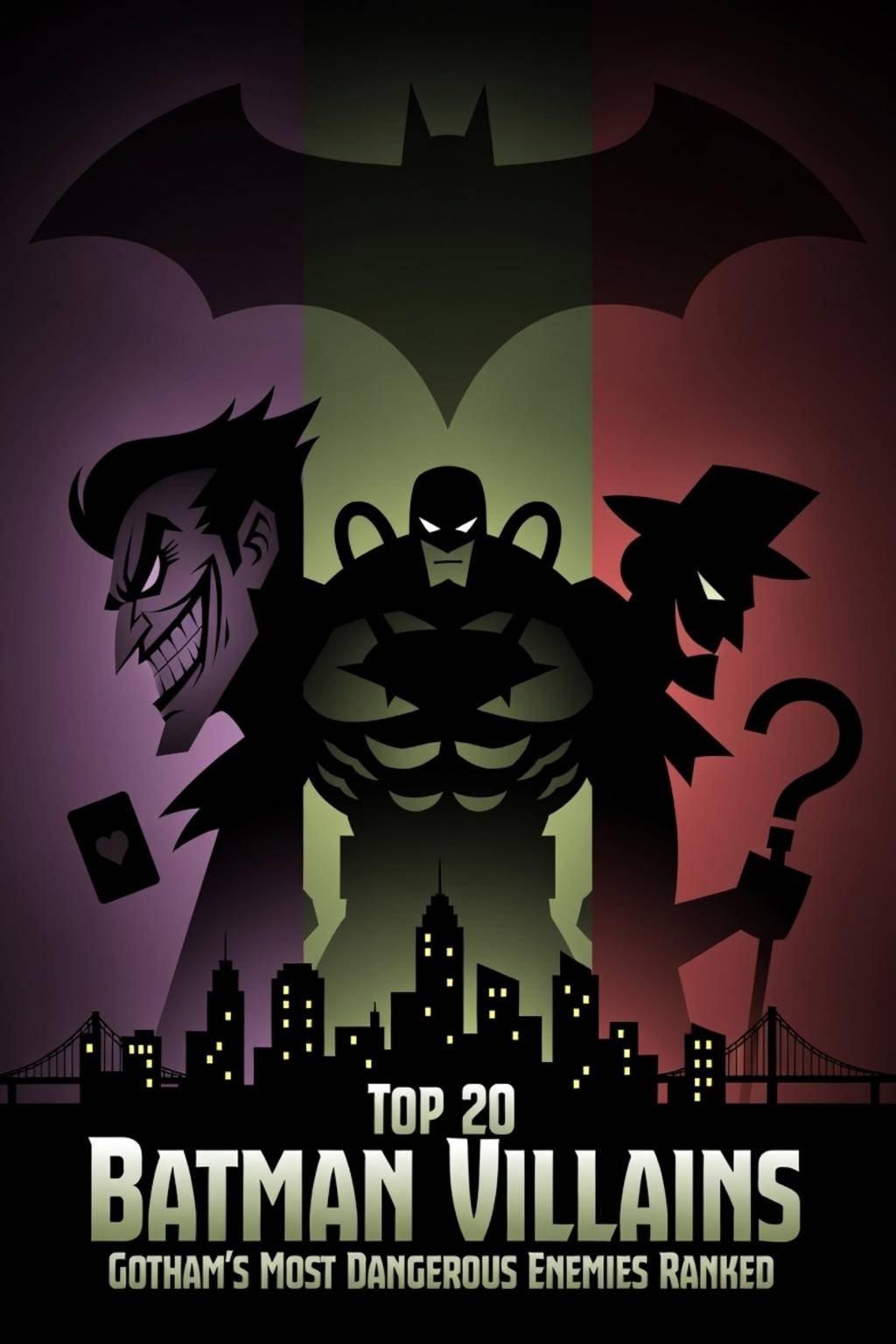
Top 20 Batman Villains Ranked: Gotham’s Darkest Minds
Why Batman Has the Greatest Villains in Comic History
Batman is one of the most iconic superheroes in the world, but what makes his stories so compelling are the villains he faces. Gotham City is home to some of the most dangerous and psychologically complex criminals in comic history. Unlike heroes who fight simple threats, Batman faces enemies who challenge his mind, test his morals, and force him to confront fear in ways few other superheroes ever experience. This is why the list of top Batman villains is both fascinating and important.
The villains of Gotham are unique because most of them do not rely on superpowers. They are human, but their intelligence, ambition, and willingness to embrace chaos make them terrifying. Characters like the Joker are unpredictable and challenge Batman on every level. Other villains, like Two-Face, show how tragedy can shape a person into an enemy of justice. These criminals are not just opponents. They are mirrors to Batman’s own fears and weaknesses. They highlight what could happen if someone like him chooses a darker path.
Gotham’s villains are also compelling because they reflect different aspects of fear and morality. Some, like Ra’s al Ghul, operate with a sense of purpose, believing they are saving the world even if their methods are extreme. Others, like Poison Ivy, are driven by ideology and emotions. Each villain presents a new challenge, whether it is physical strength, psychological manipulation, or moral dilemmas. This makes Batman’s world richer and more complex than most comic universes.
This blog explores the top 20 Batman villains, ranking them based on their intelligence, impact, and threat to the Dark Knight. We will cover iconic characters such as the Joker, Bane, and the Penguin. Each entry will provide insight into the villain’s background, abilities, and how they have shaped Gotham. We will also explain why these enemies remain relevant across decades of comics, movies, and television adaptations.
By the end of this list, readers will have a clear understanding of what makes Gotham’s rogues gallery so memorable. These villains are more than just obstacles for Batman. They are essential elements of the story, pushing him to his limits and revealing the strength of his character. Whether you are a longtime fan or new to Batman, this list will give you a detailed look at the most dangerous and influential enemies the Dark Knight has ever faced.
Why Batman’s Villains Are So Iconic
The villains of Gotham City are unlike those in most superhero stories. Many heroes face enemies with powers or technology, but Batman’s foes rely on intelligence, strategy, and psychological manipulation. This is why the top Batman villains have stood the test of time. They are memorable because they challenge not only Batman’s strength but also his mind and moral code.
One of the key reasons Batman’s villains are iconic is their depth. Characters like the Joker are not just chaotic. They represent an extreme philosophy, testing Batman’s ideas of justice and order. Two-Face embodies duality and the consequences of trauma, showing how one bad decision can alter a person forever. Villains like Ra’s al Ghul offer ideology, believing their extreme actions are justified for the greater good. This level of complexity sets Gotham’s villains apart.
Gotham’s criminals are also humanized by their backstories. Mr. Freeze is driven by the desire to save his wife, adding empathy to his crimes. Poison Ivy fights for nature, presenting a moral ambiguity that complicates her villainy. Even the Penguin, who rules through organized crime, is a figure of society’s corruption. These layers make the villains more than just enemies. They are characters readers can understand, even if they do not condone their actions.
Another factor that makes these villains iconic is their relationship with Batman. They are specifically tailored to challenge him. Bane tests Batman’s physical limits, while Riddler tests his intelligence. Harley Quinn adds emotional and chaotic challenges. Each villain pushes the Dark Knight to a different extreme, creating stories that are as psychological as they are action-packed.
The combination of human complexity, moral ambiguity, and a direct challenge to Batman’s abilities ensures that these villains are unforgettable. They have influenced countless storylines, films, and television series. Their relevance continues because they explore universal themes of fear, morality, and chaos. This is why Gotham’s rogues gallery is considered one of the most remarkable collections of villains in comic book history.
Top 20 Batman Villains Ranked: 20–16 (Lower Tier but Dangerous)
Not all of Batman’s villains are on the same level, but even those ranked 20 to 16 are dangerous and memorable. They may not have the same global influence as the Joker or Ra’s al Ghul, but they still pose serious threats to Gotham and challenge the Dark Knight.
Hush is a master manipulator and strategist. He uses deception and complex plans to target Batman, often exploiting the hero’s trust in friends and allies. His intelligence makes him dangerous even without superhuman abilities.
Scarecrow uses fear as a weapon. His fear toxin causes hallucinations that force Batman and others to confront their deepest anxieties. Scarecrow’s psychological warfare is often more dangerous than physical attacks because it preys on the mind.
Killer Croc is physically intimidating. His brute strength and durability make him a formidable opponent in hand-to-hand combat. While he lacks the sophistication of some villains, his raw power and animal instincts create real danger.
Mad Hatter focuses on mind control and manipulation. His obsession with Alice in Wonderland themes leads him to use technology and drugs to control others. He can turn ordinary citizens into pawns, creating chaos in Gotham.
Firefly is a pyromaniac who uses fire to terrorize Gotham. His skill with explosives and flying equipment allows him to commit crimes on a large scale. Firefly’s destructive nature makes him unpredictable and dangerous.
These lower-tier villains demonstrate that even without extreme powers or ideology, Gotham’s criminals are a real threat. They challenge Batman in unique ways, setting the stage for more powerful foes. Each one contributes to the complexity and richness of Gotham’s criminal underworld, showing that the Dark Knight faces danger at every level.
Perfect. Here are the next three sections, covering 15–11 (Rising Threats) and 10–6 (Elite Villains), each around 400 words, keeping your requested style and SEO optimization.
15–11 Batman Villains Ranked (Rising Threats)
The villains ranked 15 to 11 are more dangerous than the lower tier because they combine intelligence, power, and ambition. They challenge Batman in ways that go beyond simple physical confrontations, often threatening Gotham on larger scales.
Deathstroke is an expert assassin and sometimes anti-hero. He has peak physical conditioning, superior combat skills, and a tactical mind. Deathstroke can outthink and outfight almost anyone, making him a serious threat to Batman. While he sometimes works independently, his appearances in Gotham often involve highly strategic plans designed to test the Dark Knight’s skills.
Clayface is a shape-shifter whose body can mimic anyone or anything. This ability makes him a master of deception and infiltration. He can impersonate key figures in Gotham, creating confusion and mistrust. Clayface’s fighting style is unpredictable, as his body can form weapons, grow in size, or alter its density. This makes him a difficult opponent to contain.
Black Mask rules Gotham’s criminal underworld through intimidation and strategy. He is a ruthless crime lord whose operations range from smuggling to organized crime. His influence extends into Gotham’s corrupt political and business sectors, making him a formidable adversary even without physical powers. Black Mask represents the systemic corruption that Batman fights against.
Victor Zsasz is a serial killer who marks his body with a tally for each victim. His insanity and obsession with death make him unpredictable. Zsasz’s presence forces Batman to confront the darker side of humanity, showing the extremes of personal trauma and violence. Despite lacking superhuman abilities, his cunning and brutality make him a constant threat.
Man-Bat is a tragic figure whose transformation results from a scientific experiment gone wrong. He possesses enhanced strength, speed, and flight, making him physically dangerous. His human intelligence combined with animalistic instincts creates a unique challenge for Batman. Man-Bat also represents the unintended consequences of science, a recurring theme in Gotham.
These villains illustrate that Gotham is more than a city of chaotic threats. Rising-tier villains combine intellect, physical ability, and ideology to create multifaceted dangers. They push Batman to plan carefully and adapt constantly. Each of these characters shows that a villain does not need to be the strongest or most famous to pose serious risks to Gotham’s Dark Knight.
10–6 Batman Villains Ranked (Elite Villains)
The villains ranked 10 to 6 are considered elite because they possess exceptional abilities, intelligence, or influence. They not only threaten Gotham physically but also challenge Batman psychologically and morally.
Penguin controls Gotham’s criminal networks and operates with cunning precision. He uses wealth, influence, and high-tech weaponry to maintain power. The Penguin often presents himself as a gentleman, but his ruthlessness is unmatched. He combines strategy with business acumen, making him a villain who can manipulate Gotham without direct confrontation.
Riddler is a genius obsessed with puzzles and intellect. He challenges Batman with complex riddles and traps that require exceptional detective skills to solve. The Riddler thrives on proving his superiority over Gotham’s protector. His schemes often expose vulnerabilities in Batman’s plans and force him to think several steps ahead.
Poison Ivy blends environmental ideology with crime. She uses plant-based toxins and mind-controlling pheromones to achieve her goals. Ivy’s motivations are often moral in her own view, which adds layers to her villainy. She challenges Batman not only physically but ethically, making him question his choices and responses.
Mr. Freeze is driven by tragedy. He uses cryogenic technology to commit crimes, often attempting to save or honor his comatose wife. His calculated and emotion-driven actions force Batman to deal with villains whose motivations are rooted in empathy and loss. Freeze’s intelligence and specialized weaponry make him a challenging opponent in combat and strategy.
Harley Quinn is a chaotic wildcard whose unpredictability makes her dangerous. Once a psychiatrist, she became the Joker’s partner and developed her own criminal identity. Harley combines humor, agility, and unpredictability to keep Batman off-balance. Her emotional attachment to the Joker often leads to highly erratic behavior, creating scenarios that are both dangerous and psychologically complex.
These elite villains are central to Gotham’s chaos. They combine physical skill, intelligence, and moral complexity to challenge Batman in multiple dimensions. Facing these enemies requires more than fighting strength; it demands detective skills, strategy, and an understanding of human psychology. This is what elevates them above lower-tier threats and makes them unforgettable parts of Gotham’s rogue gallery.
5–2 Batman Villains Ranked (Legendary Status)
The villains ranked 5 to 2 are legendary because they have not only challenged Batman physically but also mentally and morally. They have shaped Gotham City and defined the stakes of Batman’s mission.
Scarecrow deserves a deeper look at this stage because of the psychological impact he wields. Using fear toxins, he forces victims, including Batman, to confront their deepest phobias. His mastery of psychology makes him dangerous in ways that go beyond physical strength. He manipulates situations to create chaos and tests Batman’s resilience and willpower. Scarecrow’s schemes are often long-term, demonstrating patience and intelligence that set him apart from other villains.
Ra’s al Ghul represents ideology and immortality. As the leader of the League of Assassins, Ra’s believes in radical solutions to save the world, even if it requires mass destruction. His centuries-long life has honed both his combat skills and strategic thinking. Ra’s sees Batman as a worthy successor and often presents moral dilemmas, asking whether the Dark Knight shares his vision or will resist. His presence in Gotham brings high-stakes threats that go beyond city limits, challenging Batman on philosophical, physical, and strategic levels.
Two-Face is the embodiment of duality and tragedy. Once Harvey Dent, Gotham’s district attorney, he became Two-Face after a horrific accident left half of his face scarred. He makes decisions based on the flip of a coin, symbolizing fate and chance. Two-Face challenges Batman emotionally because he was once an ally and friend. His complex personality and obsession with justice versus chance create unpredictable scenarios. Two-Face forces Batman to navigate not only criminal threats but also personal loyalty and loss.
Bane is famous for his physical dominance and strategic mind. He is the villain who broke the Bat, proving that Gotham’s hero can be defeated through strength and planning. Bane combines brute force with intelligence, making him one of the few villains capable of controlling the battlefield and outsmarting Batman simultaneously. His presence is a reminder that even the strongest hero has limits. Bane’s philosophy centers on power, control, and testing one’s limits, making him a unique combination of physical and intellectual threat.
These legendary villains are central to Gotham’s identity. They are more than just criminals; they define the challenges Batman faces. They test his morality, strength, and intelligence, making Gotham’s streets a dangerous and psychologically complex environment. Their stories are integral to understanding why Batman’s world is unlike any other superhero universe.
The Ultimate Batman Villain – Joker
The Joker is widely regarded as the ultimate Batman villain. He is chaos incarnate, unpredictable, and dangerous on every level. Unlike most criminals, he does not seek power, money, or revenge. His goal is to create disorder, challenge morality, and push Batman to his psychological limits.
The Joker represents the pure clash of chaos and order. Batman upholds justice and order, while the Joker thrives on anarchy and unpredictability. Their conflict is not just physical but philosophical. Every scheme the Joker creates tests Batman’s commitment to his moral code, especially his refusal to kill. The Joker’s intelligence, planning, and willingness to exploit emotions make him unmatched.
What makes the Joker so compelling is his unpredictability. He can strike anywhere at any time, often with theatrics and symbolism. His crimes are designed to provoke fear, confusion, and ethical dilemmas. Unlike villains with clear motives, the Joker’s actions seem random, making him terrifying because there is no pattern to anticipate.
The Joker also challenges Batman emotionally. Their intertwined relationship is one of the most famous in comic history. The Joker sees Batman as a necessary opponent and often tries to force him into moral compromises. This connection elevates their conflict beyond simple hero versus villain, creating tension that resonates with readers and viewers.
Finally, the Joker’s cultural impact cannot be overstated. He has appeared in countless comics, television series, and films, influencing how villains are portrayed across media. He is the benchmark against which all other Batman villains are measured. The Joker is not just the most dangerous villain in Gotham; he is the symbol of why Batman must remain vigilant and why Gotham will always be a city on the edge of chaos.
What Makes These Villains So Powerful
Gotham’s villains are powerful not just because of their abilities, but because of how they challenge Batman on multiple levels. Their strength lies in a combination of intelligence, strategy, psychological manipulation, and moral ambiguity. These factors make even seemingly ordinary criminals dangerous in the context of Gotham.
Intelligence is a key factor. Villains like the Riddler, Ra’s al Ghul, and Hush use planning, puzzles, and long-term schemes to challenge Batman. Their plans are rarely straightforward, requiring the Dark Knight to use his detective skills, foresight, and intuition. Villains like the Joker elevate this even further, combining cunning with unpredictability, creating situations where Batman must make critical decisions under immense pressure.
Physical strength is another element. Characters like Bane, Killer Croc, and Man-Bat rely on brute force, enhanced abilities, or mutations. They can overpower ordinary people and even push Batman to his physical limits. These villains force Batman to combine intellect with strength, creating battles that are not just about fighting, but also about strategy and endurance.
Psychological warfare sets Gotham’s villains apart from typical comic book criminals. Scarecrow uses fear toxins, while Poison Ivy manipulates emotions. Villains exploit Batman’s moral code, forcing him into dilemmas where every choice has consequences. This kind of mental and emotional manipulation is what makes these villains particularly dangerous. It is a constant battle for control over Gotham and over Batman himself.
Finally, the villains’ connection to Gotham enhances their power. They understand the city, its politics, and its social systems. Black Mask controls organized crime, and Penguin manipulates wealth and influence. This gives them resources that extend beyond physical confrontations, allowing them to destabilize Gotham on multiple fronts.
In essence, Gotham’s villains are powerful because they combine brains, brawn, and psychology. They operate at the intersection of chaos and strategy, making Batman’s mission uniquely difficult. Every villain contributes to the city’s danger in a specific way, ensuring that the Dark Knight faces threats that are as complex and layered as Gotham itself.
Batman vs His Villains: A Psychological War
Batman’s battles with Gotham’s villains are often more mental than physical. While fists and gadgets play a role, the real conflict is psychological. Each villain is designed to challenge Batman in unique ways, exploiting his fears, ethics, and emotional attachments.
Fear is central to this psychological war. Scarecrow’s toxins and Joker’s unpredictability force Batman to confront his own anxieties. These villains turn the Dark Knight’s greatest strength—his mind—into a vulnerability. Facing fear head-on is part of Batman’s identity, but repeated exposure to psychological attacks creates tension and strain, making every confrontation more than just a fight.
Moral dilemmas add complexity. Batman’s no-kill rule is constantly tested. Villains like Two-Face or the Joker create scenarios where breaking his moral code seems logical. Each decision carries weight, and failure can have far-reaching consequences for Gotham’s citizens. This ongoing ethical struggle is a defining feature of Batman’s conflicts.
Emotional challenges are equally significant. Many villains were once allies or people connected to Gotham’s society. Two-Face was Harvey Dent, a trusted district attorney. Harley Quinn has a personal history with the Joker and Batman. These relationships complicate confrontations, as Batman must balance duty, compassion, and strategy.
The psychological war also extends to long-term planning. Villains like Ra’s al Ghul and Hush create schemes that unfold over months or years. These plans test Batman’s patience, intellect, and adaptability. Unlike straightforward battles, these confrontations are battles of wits and strategy.
Ultimately, the war against Gotham’s villains is as much about resilience as it is about heroism. Batman’s ability to endure fear, maintain moral integrity, and solve complex problems defines him as a hero. Gotham’s rogues gallery ensures that every encounter is layered with mental and emotional challenges, making Batman’s victories meaningful and his defeats instructive.
Why Batman’s Rogues Gallery Stands Above All
Gotham’s villains are considered one of the greatest collections of enemies in comic book history. Their diversity, complexity, and influence set them apart from villains in other superhero universes. The Dark Knight’s enemies are more than simple antagonists—they define the stakes, shape the city, and challenge Batman’s character.
One reason the rogues gallery stands out is longevity. Characters like the Joker, Penguin, and Ra’s al Ghul have remained relevant for decades. They adapt to changing social contexts, modern storytelling, and evolving media formats. This continuity has kept them fresh while preserving their core identities. Fans of all ages can recognize their traits and motives, creating enduring cultural impact.
Another factor is diversity of threat. Gotham’s villains are not a single type. They range from physically dominant foes like Bane, to psychological manipulators like Scarecrow, to ideologically driven characters like Poison Ivy. Each brings a different challenge, ensuring Batman’s world is never predictable. This variety creates stories that are rich, multi-dimensional, and consistently engaging.
Their influence extends beyond comics. Gotham’s villains have appeared in blockbuster films, animated series, video games, and novels. The Joker alone has become a symbol of chaos in popular culture. These characters influence how audiences perceive heroism, morality, and human complexity. Marvel villains may threaten the world, but Gotham’s villains challenge the mind, morality, and identity of the hero himself.
Finally, these villains are essential to Batman’s narrative. Without them, Gotham would be just a city, and Batman would face simpler conflicts. The rogues gallery elevates the storytelling by creating moral, physical, and psychological stakes that resonate with readers. Their presence ensures Gotham is dangerous, unpredictable, and fascinating.
In conclusion, Batman’s villains are not just enemies. They are crucial to the Dark Knight’s legend. Their complexity, diversity, and cultural significance make them a rogues gallery unlike any other. Gotham’s criminal minds are central to the enduring appeal of Batman stories.
Why Batman Needs His Villains
Batman’s villains are more than mere obstacles. They define Gotham City and give meaning to the Dark Knight’s mission. Each villain presents unique challenges, whether it is testing his intelligence, pushing his physical limits, or confronting his moral code. From the chaotic Joker to the ideological Ra’s al Ghul, these enemies shape Batman’s story and make his victories meaningful.
Gotham itself is a reflection of human darkness. The city is full of crime, corruption, and fear, and the villains amplify these elements. They force Batman to navigate a complex landscape where decisions have life-or-death consequences. Without these adversaries, Gotham would be ordinary, and Batman’s struggles would be far less compelling.
Moreover, the villains of Gotham challenge Batman emotionally. Two-Face reminds him of lost friendships and moral compromise. Harley Quinn and Poison Ivy force him to consider empathy, justice, and the consequences of chaos. The psychological depth these characters bring ensures that Batman is constantly tested, not just physically, but mentally and morally.
In summary, Gotham’s villains are indispensable to Batman’s legend. They create tension, drama, and narrative richness that elevate the stories beyond standard superhero fare. They are mirrors of fear, morality, and chaos. Understanding them gives readers insight into why Batman remains one of the most enduring and compelling heroes in comic history. Without these villains, there would be no Dark Knight, only a hero without challenge.