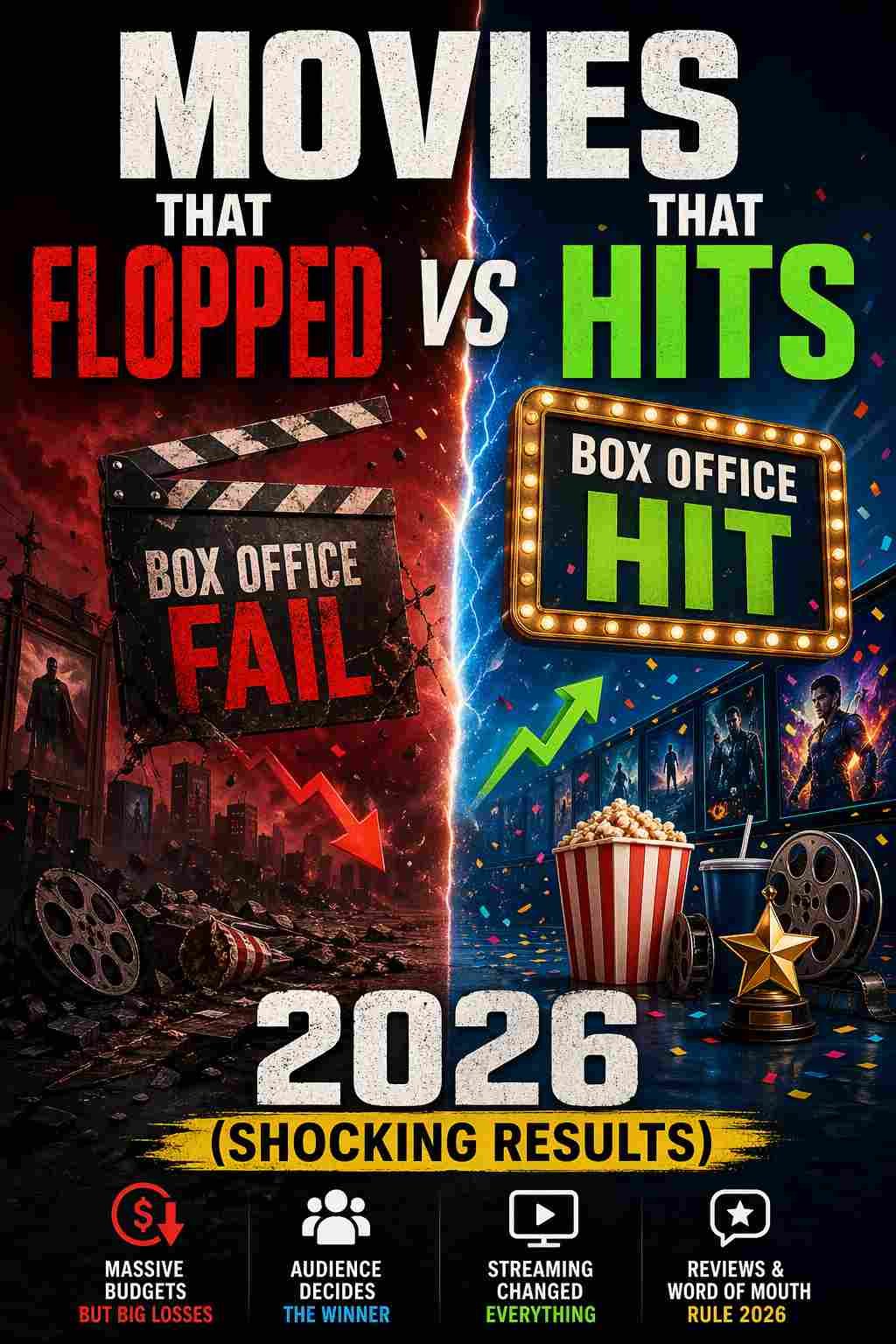
Movies That Flopped Vs Hits in 2026
What if the biggest movies of 2026 were not the ones that made the most money?
That question captures the strange reality of the film industry this year. Many people expected large studio releases to dominate the box office. These films had massive budgets, global marketing campaigns, and well-known actors. On paper, they looked like guaranteed successes. But the results told a very different story.
In 2026, several high-profile releases failed to meet expectations. Some struggled to recover even their production costs. At the same time, smaller films and unexpected titles rose to become box office hits. These movies did not rely on hype alone. They connected with audiences in a more meaningful way.
This contrast between movie flops 2026 and box office hits 2026 has raised important questions. Why do some films succeed while others fail despite similar resources? Why are audiences turning away from big franchises and choosing different types of content?
One major reason is the shift in audience behavior. Viewers today are more informed and selective. They rely on reviews, social media, and recommendations before deciding what to watch. A strong opening weekend is no longer enough. If a movie does not deliver, word spreads quickly and affects its performance.
Another factor is the growing influence of streaming platforms. Success is no longer measured only by ticket sales. A film can struggle in theaters but still gain popularity online. This has changed how we define highest grossing movies 2026 and overall success.
This blog explores the most surprising outcomes in movies 2026. It looks at both the biggest hits and the most shocking failures. It also explains the key reasons behind these results using real patterns and insights.
By the end, you will understand why the line between a hit and a flop has become so unpredictable.
Why 2026 Was a Turning Point for Movies
The year 2026 stands out as a major turning point in the film industry. The way movies succeed or fail has changed in ways that are hard to ignore.
For many years, box office numbers were the main measure of success. A film that earned high ticket sales was considered a hit. But in 2026, this idea started to shift. Streaming platforms began to play a much larger role. Films that did not perform well in theaters found new life online. This blurred the line between success and failure.
Another important change is the shift in audience expectations. Viewers are no longer impressed by big budgets alone. They want strong stories, relatable characters, and meaningful experiences. If a film fails to deliver these elements, it is quickly labeled as disappointing.
Trust in big studios has also declined. In the past, audiences would watch a movie simply because it was part of a popular franchise. Now, that trust is weaker. Many viewers feel that some franchises have become repetitive. This has led to a decline in automatic ticket sales for big releases.
Social media has added another layer to this change. Reviews and reactions spread within hours of a film’s release. A negative response can reduce audience interest almost immediately. On the other hand, positive feedback can turn a small film into a major success.
The debate of streaming vs box office has become more important than ever. Some movies are designed for theaters, while others perform better online. Studios now have to think carefully about where and how to release their films.
These movie industry trends 2026 show that success is no longer predictable. The rules have changed, and both filmmakers and audiences are adapting to this new reality.
The Biggest Box Office Hits of 2026
These movies were not supposed to win. But they did.
The biggest box office hits 2026 were not always the films with the largest budgets. Instead, many successful movies focused on strong storytelling and originality. They offered something fresh that audiences could connect with.
Some franchise films still performed well, but only when they delivered quality. Audiences showed that they are willing to support familiar stories if they feel engaging and well-made. However, brand name alone was not enough. Content quality became the deciding factor.
One interesting trend among the highest grossing movies 2026 was the rise of mid-budget films. These movies did not rely on heavy marketing. Instead, they grew through word of mouth. Viewers recommended them to friends, shared reviews online, and helped build momentum over time.
Streaming platforms also played a role in boosting these hits. Some films had moderate theatrical success but became extremely popular after moving online. This extended their reach and increased overall viewership.
Timing was another factor that helped certain movies succeed. Films released during less competitive periods had a better chance of gaining attention. Without major competition, they were able to attract larger audiences.
A common pattern among successful movies in 2026 includes:
- Strong and engaging storytelling
- Positive audience reviews
- Smart release timing
- Organic promotion through social media
These factors helped these films stand out in a crowded market.
The success of these hits shows that audiences are looking for more than just spectacle. They want meaningful entertainment that feels worth their time. This shift is shaping the future of movies 2026 and beyond.
The Most Shocking Movie Flops of 2026
Some of these films were expected to break records. Instead, they broke studios.
The movie flops 2026 included several high-budget releases that had everything needed for success on paper. Big stars, massive marketing campaigns, and strong franchise connections created very high expectations. Yet when the films were released, the response was far weaker than expected.
One of the main reasons behind these biggest movie failures 2026 was franchise fatigue. Many studios relied heavily on sequels, remakes, and extended universes. While these worked in earlier years, audiences in 2026 showed clear signs of exhaustion. The same storytelling patterns and predictable plots no longer felt exciting.
Overhype also played a major role. Some films were promoted as “must-watch” cinematic events. Trailers built extreme expectations, sometimes showing the best moments of the entire movie. When the actual film failed to match that level, audiences reacted negatively. This created a sharp drop in ratings after release.
Another issue was weak storytelling. Even with strong visual effects, many films lacked emotional depth. Audiences in 2026 have become more sensitive to writing quality. If characters feel flat or the story feels rushed, viewers quickly lose interest. This directly affected ticket sales and long-term performance.
Competition also contributed to several flops. Some films were released alongside stronger or more original titles. In such cases, even decent movies struggled to attract attention. Timing mistakes turned potential hits into failures.
Common reasons behind major flops included:
- Repetitive franchise formulas
- Weak or predictable storylines
- Over-promising in marketing campaigns
- Poor release timing against competitors
- Lack of emotional connection with audiences
These failures highlight a major shift in audience behavior. People are no longer impressed by scale alone. They want originality and meaning.
The shocking part is that many of these films still had strong opening weekends. But negative word of mouth spread quickly. Within days, interest dropped, showing how powerful audience feedback has become in shaping movie flops 2026.
Hit vs Flop – What Really Made the Difference?
The difference between success and failure in 2026 was not always obvious at first. Many films looked similar in scale, budget, and promotion. Yet their results were completely different. This raises an important question. What actually separates a hit from a flop?
The biggest factor is storytelling quality. Successful films focused on clear, engaging, and emotionally strong narratives. They gave audiences a reason to stay invested from start to finish. In contrast, many flops relied too heavily on visual effects or franchise identity without strong writing to support them.
Audience connection also played a major role. The biggest box office hits 2026 were films that made viewers feel something. Whether it was excitement, emotion, or curiosity, these movies created a lasting impact. Flops failed to build this connection, even if they looked impressive on screen.
Marketing expectations created another major difference. Some films were marketed as groundbreaking experiences. This built very high expectations. When the final product did not meet those expectations, disappointment spread quickly. In today’s environment, disappointment spreads faster than success.
Timing and competition also mattered. Films released at the right moment had a better chance of standing out. Others got lost in crowded release windows, making it harder to attract attention even if the content was decent.
Key differences between hit and flop movies 2026 include:
- Strong storytelling versus weak writing
- Emotional engagement versus visual dependency
- Balanced marketing versus overhype
- Smart timing versus poor release strategy
- Audience trust versus audience fatigue
The most important takeaway is that audiences are now in control. Their response decides the fate of a film faster than ever before. A movie is no longer judged only by critics or studios. It is judged in real time by viewers across the world.
This shift explains why blockbuster vs flop outcomes in 2026 became so unpredictable.
Real Case Studies (Side-by-Side Comparisons)
To understand the gap between movie hits and flops 2026, it is important to look at direct comparisons. In many cases, films with similar budgets, marketing power, and release scale ended up with completely opposite results. These side-by-side examples show how unpredictable the industry has become.
One major pattern is that success was not about resources. It was about execution. A well-funded movie could still fail if it did not connect with audiences. At the same time, a smaller or less expected film could rise quickly if it delivered a strong experience.
Case Study 1: Franchise Sequel vs Original Story
A big franchise sequel released with huge expectations and global promotion. It had established characters and a loyal fan base. However, the story felt repetitive and predictable. Audience feedback was mixed, and ratings dropped after opening weekend.
In contrast, an original mid-budget film released around the same time focused on fresh storytelling. It had no major franchise backing, but it offered emotional depth and a unique concept. Word of mouth spread quickly, turning it into one of the box office hits 2026.
Case Study 2: Visual Spectacle vs Emotional Story
Another comparison shows a heavy visual effects film that spent heavily on action sequences and CGI. While the visuals were impressive, the story lacked emotional weight. Viewers praised the visuals but did not return for repeat viewing.
Meanwhile, a smaller drama-focused film with limited effects gained strong audience loyalty. It performed steadily over time and became one of the surprising highest grossing movies 2026 due to consistent engagement and streaming popularity.
Key Patterns from These Comparisons
- Similar budgets did not guarantee similar outcomes
- Storytelling quality outweighed production scale
- Word of mouth had stronger impact than advertising
- Emotional connection drove long-term success
- Audience trust influenced final box office results
These examples clearly show that blockbuster vs flop outcomes in 2026 are shaped more by audience reaction than studio expectations.
The gap between success and failure is no longer about size. It is about connection, timing, and how well a film resonates after release.
The Role of Audience Behavior in 2026
“The audience is now the most powerful critic.”
This statement defines how movies 2026 are being shaped today. The behavior of viewers has changed so much that it directly decides whether a film becomes a hit or a flop within days of release.
One of the biggest changes is selective viewing. Audiences no longer watch movies automatically just because they are released. They research before watching. Reviews, ratings, trailers, and social media reactions all influence their decision. This has made it harder for weak films to survive.
Social media also plays a massive role. A single viral opinion can shift public interest. Positive reactions can boost a film overnight, while negative reviews can damage its performance very quickly. This speed of feedback was not as powerful in earlier years.
Another important factor is short attention span. Viewers are less patient with slow or poorly structured storytelling. If a film does not engage them early, they often lose interest or stop watching altogether. This affects both theater performance and streaming success.
Audiences in 2026 also demand originality. They are more open to new ideas and less impressed by repetitive formulas. This is one of the main reasons why movie flops 2026 often include predictable franchise films.
Key audience behavior trends include:
- Strong reliance on social media reviews
- Preference for originality over repetition
- Quick judgment after release
- High sensitivity to storytelling quality
- Influence of online communities and discussions
This shift means studios no longer control the narrative alone. Audiences shape the reputation of a film in real time.
As a result, understanding audience behavior movies has become just as important as making the movie itself.
Financial Impact – Hits vs Flops
The financial gap between hits and flops in 2026 has become wider and more unpredictable than ever before. A single film can now decide whether a studio earns massive profits or faces heavy losses. This is why understanding the economics behind movies 2026 is so important.
At first glance, box office numbers may seem like the only measure of success. But in reality, the full financial picture is much more complex. Production budgets, marketing costs, streaming deals, and long-term licensing all play a major role in determining whether a movie is truly successful.
Many of the biggest movie failures 2026 had extremely high budgets. Some films spent hundreds of millions on production and global promotion. When these movies failed at the box office, studios not only lost ticket revenue but also struggled to recover marketing expenses. This created massive financial pressure.
On the other hand, several box office hits 2026 delivered strong returns despite smaller budgets. These films were cost-efficient and relied more on storytelling than expensive production elements. Because of this, their profit margins were significantly higher compared to big-budget failures.
Streaming platforms also changed the financial game. A film that underperformed in theaters could still generate long-term revenue through streaming rights. This created a second chance for some movies, especially those that gained popularity after digital release.
Key financial differences between hits and flops include:
- High return on investment in successful films
- Heavy losses in over-budgeted flops
- Strong streaming performance saving weaker theatrical runs
- Merchandise and franchise value for successful titles
- Long-term earnings versus short-term losses
Another important factor is risk. Studios now face higher uncertainty because audience reactions are less predictable. A film can perform well in early screenings but drop quickly after release due to word of mouth.
This makes financial planning more complex than ever. Studios must balance creativity with financial safety, especially when investing in large-scale projects.
The reality of highest grossing movies 2026 is that profitability does not always match popularity. Some films earn less but still make more profit, while others earn more but still lose money due to high costs.
Lessons for Filmmakers and Studios
The results of movies flopped vs hits in 2026 offer clear lessons for the future of filmmaking. The industry is no longer driven by assumptions. It is driven by audience response, timing, and execution.
One of the most important lessons is the power of storytelling. No matter how large the budget is, a weak story will struggle. Audiences expect meaningful narratives, not just visual effects. This shift has become one of the defining movie industry trends 2026.
Another key lesson is the danger of franchise fatigue. Studios that rely too heavily on sequels and reboots risk losing audience interest. While franchises can still succeed, they must evolve and offer something new to stay relevant.
Understanding modern audiences is also critical. Viewers today are more informed and selective. They rely heavily on reviews and online discussions before making decisions. This means studios must focus on building trust, not just hype.
Smart release strategies have also become essential. Releasing a film at the wrong time can lead to poor performance, even if the content is strong. Competition and timing now play a major role in determining success.
Key lessons from 2026 include:
- Strong storytelling is more important than budget
- Audiences reject repetitive content
- Timing can decide a film’s success or failure
- Word of mouth is more powerful than marketing
- Audience trust is a long-term asset
Studios must also balance creativity with business decisions. Taking risks is important, but those risks must be guided by an understanding of audience behavior.
In the end, success in movies 2026 is no longer predictable. It depends on how well filmmakers understand the changing expectations of viewers.
The Unpredictable Future of Movies
The year 2026 has proven one clear truth about the film industry. Success is no longer guaranteed by money, fame, or franchise power. The line between hit and flop has become thinner and more unpredictable than ever.
From unexpected box office hits 2026 to shocking movie flops 2026, the industry has shown that audiences now hold the real power. Their reactions decide the fate of a film faster than any marketing campaign or studio prediction.
The biggest takeaway is simple. Creativity, authenticity, and audience connection matter more than scale. Films that understand this are thriving, while those that ignore it are struggling.
As we move forward, the film industry will continue to evolve. But one thing is certain. In 2026 and beyond, the audience does not just watch movies. They decide which ones survive.