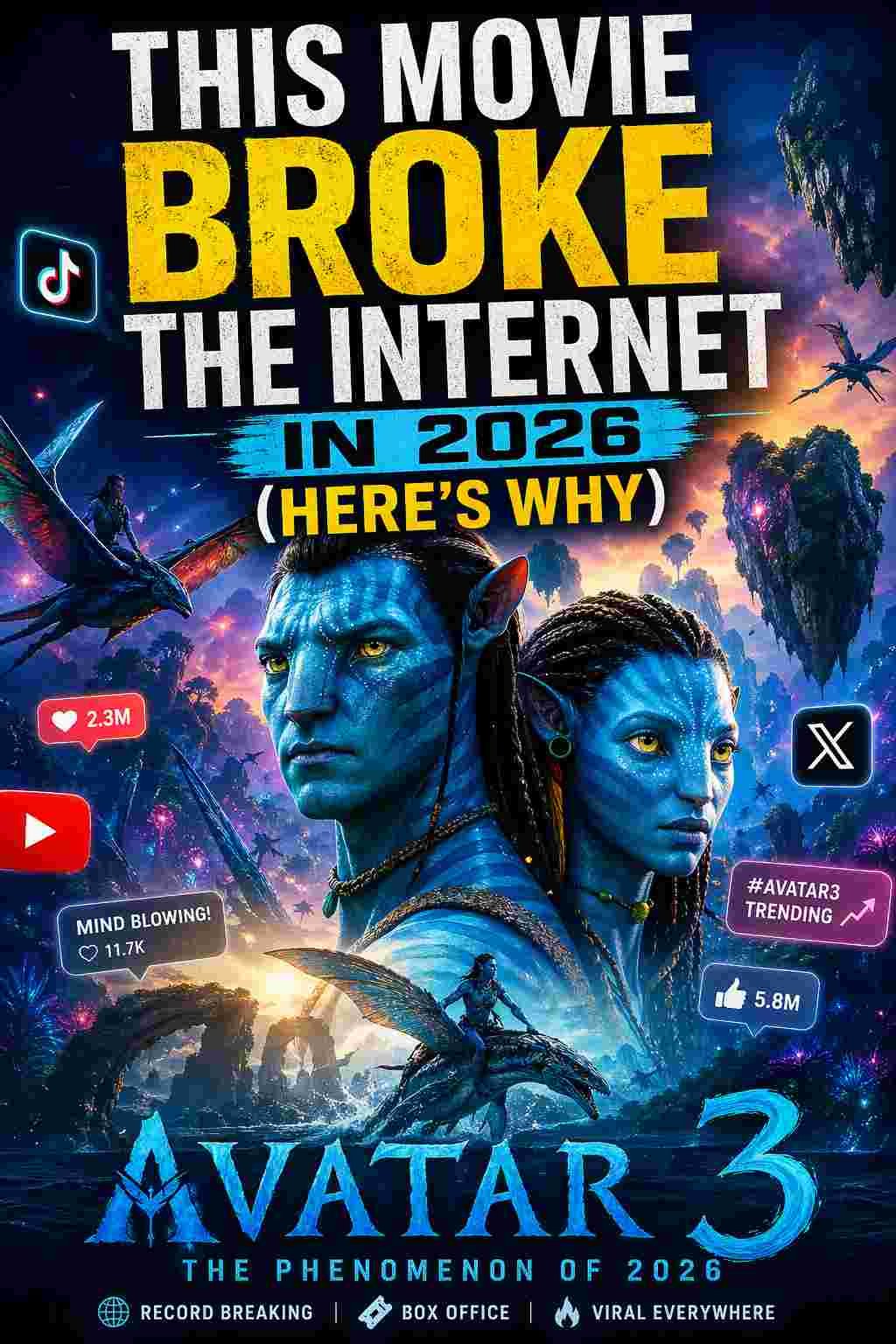
This Movie Broke the Internet in 2026
In 2026, one movie did more than dominate theaters. It took over the entire internet. From social media feeds to group chats, everyone seemed to be talking about the same thing. That movie was Avatar 3.
The scale of its impact was hard to ignore. Within days of release, clips from the film were everywhere. People shared reactions, reviews, and theories across platforms. Whether you opened TikTok or YouTube, the content looked the same. It was all about Avatar 3. This was not just another blockbuster. It became the biggest movie of 2026 and quickly earned the label of the movie that broke the internet.
What made this film different was not just its scale. Many movies release with high expectations. Few manage to turn that attention into a global online movement. Avatar 3 did exactly that. It created a moment where audiences felt they had to be part of the conversation. If you had not seen it, you were already behind.
The hype did not start on release day. It had been building for years. Fans followed every update closely. Small details became big discussions. By the time the movie arrived, the internet was ready. The excitement turned into action almost instantly.
This blog breaks down why Avatar 3 2026 reached that level. It looks at the hype, the strategy, the technology, and the audience behavior that turned a film into a worldwide event. If you want to understand how one movie managed to capture global attention and hold it for weeks, this is where it begins.
Years of Anticipation: The Hype Was Built to Explode
The success of Avatar 3 did not happen overnight. It was built over many years. After the earlier films in the franchise, audiences were already familiar with the world of Pandora. They knew the scale, the visuals, and the ambition behind the story. This created a strong foundation for future releases.
At the center of it all was James Cameron. His reputation played a major role in building trust and excitement. People expected something big because his previous films had already raised the bar. When news about Avatar 3 began to spread, it did not feel like a regular sequel. It felt like the next step in a larger vision.
Fans stayed engaged during the long gap between releases. They discussed theories, analyzed old scenes, and speculated about what could come next. Online communities kept the conversation alive. Even small updates became important. A leaked image or a short teaser could spark days of discussion.
This level of anticipation created emotional investment. Audiences were not just waiting for a movie. They were waiting for answers, for new experiences, and for a return to a world they cared about. That emotional connection made a big difference when the film finally arrived.
There were also rising expectations around the evolution of the franchise. People wanted to see how the story would grow. They expected deeper characters, new environments, and stronger conflicts. The idea was simple. If the earlier films set the standard, Avatar 3 had to go beyond it.
By the time the release date came close, the hype had reached a peak. It was not forced. It was built naturally over time. This is a key reason why Avatar franchise success continues to grow. The audience was already ready to watch, react, and share. All the film had to do was deliver.
Marketing Genius: How the Internet Was Engineered to Explode
The rise of Avatar 3 as the movie that broke the internet was not accidental. It was the result of a carefully planned marketing strategy. Every step was designed to build momentum and keep the audience engaged.
The campaign started with teaser trailers that revealed just enough to spark curiosity. Instead of giving away the full story, they focused on visuals and mood. This encouraged people to discuss what they saw. Each new teaser added more questions than answers, which kept the conversation active.
Countdown campaigns played a major role as well. As the release date approached, the frequency of content increased. Posters, short clips, and behind the scenes footage appeared regularly. This created a sense of urgency. People felt that something big was coming and they did not want to miss it.
Social media platforms became the main stage. On TikTok, short clips and reactions spread quickly. On YouTube, creators uploaded breakdowns, reviews, and predictions. Discussions on X kept trending topics alive for days. The movie stayed visible everywhere.
Influencers and content creators added another layer. They shared early reactions and exclusive insights. This helped reach different types of audiences. Some came for the visuals. Others came for the story. The marketing adapted to both.
One important detail was how the content was designed for sharing. Many clips were short, visually strong, and easy to repost. This made it simple for users to spread them across platforms. The result was a constant flow of content that kept the movie in public attention.
The key idea is clear. The internet was not surprised by Avatar 3 2026. It was prepared for it. The marketing strategy made sure of that.
Visual Revolution: Technology That Changed Cinema Forever
One of the biggest reasons Avatar 3 became the movie that broke the internet in 2026 was its visual power. From the first frame to the last, it delivered an experience that felt far ahead of anything audiences had seen before. People did not just watch it. They reacted to it in real time online.
The film pushed visual effects and CGI to a new level. Every environment looked detailed, alive, and physically real. Water, light, skin textures, and movement all felt carefully designed. This was not just improvement. It was a clear leap in cinematic technology. Viewers often said it looked more like a real place than a digital creation.
Compared to earlier entries in the franchise, the difference was noticeable. The world of Pandora felt larger and more detailed. Scenes flowed smoothly without breaking immersion. This made the experience more believable and emotionally engaging. It helped audiences stay fully inside the story without distraction.
A major part of this impact came from motion capture and advanced 3D techniques. The performances of the actors were translated into digital characters with extreme precision. Small facial expressions, eye movements, and emotional shifts were clearly visible. This added depth to every character interaction.
The visuals also created a strong “clip culture” moment online. Many scenes were screenshot-worthy. People paused, recorded, and shared moments across platforms like YouTube and TikTok. Even users who had not seen the full film were exposed to its visuals through viral clips.
Audience reactions were consistent. Many described the visuals as unreal or impossible. This reaction itself became part of the marketing cycle. The more people talked about how good it looked, the more others wanted to see it for themselves.
This visual revolution did not just support the story. It became part of the reason the film dominated online conversations. It set a new standard for what future blockbusters will be expected to deliver.
Storytelling That Hit Hard: More Than Just Visuals
While the visuals of Avatar 3 captured attention, the story is what kept audiences emotionally connected. This is one of the key reasons it became the movie that broke the internet in 2026. People did not only talk about how it looked. They talked about how it made them feel.
The film focused heavily on emotional depth. Characters were not just part of a larger world. They had personal struggles, relationships, and decisions that carried real weight. These emotional layers helped viewers connect with the story beyond the surface level.
One of the strongest elements was character development. Several characters went through clear transformations. Their choices were influenced by survival, loyalty, and identity. This made the story feel more grounded even in a visually extraordinary world. Audiences could understand motivations and conflicts without confusion.
The expansion of the Avatar universe also played an important role. New regions, cultures, and conflicts were introduced. This made the world feel larger and more complex. Instead of repeating ideas from earlier films, the story explored new directions while staying connected to its roots.
Core themes like nature, survival, and identity were central throughout the film. These themes were presented in a way that felt relevant and easy to understand. They gave the story meaning beyond action and visuals. This balance helped it appeal to both casual viewers and long time fans.
Another important factor was emotional payoff. Key moments were designed to build tension and release it in impactful ways. This created a strong reason for repeat viewing. Many audiences returned to experience those moments again, which added to the film’s popularity.
This combination of emotional storytelling and world expansion made Avatar 3 2026 more than just a visual experience. It gave audiences a reason to care, discuss, and stay connected long after the credits rolled.
The Viral Explosion: Memes, Trends, and Online Chaos
Once Avatar 3 hit theaters, it did not stay inside cinemas for long. It immediately spilled onto the internet and became the center of nonstop online activity. This is where it fully earned the title of the movie that broke the internet in 2026.
Social media platforms were flooded with reactions within hours of release. On TikTok, short clips of intense scenes and emotional moments started trending. On YouTube, creators uploaded breakdowns, reviews, and detailed analysis videos. Every corner of the internet seemed to be discussing the same film.
Memes played a huge role in spreading its popularity. Users took iconic scenes and turned them into humorous edits, captions, and remix content. Some memes focused on emotional moments, while others highlighted the visual intensity of certain scenes. This made the movie feel even more present in everyday online conversations.
Reaction videos also exploded. Viewers filmed themselves watching key scenes for the first time. Their shock, excitement, and emotional responses became part of the film’s digital identity. These reactions helped new audiences understand the scale of the experience before even watching the movie.
Fan communities added even more fuel. People created detailed theories about characters, hidden meanings, and possible future storylines. These discussions kept the movie alive long after the first wave of release. Even small details were analyzed and debated across forums and social platforms.
Hashtags related to Avatar 3 2026 trended for weeks. Each new wave of content brought the film back into online visibility. The conversation never fully stopped. Instead, it evolved from reactions to analysis, and then to ongoing speculation.
The key reason behind this viral explosion was participation. People were not just watching the movie. They were actively contributing to its online presence. This constant cycle of content creation and sharing is what kept it trending far beyond typical blockbuster timelines.
Box Office Domination: Numbers That Shocked the Industry
The success of Avatar 3 was not limited to online discussions. It also delivered massive results at the global box office. This combination of digital hype and real-world performance is what solidified its status as the movie that broke the internet.
From the first weekend, theaters reported record-breaking attendance. Tickets sold out quickly in multiple regions. Many cinemas added extra showtimes just to meet demand. The momentum continued for weeks as more audiences rushed to experience the film on the big screen.
International markets played a huge role in its success. The movie performed strongly across continents, showing that its appeal was truly global. Different audiences connected with different aspects of the story, but the overall response remained consistently strong everywhere.
A key factor behind this performance was repeat viewing. Many viewers watched the film more than once. Some returned to experience the visuals again. Others came back to better understand the story and emotional details. This behavior significantly boosted total revenue.
Social media also influenced ticket sales directly. Viral clips, trending discussions, and online hype created a sense of urgency. People did not want to miss what everyone was talking about. This FOMO effect pushed even hesitant viewers into theaters.
Compared to other major releases of 2026, Avatar 3 clearly stood at the top. It outperformed expectations and set new benchmarks for global box office performance. Industry analysts noted how rare it is for a film to dominate both online platforms and cinema revenue at the same time.
The financial success confirmed what the internet already showed. Avatar 3 2026 was not just popular. It was a worldwide event that reshaped what a blockbuster can achieve.
Cultural Impact: When a Movie Becomes a Movement
The influence of Avatar 3 went far beyond cinemas and box office numbers. It became a cultural force that shaped conversations, trends, and creative expression across the world. This is what truly turned it into the movie that broke the internet in 2026.
One of the most visible impacts was in fashion. Inspired designs started appearing shortly after release. Colors, patterns, and aesthetic elements drawn from the film’s world influenced clothing styles and digital artwork. Fans began recreating looks and sharing them online, turning cinematic visuals into real-world inspiration.
The gaming industry also felt the effect. Developers and creators referenced the film’s environments and design style in discussions and concept work. While not directly copying, many digital experiences began to reflect similar immersive world-building approaches. This showed how strongly the film influenced visual imagination in interactive media.
Digital art communities were especially active. Artists created thousands of interpretations of characters, environments, and emotional scenes. These artworks spread quickly across platforms like Instagram and TikTok, adding another layer to the film’s online presence. The movie became a source of creative inspiration rather than just entertainment.
Brand collaborations and marketing tie-ins also increased its cultural reach. Companies used the popularity of Avatar 3 2026 to connect with audiences through themed campaigns and promotional content. This helped the film stay visible even outside traditional movie discussions.
Pop culture references appeared everywhere. From casual conversations to online jokes, elements of the film entered daily language. Certain visuals and phrases became instantly recognizable even to people who had not watched the movie in full.
What made this impact special was its scale. It was not limited to one region or one audience group. It spread globally and quickly became part of digital culture. The film stopped being just a product and became a shared cultural moment.
The Power of the Internet: Why This Movie Went Beyond Cinema
The success of Avatar 3 shows how powerful the internet has become in shaping modern entertainment. It was not just a film release. It became a global digital event that lived and grew online every second.
In today’s world, content spreads instantly. Scenes, reactions, and opinions travel across platforms within minutes. Platforms like TikTok and YouTube played a major role in amplifying the movie’s reach. A single clip could reach millions of viewers in a very short time.
Audience behavior also changed how the film performed. Many people joined the conversation simply because they saw others talking about it. This created a strong FOMO effect. Not watching the movie felt like missing a global moment. That emotional pressure pushed more people to engage with it.
Another important factor was community viewing. Friends, families, and online groups discussed the movie together. Instead of isolated viewing experiences, it became a shared topic across social spaces. This increased engagement and extended its relevance beyond the theater experience.
The internet also allowed the movie to evolve after release. Discussions, theories, and reactions kept it alive long after the opening weekend. Unlike older films that fade quickly, Avatar 3 2026 continued to grow in visibility because of constant online interaction.
In simple terms, the movie did not just rely on traditional marketing or theater performance. It used the full power of digital connectivity. This is what transformed it into a global phenomenon and not just another blockbuster.
The Future of Movies: A New Standard Has Been Set
The impact of Avatar 3 has changed expectations for future films. It proved that modern cinema is no longer just about storytelling or visuals. It is about creating a full experience that extends into the digital world.
Hollywood will likely study this model closely. The combination of storytelling, technology, and internet engagement has set a new benchmark. Future films will be expected to deliver not just quality content, but also cultural relevance and online impact.
Audiences now expect more immersive visuals, stronger emotional stories, and deeper world-building. At the same time, marketing strategies will need to be more interactive. The success of Avatar 3 2026 shows that engagement before and after release is just as important as the film itself.
Studios may also invest more in community-driven promotion. Online discussions, fan theories, and social media trends are now part of the success formula. The line between audience and promotion has become much thinner.
This shift suggests that cinema is entering a new era. Movies are no longer isolated releases. They are global events that live across theaters, phones, and social platforms at the same time.
Why This Movie Truly Broke the Internet
Avatar 3 became more than just a film. It became a global digital phenomenon that redefined what it means to be successful in modern cinema.
Its rise was powered by anticipation, advanced technology, emotional storytelling, and massive online engagement. Every part of its journey contributed to its dominance. From theaters to social media, it stayed present everywhere.
The combination of hype, visuals, story, and internet culture is what made it stand out as the movie that broke the internet in 2026. It was not just watched. It was experienced, shared, and discussed on a global scale.
In the end, it proved one simple idea. Cinema today is not limited to the screen. It lives in conversations, reactions, and digital culture. And this is what happens when a movie fully connects with the power of the internet.