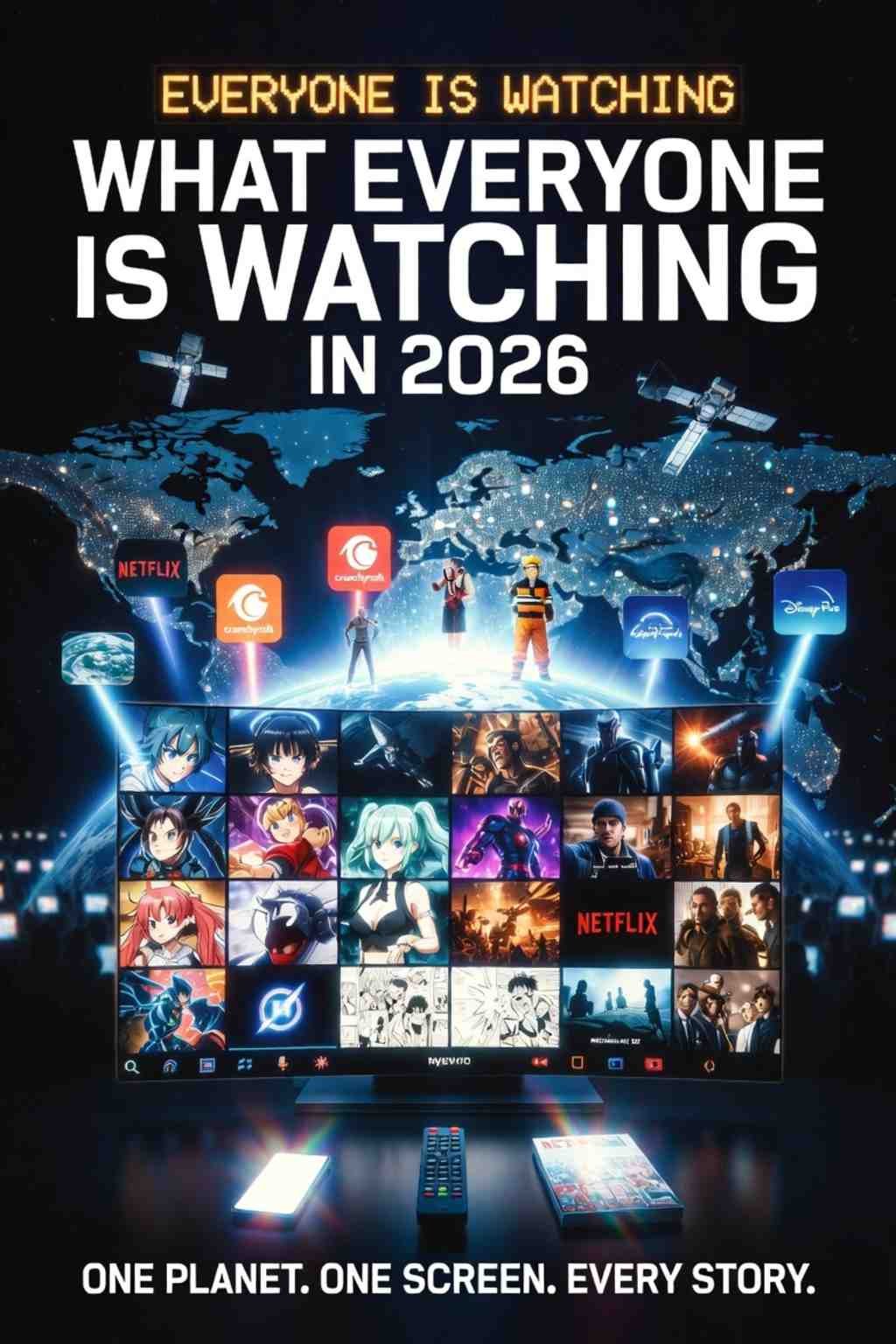
What Everyone Is Watching in 2026: Anime, Movies & Comics
What if your favorite anime, movie, and comic were all part of the same universe? That idea may sound unrealistic, but in 2026 it is becoming normal. The way people consume entertainment has changed completely. Viewers are no longer limited to one format. They move between anime, movies, and comics without even thinking about it.
If you look closely at what everyone is watching in 2026, you will notice a clear pattern. The boundaries between different types of content are fading. A story that starts as a manga can become an anime series. That same story can later turn into a global movie release. Fans follow it across every platform.
Streaming platforms have played a major role in this shift. Services like Netflix and Crunchyroll have made global content easily accessible. A viewer in one country can watch the same show at the same time as someone across the world. This has created a shared global culture around entertainment.
At the same time, fandoms have grown stronger. Online communities discuss theories, share reactions, and build hype before a show or movie even releases. This level of engagement has changed what becomes popular. It is no longer just about quality. It is about connection and community.
This blog explores what everyone is watching in 2026 and why these trends are dominating. From the rise of anime to the evolution of Hollywood movies and the growing influence of manga, everything is connected.
The biggest trend is not just what people are watching. It is how and why they are watching it.
Anime Has Taken Over the World
Anime is no longer a niche interest. It is one of the biggest forces in global entertainment. If you look at anime trends in 2026, the growth is impossible to ignore. Anime is now watched by millions across different countries and age groups.
One major reason for this rise is the success of anime movies. Films like Demon Slayer: Infinity Castle and Chainsaw Man – The Movie: Reze Arc are not just popular among anime fans. They are global events. These movies generate massive hype before release and perform strongly at the box office.
Streaming platforms have made anime more accessible than ever. Services like Crunchyroll and Netflix provide instant access to thousands of anime titles. This has allowed new viewers to explore anime without barriers. As a result, anime has reached audiences that were previously untouched.
Another important factor is nostalgia. Classic series continue to attract viewers even in 2026. Shows like Naruto, One Piece, and Dragon Ball remain highly relevant. Older fans return to these stories, while new fans discover them for the first time.
Anime also stands out because of its emotional storytelling. Unlike many traditional shows, anime often focuses on deep character development and long-term narratives. Viewers form strong connections with characters, which keeps them invested for years.
If you are wondering why anime is popular in 2026, the answer is simple. It offers a combination of storytelling, emotion, and accessibility that few other formats can match. This is why anime continues to dominate what everyone is watching in 2026.
Hollywood Is Playing It Safe
While anime is expanding creatively, Hollywood is moving in a different direction. If you examine popular movies in 2026, a clear trend appears. Studios are focusing heavily on sequels, franchises, and established brands.
Major releases like Avengers: Doomsday, Spider-Man: Brand New Day, and Toy Story 5 highlight this strategy. These films are built on existing success. They come with a built-in audience, which reduces financial risk for studios.
This approach is not random. Movie production costs have increased significantly. Studios prefer to invest in projects that are likely to succeed. Established franchises provide that safety. They already have loyal fanbases and strong brand recognition.
Another key trend is the rise of shared universes. Many movies are no longer standalone stories. They are part of larger interconnected worlds. This keeps audiences engaged over long periods. Viewers feel the need to watch every release to stay updated.
However, this strategy also raises an important question. Are movies becoming predictable, or are they simply becoming bigger? While these films deliver high-quality visuals and large-scale action, some viewers feel that originality is declining.
Despite this, these movies remain highly popular. They dominate box offices and generate massive online discussions. This proves that audiences still enjoy familiar stories, especially when they are presented on a larger scale.
In the context of what everyone is watching in 2026, Hollywood continues to play a major role. Even if the approach is safe, the impact is still huge.
Manga vs Comics – The Silent Takeover
If you want to understand manga vs comics in 2026, you need to look at how reading habits have changed. The shift is not loud or sudden. It is slow, steady, and global. But the outcome is clear. Manga is now outperforming traditional Western comics in both reach and influence.
One major reason is storytelling variety. Manga covers almost every genre you can think of. From romance and horror to psychological thrillers and fantasy, there is something for everyone. This wide range of themes makes manga more flexible and easier for new readers to enter.
Another important factor is how quickly manga gets adapted into anime. A successful manga often becomes an anime series within a short time. This creates a strong feedback loop. Readers discover manga through anime, and anime viewers go back to read the original source. This cycle keeps both formats growing together.
Popular franchises like Attack on Titan and Jujutsu Kaisen show how powerful this connection has become. These stories did not just succeed as manga. They became global entertainment phenomena through anime adaptation and worldwide streaming.
On the other hand, Western comics have faced challenges. Many long-running superhero stories have become complex for new readers. Large interconnected universes can feel difficult to enter without prior knowledge. This creates a barrier for casual audiences.
At the same time, superhero fatigue is becoming a real discussion point. Some readers feel that stories are repeating similar themes. This does not mean comics are disappearing. Instead, it means they are competing in a more crowded and demanding space.
In contrast, manga often feels more personal and focused. Many stories follow a clear beginning, middle, and end. This gives readers a complete experience without needing years of background knowledge.
If you look at what everyone is watching in 2026, manga plays a quiet but powerful role. It feeds both anime and global fandom culture. It is not just competing with comics. It is reshaping how visual storytelling works across the world.
Darker Stories Are Winning
Entertainment trends in 2026 show a clear shift toward darker and more emotional storytelling. Audiences are no longer satisfied with simple good versus evil narratives. They want complexity, realism, and emotional depth in the stories they follow.
This change is especially visible in anime and movies. Characters are no longer perfect heroes. They are flawed, conflicted, and often morally uncertain. This makes them feel more human and relatable. Viewers connect more deeply with stories that reflect real emotional struggles.
Anime has been at the center of this shift. Series like Chainsaw Man and Tokyo Ghoul explore darker themes such as identity, survival, and psychological trauma. These shows do not avoid uncomfortable topics. Instead, they use them to build stronger emotional impact.
This trend is not limited to anime. Movies and comics are also adopting more mature storytelling styles. Even mainstream entertainment is becoming more willing to explore emotional complexity and moral ambiguity.
One reason for this shift is audience maturity. Many viewers who grew up with older shows and franchises are now adults. Their taste in entertainment has evolved. They prefer stories that challenge them instead of simple predictable plots.
Another factor is emotional engagement. Darker stories often create stronger reactions. They stay in the viewer’s mind longer because they feel more real. This emotional depth is what drives rewatch value and fan discussion.
In 2026, entertainment is not just about escape anymore. It is also about reflection. People want stories that make them think, question, and feel something meaningful. This is why darker narratives are dominating what everyone is watching in 2026 and shaping the future of global entertainment.
Streaming Platforms Changed Everything
Streaming platforms have completely reshaped entertainment in 2026. The way people watch anime, movies, and even read adapted content is now controlled by digital platforms rather than traditional release systems. This shift has made entertainment faster, more global, and more personalized than ever before.
Platforms like Netflix, Disney+, and Crunchyroll have become the main gateways for global audiences. Instead of waiting for regional releases or cinema schedules, viewers now get instant access to content from around the world. This has removed almost all geographical barriers.
One of the biggest changes is the rise of binge watching culture. Entire seasons are released at once, allowing viewers to consume stories at their own pace. This has changed how shows are written. Writers now focus on keeping attention across long viewing sessions rather than weekly anticipation.
Algorithms also play a huge role in what everyone is watching in 2026. Streaming platforms track user behavior and recommend content based on viewing history. This creates a highly personalized experience. Two people on the same platform may see completely different recommendations.
Another important shift is global simultaneous releases. Major anime episodes and movie premieres are now launched worldwide at the same time. This reduces piracy and increases global hype. It also allows fans from different countries to experience stories together in real time.
Streaming has also influenced what types of stories get made. Platforms prefer content that keeps viewers engaged for longer periods. This has led to more serialized storytelling, especially in anime and long-form series.
In simple terms, streaming platforms have changed everything about how entertainment is consumed. They have turned viewing into an on-demand experience where control is fully in the hands of the audience.
The Rise of Cross-Media Universes
One of the most important entertainment trends in 2026 is the rise of cross-media storytelling. Stories no longer stay in one format. They move across manga, anime, movies, and even games, creating a complete entertainment ecosystem.
This transformation can be seen clearly in major franchises like Demon Slayer and One Piece. These stories do not exist in just one medium. They expand across multiple formats, each adding new layers to the narrative.
A typical journey now looks like this. A story begins as a manga. If it becomes popular, it is adapted into an anime. After gaining global success, it may turn into a feature film or even a video game. Each version reaches a different type of audience while keeping the same core story.
This system has completely changed how fans interact with content. Viewers are no longer just watching a story. They are following it across different platforms. This creates stronger emotional investment and long-term engagement.
Cross-media universes also help build global franchises. A single story can now generate billions in revenue across multiple industries. Merchandise, streaming rights, films, and games all contribute to the same ecosystem.
Another key impact is accessibility. Some fans discover a story through anime, while others start with manga or even games. This allows entry from multiple points, making franchises easier to grow internationally.
In 2026, entertainment is no longer linear. It is interconnected. Stories are designed to expand, evolve, and adapt across platforms. This is why cross-media universes are shaping what everyone is watching in 2026 and redefining how modern storytelling works.
Fandom Culture Is Stronger Than Ever
Fandom culture in 2026 has become one of the most powerful forces in entertainment. What people choose to watch is no longer driven only by studios or creators. It is heavily influenced by online communities and global fan engagement.
Social media platforms play a major role in this shift. Discussions, reactions, and theories spread instantly across the internet. A single trailer or episode can go viral within hours. This creates massive hype even before official releases.
Fans are not just passive viewers anymore. They actively shape how stories are perceived. They create fan art, edit videos, write theories, and build entire communities around their favorite shows. This level of engagement keeps content alive long after release.
Cosplay culture has also grown significantly. Fans physically represent their favorite characters at conventions and online events. This strengthens the emotional connection between audiences and fictional worlds.
Fandoms also influence production decisions. Studios pay attention to audience reactions on social media. Popular demand can affect story directions, spin-offs, and even character development.
In 2026, fandoms are no longer secondary. They are part of the entertainment system itself. They drive visibility, popularity, and even financial success.
This is why understanding fandom culture is essential to understanding what everyone is watching in 2026. The audience is no longer just consuming content. They are actively shaping it.
The Future of Entertainment
What everyone is watching in 2026 is not defined by a single genre or platform. It is defined by connection. Anime, movies, and comics are no longer separate worlds. They now form one interconnected entertainment ecosystem where stories move freely across formats and audiences follow them everywhere.
Across all the trends we explored, one pattern is clear. Entertainment is becoming more unified. Anime is no longer just Japanese animation. Hollywood movies are no longer just cinema releases. Comics are no longer just printed stories. Everything is merging into a shared global experience.
The success of franchises across different formats shows this clearly. A story can start in manga, become an anime, expand into a movie, and continue in games or spin-offs. This is not a rare case anymore. It is becoming the standard way entertainment is built in 2026.
Another major shift is audience behavior. Viewers are more involved, more emotional, and more connected than ever before. They do not just watch content. They follow it, discuss it, and shape it. This is why fandoms and streaming platforms have become so powerful in deciding what becomes popular.
Looking ahead, this trend will only grow stronger. We will likely see more crossovers between anime and Hollywood. More global collaborations between studios. And more stories designed from the beginning to exist across multiple formats.
The biggest takeaway from everything is simple. Entertainment is no longer about choosing between anime, movies, or comics. It is about experiencing all of them together as one continuous world.
In 2026, watching content is not just entertainment anymore. It is participation in a global storytelling universe that never stops expanding.