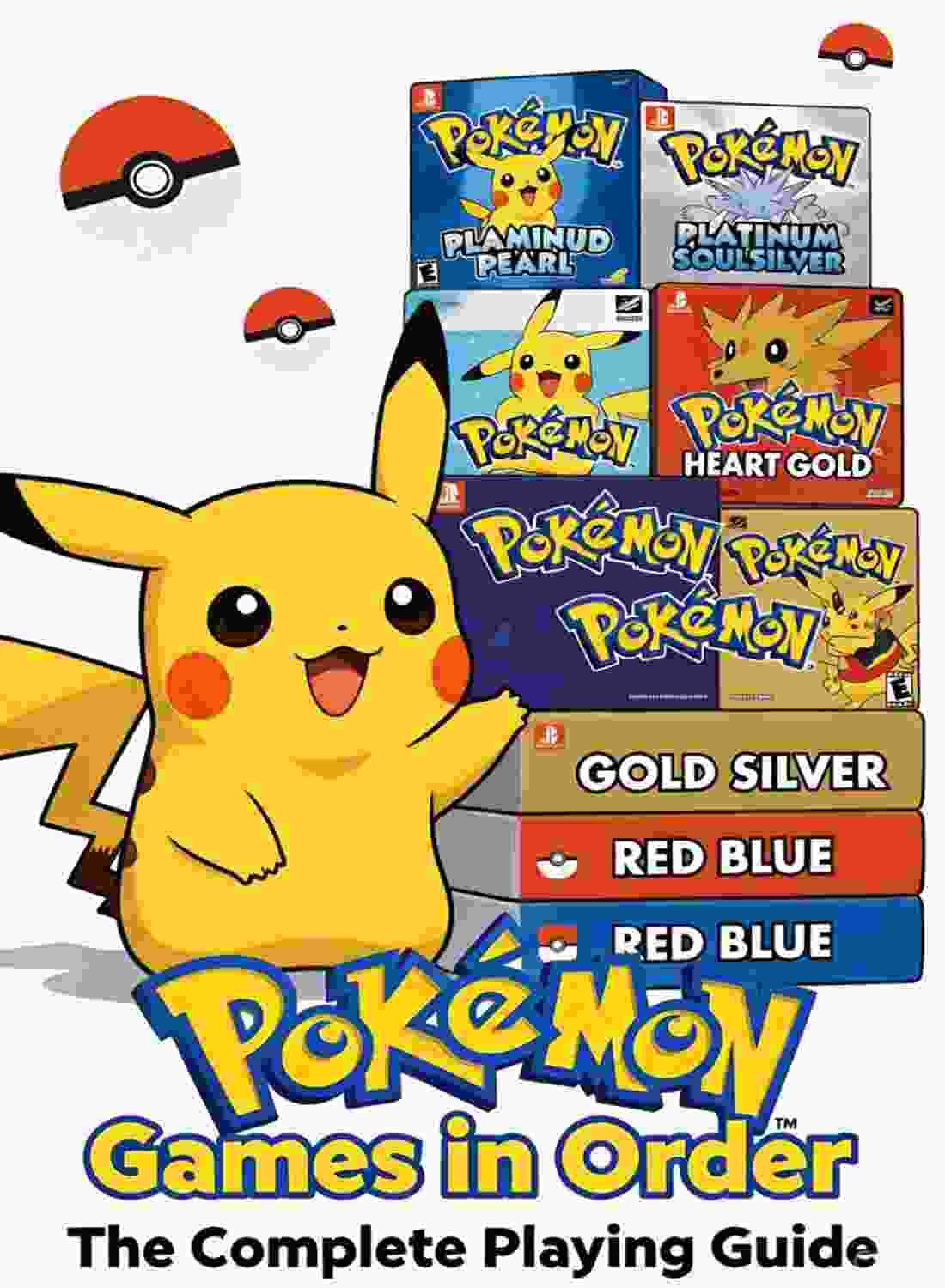
Pokémon Games in Order: The Complete Playing Guide
Pokémon is one of the longest running and most successful gaming franchises in the world. Since its first release in the 1990s, Pokémon has expanded into dozens of games across multiple generations, consoles, and formats. For new players and even returning fans, figuring out the correct Pokémon games in order can feel confusing and overwhelming.
This guide is designed to solve that problem completely.
Whether you are playing Pokémon for the first time or returning after years away, this article explains the Pokémon games in order in a clear and logical way. It covers every main series Pokémon game, important remakes, and essential spin off titles. By the end of this guide, you will know exactly how to play Pokémon games in order and which titles best fit your experience level.
This guide focuses on clarity, enjoyment, and understanding the evolution of Pokémon over time. You do not need to play every game to enjoy the franchise, but following a structured Pokémon game order helps you understand regions, mechanics, legendary Pokémon, and overall progression much more naturally.
Why Playing Pokémon Games in Order Actually Matters
Many people assume that Pokémon games can be played in any order. While this is partly true, playing Pokémon games in order offers several clear advantages, especially for beginners.
One of the biggest challenges new players face is understanding the growing number of mechanics. Early Pokémon games introduce systems slowly. Later games build on these systems and add complexity. If you start with a modern title, you may feel overwhelmed by features that earlier games explain step by step.
Playing Pokémon games in order also helps you understand how regions connect. Each generation introduces a new region with its own culture, Pokémon species, and legendary creatures. When played in sequence, you can see how the Pokémon world expands and evolves over time.
Another important reason is mechanical progression. Features like abilities, held items, breeding, online battles, and regional forms did not exist in the earliest games. Playing in order allows you to learn these systems naturally instead of all at once.
Even though Pokémon games are mostly standalone stories, following a Pokémon games timeline improves enjoyment. You gain appreciation for how far the series has come and why certain changes were made.
Are Pokémon Games Connected by Story?
Pokémon games exist in a shared universe, but each region tells its own story. You do not need to complete earlier games to understand later ones. However, recurring characters, themes, and legendary Pokémon appear across generations.
Some characters reappear as champions, gym leaders, or researchers. Certain legendary Pokémon are referenced across multiple games. Playing Pokémon games in order helps you recognize these connections and understand their significance.
What Are Pokémon Generations and Why They Matter
A Pokémon generation refers to a group of games released during the same development era. Each generation introduces a new region, new Pokémon species, and major gameplay changes.
Generations are the foundation of the Pokémon games list. Understanding generations makes the Pokémon game order much easier to follow.
Each generation usually includes:
- A main pair of games
- Sometimes a third enhanced version
- Possible remakes of older games
- New battle mechanics and features
Generations often align with new consoles. As hardware improved, Pokémon games became more visually detailed and mechanically complex.
How Generations Shape the Pokémon Experience
Every generation defines the Pokémon experience in a unique way.
Starter Pokémon reflect the region’s theme. Gym structures and challenges change over time. Legendary Pokémon represent the story and mythology of each region. New battle systems refresh gameplay while keeping the core formula familiar.
By playing Pokémon games in order, you experience these changes gradually instead of all at once.
Pokémon Games in Release Order Explained Generation by Generation
This section covers the Pokémon games in release order, which is the most complete way to understand the franchise. This order shows how Pokémon evolved from simple beginnings into a global phenomenon.
Generation 1 Pokémon Games
Generation One introduced the world to Pokémon.
The original games were Pokémon Red and Blue. These titles take place in the Kanto region and establish the core gameplay loop. You catch Pokémon, train them, battle gym leaders, and challenge the Elite Four.
Starter Pokémon include Bulbasaur, Charmander, and Squirtle. These starters define the grass, fire, and water balance that continues throughout the series.
Pokémon Yellow followed as an enhanced version inspired by the anime. Pikachu follows the player and the story closely mirrors the television series.
Core mechanics in Generation One are simple. There are no abilities, held items, or breeding systems. This simplicity makes Generation One an excellent starting point for understanding Pokémon fundamentals.
Generation 2 Pokémon Games
Generation Two expanded the Pokémon world significantly.
Pokémon Gold and Silver introduced the Johto region and added one hundred new Pokémon. These games introduced breeding, held items, and a day and night system.
One of the most important features of Generation Two is the return to Kanto after completing the Johto story. This created a sense of continuity rarely seen in games at the time.
Pokémon Crystal refined the experience with improved animations and a stronger story focus on the legendary Pokémon Suicune.
Generation Two solidified Pokémon as a long term franchise rather than a short lived trend.
Generation 3 Pokémon Games
Generation Three marked a technical reset for Pokémon.
Pokémon Ruby and Sapphire take place in the Hoenn region and introduce abilities and natures. These features add strategic depth to battles and training.
Pokémon Emerald serves as the enhanced version, offering a more balanced story and the Battle Frontier, which is one of the most challenging post game features in the series.
FireRed and LeafGreen are remakes of Generation One. They retell the Kanto adventure with updated mechanics and visuals. For many players, these remakes are the best way to experience the original Pokémon games.
Generation Three is often recommended for players who want both classic structure and modern mechanics.
Generation 4 Pokémon Games
Generation Four brought Pokémon to the Nintendo DS and introduced major mechanical changes.
Pokémon Diamond and Pearl take place in the Sinnoh region. These games introduced online trading and battling, which changed how players interacted globally.
Pokémon Platinum improved pacing, story depth, and battle variety. It is widely considered the definitive Sinnoh experience.
HeartGold and SoulSilver are remakes of Generation Two. These games combine Johto and Kanto with modern mechanics and improved visuals. Pokémon follow the player, creating a strong sense of connection.
Generation Four is loved for its balance of challenge, storytelling, and content depth.
Generation 5 Pokémon Games
Generation Five focused heavily on storytelling.
Pokémon Black and White introduce the Unova region and feature only new Pokémon until the post game. This creates a fresh experience for longtime players.
These games explore themes of truth, ideals, and the relationship between humans and Pokémon.
Black 2 and White 2 are direct sequels rather than enhanced versions. They continue the story and show how the region has changed over time.
Generation Five stands out for its narrative ambition and character development.
Generation 6 Pokémon Games
Generation Six transitioned Pokémon fully into 3D.
Pokémon X and Y take place in the Kalos region and introduce Mega Evolution. This mechanic allows certain Pokémon to temporarily gain new forms and abilities during battle.
Omega Ruby and Alpha Sapphire are remakes of Generation Three. They include Mega Evolution and expanded story elements related to legendary Pokémon.
Generation Six made Pokémon more accessible to new players while modernizing visuals and systems.
Generation 7 Pokémon Games
Generation Seven introduced major structural changes.
Pokémon Sun and Moon take place in the Alola region. Traditional gyms are replaced by island trials and kahunas. This changes progression and pacing significantly.
Regional forms are introduced, showing how Pokémon adapt to different environments.
Ultra Sun and Ultra Moon expand the story and add additional content. These games are enhanced versions rather than sequels.
Generation Seven focuses on experimentation and regional identity.
Generation 8 Pokémon Games
Generation Eight marks Pokémon’s move to the Nintendo Switch.
Pokémon Sword and Shield take place in the Galar region. The Wild Area introduces semi open exploration and visible Pokémon encounters.
Expansion passes replace traditional third versions. These expansions add new areas, Pokémon, and storylines.
Generation Eight focuses on accessibility, online features, and large scale environments.
Generation 9 Pokémon Games
Generation Nine fully embraces open world design.
Pokémon Scarlet and Violet take place in the Paldea region. Players can explore freely and tackle objectives in any order.
Terastallization introduces a new battle mechanic that changes Pokémon types temporarily.
Generation Nine represents the future direction of Pokémon games, emphasizing freedom and exploration.
Best Pokémon Game Order for Beginners
Release order is not always ideal for new players. Some older games lack quality of life features that modern players expect.
A recommended Pokémon game order for beginners focuses on accessibility and learning curve.
A beginner friendly path might include:
- FireRed or LeafGreen
- HeartGold or SoulSilver
- Omega Ruby or Alpha Sapphire
- Sword or Shield
- Scarlet or Violet
This order introduces mechanics gradually while offering modern improvements.
Beginner Friendly Pokémon Games
Remakes are often better starting points than originals. They retain classic stories while improving graphics, menus, and pacing.
Modern Pokémon games also include tutorials, experience sharing, and smoother progression.
Pokémon Remakes, Third Versions, and Enhanced Games
Pokémon remakes retell older adventures using newer engines and mechanics. They are not simply graphical updates. They often include new story elements and features.
Third versions such as Emerald, Platinum, and Crystal refine earlier games with improved balance and additional content.
Enhanced versions like Ultra Sun and Ultra Moon expand the original story and add new challenges.
Choosing between originals and remakes depends on preference, but remakes are usually more accessible.
Are Remakes Better Than Originals?
Remakes offer:
- Improved graphics
- Faster gameplay
- Modern mechanics
- Better accessibility
Originals offer nostalgia and historical value but may feel dated.
Special Pokémon Games You Should Know About
Some Pokémon games do not fit neatly into standard categories.
Emerald, Platinum, and Crystal provide definitive versions of their generations.
Expansion based games like Sword and Shield add content over time instead of releasing a third version.
These games are optional but valuable for players seeking deeper experiences.
Pokémon Spin Off Games Worth Playing
Spin off Pokémon games offer different gameplay styles.
The Pokémon Legends series focuses on exploration and historical settings.
Pokémon Mystery Dungeon emphasizes story and dungeon crawling.
Pokémon GO brings Pokémon into the real world through mobile gameplay.
These games are optional but expand the Pokémon universe in meaningful ways.
How to Play Pokémon Games Today on Modern Consoles
The Nintendo Switch offers the widest selection of modern Pokémon games.
Older games can be played through original cartridges, remakes, or official digital releases when available.
Legal access options change over time, so checking official sources is important.
Complete Pokémon Games Order Checklist
For quick reference, the Pokémon games in order by generation:
- Red, Blue, Yellow
- Gold, Silver, Crystal
- Ruby, Sapphire, Emerald, FireRed, LeafGreen
- Diamond, Pearl, Platinum, HeartGold, SoulSilver
- Black, White, Black 2, White 2
- X, Y, Omega Ruby, Alpha Sapphire
- Sun, Moon, Ultra Sun, Ultra Moon
- Sword, Shield, expansions
- Scarlet, Violet
This checklist helps track progress and plan your journey.
Final Thoughts on Playing Pokémon Games in Order
There is no single correct way to play Pokémon. The Pokémon game order is a guide, not a rule.
Playing Pokémon games in order helps you understand mechanics, regions, and the evolution of the franchise. However, enjoyment matters more than perfection.
Whether you start with a classic or jump into a modern title, Pokémon offers a world of exploration, friendship, and discovery.
Use this guide as a roadmap, take your time, and enjoy the journey. Pokémon is not about rushing to the end. It is about the adventure along the way.