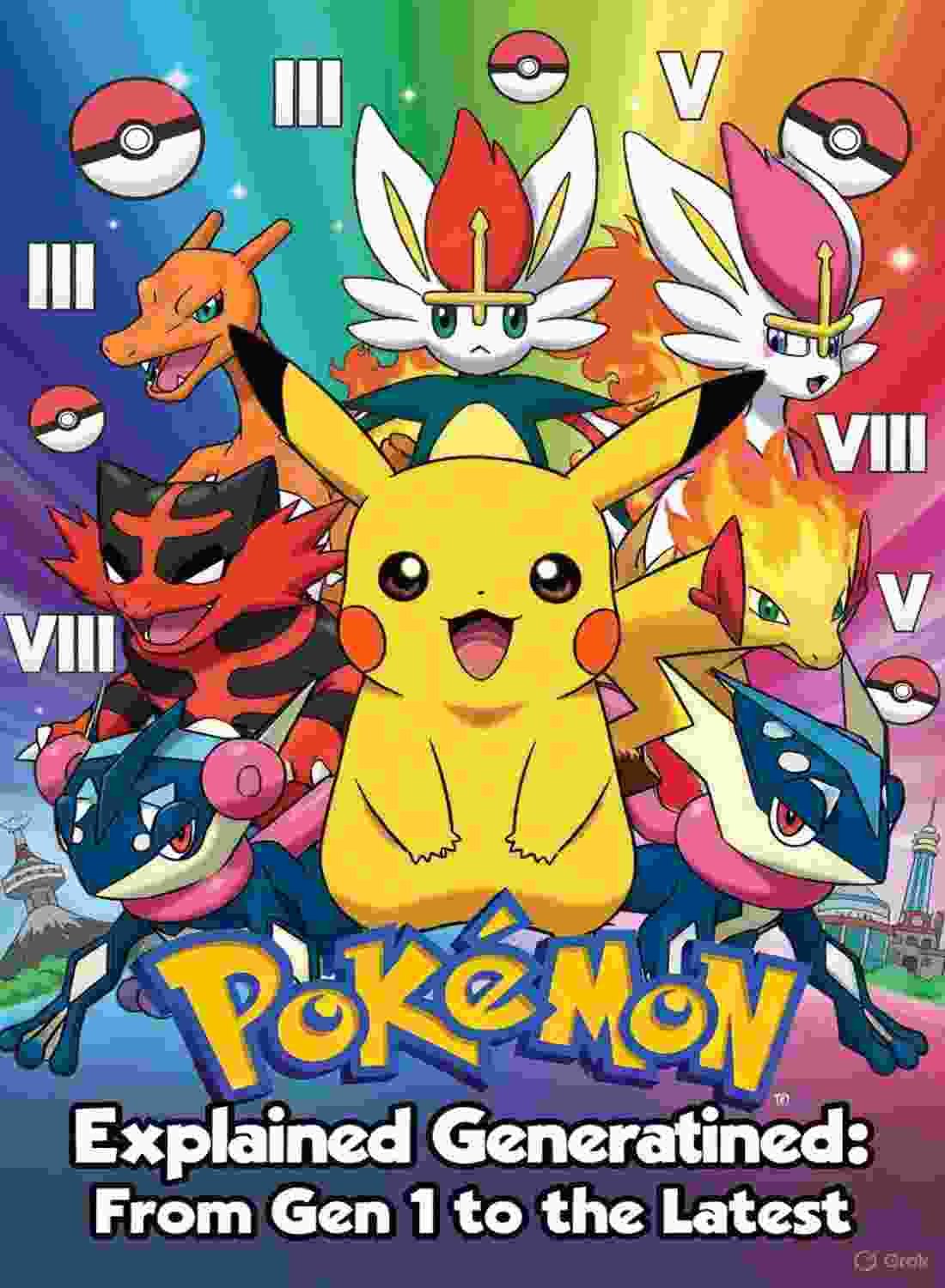
Pokémon Generations Explained: From Gen 1 to the Latest
Pokémon is one of the most popular and enduring franchises in the world. Since its first release in 1996, it has captured the hearts of millions of fans. Pokémon generations are groups of games released in chronological order that introduce new regions, Pokémon, and gameplay mechanics. Understanding these generations helps fans and players appreciate the evolution of the Pokémon universe. Each generation brings something new to the table. Some generations focus on innovative game mechanics. Others introduce new Pokémon that become instant fan favorites. Over the years, the Pokémon series has grown in complexity, creativity, and appeal. Whether you are a beginner or a long-time fan, exploring each generation shows how the games, Pokémon, and culture have changed. This guide will take you from Generation 1 all the way to Generation 9. You will learn about the key Pokémon, innovations, and impact of each generation.
Generation 1: Red, Blue, Green, Yellow – Kanto
Generation 1 laid the foundation for the entire Pokémon franchise. The games were released in 1996 in Japan as Red and Green, and later as Blue and Yellow. Players first entered the Kanto region, a vibrant world filled with 151 original Pokémon. Iconic Pokémon like Pikachu, Charizard, Bulbasaur, and Mewtwo were introduced.
Key Features
The games featured turn-based battles and Gym challenges. Players captured Pokémon, trained them, and battled Gym Leaders to earn badges. This system encouraged strategy, as players had to consider type advantages and team balance.
Gameplay Innovations
Generation 1 introduced the core mechanics that remain central to Pokémon today. Players could capture wild Pokémon, evolve them, and engage in battles. Trading Pokémon with friends became essential to complete the Pokédex. Competitive play also began with early tournaments and friendly battles.
Cultural Impact
The popularity of Generation 1 went beyond video games. Pokémon cards, animated series, and merchandise created a global phenomenon. Pikachu became a cultural icon, representing the franchise worldwide. The games inspired generations of players and set the stage for all future Pokémon adventures.
Must-catch Pokémon: Pikachu, Charizard, Bulbasaur
Iconic Features: Pokémon League, Gyms, Trading
Generation 2: Gold, Silver, Crystal – Johto
Generation 2 expanded the Pokémon universe with the Johto region. Released in 1999, these games added 100 new Pokémon, including Togepi, Lugia, and Ho-Oh. This generation also connected to Kanto, allowing players to revisit the original region after completing Johto.
Key Features
New features included Pokémon breeding, held items, and gender differences. The games introduced a day and night cycle, which affected Pokémon encounters and events. Players could now raise and breed Pokémon to create stronger teams.
Gameplay Innovations
Generation 2 added depth to strategy with items and moves that influenced battles. The ability to breed Pokémon allowed for better customization and planning. Seasons changed the game world and influenced which Pokémon appeared.
Connection to Gen 1
Returning to Kanto gave players a sense of continuity and nostalgia. Trainers could challenge the original eight Gym Leaders again, now with stronger teams and new strategies. This link created one of the most memorable gameplay experiences in the series.
Must-catch Pokémon: Togepi, Umbreon, Tyranitar
New Features: Breeding, Two Regions, Time-based Events
Generation 3: Ruby, Sapphire, Emerald – Hoenn
Generation 3 brought vibrant graphics and a new region, Hoenn. Released in 2002, these games introduced 135 new Pokémon, including Mudkip, Rayquaza, and Blaziken. The storylines became more detailed and included unique regional challenges.
Key Features
Double battles allowed two Pokémon on each side to fight at once, adding complexity to strategy. The abilities system gave Pokémon unique traits, further increasing tactical possibilities. Contests provided alternative ways to use Pokémon skills.
Gameplay Innovations
Players could create secret bases, customize them, and explore with friends. The Hoenn games also offered online features in later remakes, allowing battles and trades across distances. The combination of improved graphics, new mechanics, and engaging storylines made Generation 3 memorable.
Must-catch Pokémon: Swampert, Rayquaza, Gardevoir
New Mechanics: Abilities, Nature, Double Battles
Generation 4: Diamond, Pearl, Platinum – Sinnoh
Generation 4 marked the transition to the Nintendo DS. Released in 2006, the Sinnoh region introduced 107 new Pokémon, including Lucario, Garchomp, and Dialga. Improved graphics and online capabilities made the games more interactive.
Key Features
The physical and special move split added depth to battles. Players could now trade and battle online, expanding the competitive scene. Sinnoh also included new evolutions for older Pokémon, giving them fresh relevance.
Gameplay Innovations
Storylines became more detailed, with a focus on legendary Pokémon and regional myths. The improved battle system allowed for more strategic planning. Online interactions created a broader community of players.
Must-catch Pokémon: Lucario, Garchomp, Palkia
New Mechanics: Online Trading, Physical/Special Split
Generation 5: Black, White, Black 2, White 2 – Unova
Generation 5 emphasized storytelling and introduced a completely new set of Pokémon. Released in 2010, the Unova region featured 156 new Pokémon, including Zekrom, Reshiram, and Snivy.
Key Features
Animated sprites brought Pokémon to life. Seasonal changes affected the game world and Pokémon encounters. Rotation battles introduced a new type of tactical combat.
Gameplay Innovations
Generation 5 designs were inspired by real-world animals, myths, and legends. Strategy and story were both central to gameplay. This generation pushed the franchise toward a more narrative-driven experience.
Must-catch Pokémon: Zekrom, Reshiram, Emboar
New Features: Seasonal Changes, Rotation Battles
Generation 6: X, Y – Kalos
Generation 6 was the first mainline Pokémon game to use 3D graphics. Released in 2013, the Kalos region introduced 72 new Pokémon, including Greninja, Xerneas, and Yveltal.
Key Features
Mega Evolutions allowed certain Pokémon to temporarily evolve into stronger forms during battle. The games also introduced regional forms for existing Pokémon.
Gameplay Innovations
Players could customize their avatars and enjoy enhanced graphics. Online features improved global connectivity. Battles became more dynamic with 3D effects and strategic depth.
Must-catch Pokémon: Greninja, Sylveon, Talonflame
New Features: Mega Evolutions, 3D Battles
Generation 7: Sun, Moon, Ultra Sun, Ultra Moon – Alola
Generation 7 focused on island regions and new variants. Released in 2016, the Alola region introduced 81 new Pokémon, including Rowlet, Decidueye, and Solgaleo.
Key Features
Z-Moves offered powerful, one-time-use attacks. Alolan forms gave familiar Pokémon a regional twist. Traditional Gyms were replaced with island challenges.
Gameplay Innovations
Storytelling and Pokémon interactions were emphasized. Players faced unique trials instead of standard Gyms. The games encouraged exploration and connection with Pokémon in new ways.
Must-catch Pokémon: Decidueye, Incineroar, Primarina
New Features: Z-Moves, Island Trials
Generation 8: Sword, Shield – Galar
Generation 8 marked the move to the Nintendo Switch. Released in 2019, the Galar region introduced 89 new Pokémon, including Grookey, Zacian, and Dragapult.
Key Features
Dynamax and Gigantamax allowed Pokémon to grow enormous during battles. The Wild Area offered open-world exploration and online interaction.
Gameplay Innovations
Players could roam freely in certain areas, encountering Pokémon in natural habitats. Online trading and battling were fully integrated into the game. Generation 8 focused on accessibility and immersive exploration.
Must-catch Pokémon: Rillaboom, Dragapult, Zacian
New Features: Dynamax, Open-World Areas
Generation 9: Scarlet, Violet – Paldea
Generation 9 introduced a fully open-world design. Released in 2022, the Paldea region added new Pokémon, including Sprigatito, Koraidon, and Miraidon.
Key Features
The Terastal phenomenon transformed Pokémon during battles, changing their type and boosting abilities. Players could explore towns, forests, and mountains without restrictions.
Gameplay Innovations
Open-world mechanics increased player freedom. Strategic battle options were expanded with Terastal forms. This generation emphasized exploration, discovery, and innovation.
Must-catch Pokémon: Koraidon, Miraidon, Meowscarada
New Features: Terastal Forms, Open-World Mechani
Comparative Analysis Across Generations
Over nine generations, Pokémon gameplay and graphics have evolved significantly. Each generation introduced unique Pokémon, mechanics, and regions. Trends in design show increasing creativity and strategic depth. Fan engagement has grown with online features and competitive play. Cultural impact remains strong, with each generation creating new fan favorites and memorable experiences.
Most innovative generations: 1, 3, 5, 8
Fan-favorite Pokémon and regions: Pikachu, Charizard, Rayquaza, Lucario, Zacian
Evolution of battle mechanics: Breeding, Abilities, Mega Evolutions, Dynamax, Terastal Forms
Pokémon has grown from a simple game in Kanto to a rich universe spanning nine generations. Each generation brought unique Pokémon, gameplay mechanics, and regions. Players have enjoyed capturing, training, and battling Pokémon for decades. The franchise continues to innovate while maintaining its core appeal. Exploring all generations gives players a full appreciation of the Pokémon world. Pokémon remains a global phenomenon that connects players of all ages and backgrounds.