
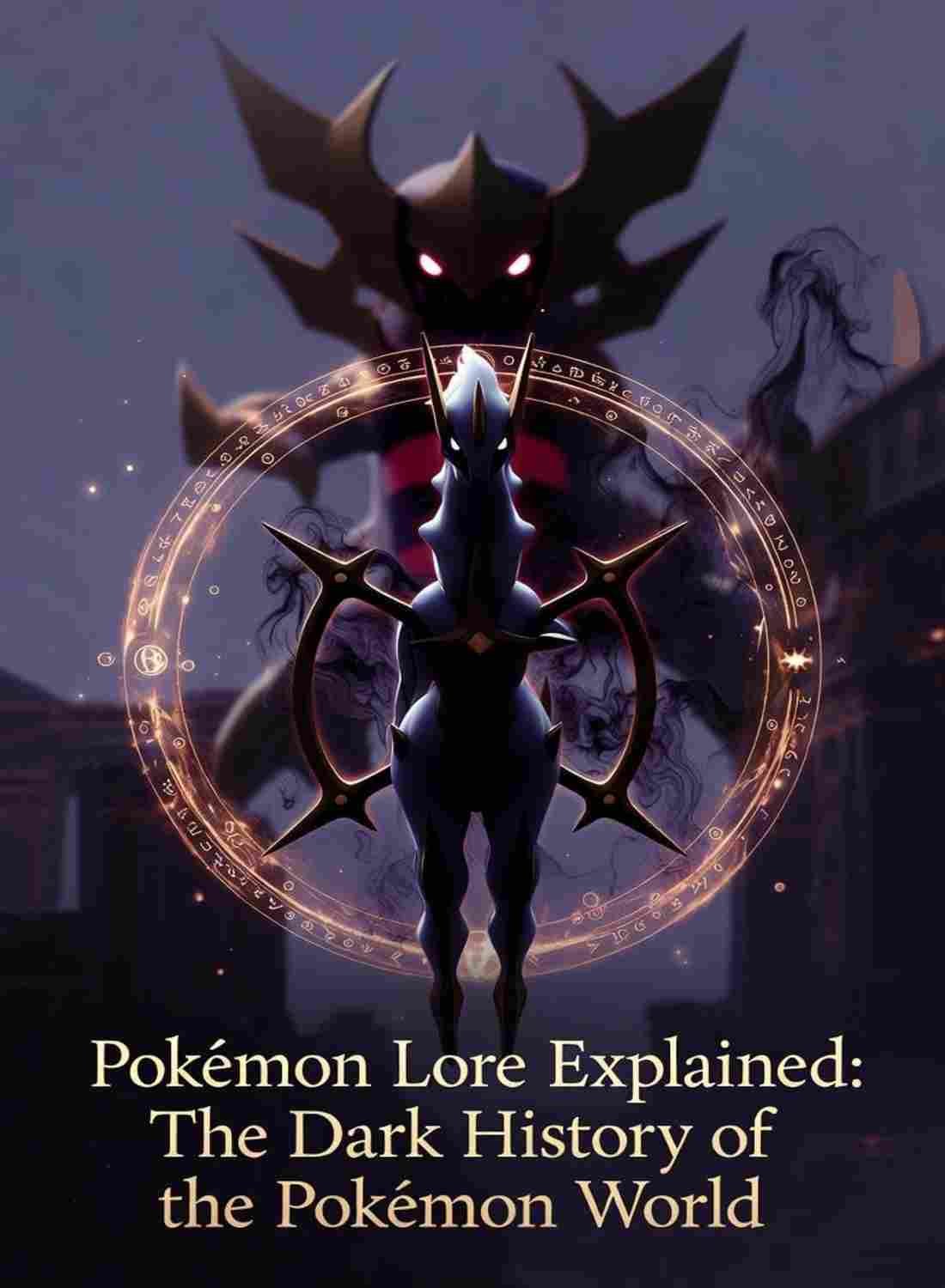
Pokémon Lore Explained: The Dark History of the Pokémon World
The Hidden Darkness in the Pokémon World
The world of Pokémon is often seen as bright and cheerful. Trainers travel from town to town, catch Pokémon, and aim to become champions. The games, anime, and manga create an image of adventure and fun. However, beneath this happy surface, the Pokémon universe has a darker and more complex history. The world is filled with secrets, tragedies, and mysteries that shape the lives of both humans and Pokémon.
Pokémon lore reveals that not all is as simple as battles and friendships. Legendary Pokémon have shaped the world for centuries, and their actions often caused disasters that affected humans and Pokémon alike. Ancient civilizations vanished, regions were reshaped, and powerful Pokémon battles left permanent marks on the land. These events are hinted at in games, stories, and myths.
The Pokémon world also shows moral challenges. Humans sometimes exploit Pokémon for profit or use them in battles without considering their feelings. Organizations like Team Rocket and Team Galactic show how greed and ambition can have destructive consequences. Even ordinary Pokémon can suffer in ways that are easy to overlook. Ghost Pokémon, lost species, and stories of lonely Pokémon reveal that the Pokémon universe has emotional depth and moral complexity.
Understanding the dark history of Pokémon gives fans a richer perspective. It shows that Pokémon is not just a game or a cartoon. The world is layered with philosophy, morality, and history. Each region, legendary Pokémon, and human choice contributes to a story that is more mature and complex than it first appears.
This blog will explore the hidden layers of Pokémon lore. It will cover the origins of legendary Pokémon, ancient conflicts, shadowy organizations, and the emotional struggles of both Pokémon and humans. By the end, readers will have a deeper understanding of the Pokémon universe. This knowledge makes the adventures of trainers and their Pokémon even more meaningful.
Legendary Origins: Gods and Creation in the Pokémon World
The Pokémon universe begins with powerful beings that shaped the very fabric of reality. At the center of creation is Arceus, often called the Original One or the god of Pokémon. Arceus is said to have emerged from an egg and created the universe. From it came Dialga, the master of time, Palkia, the ruler of space, and Giratina, the guardian of antimatter and the Distortion World. These legendary Pokémon are not just powerful fighters. They symbolize the balance and structure of the world itself.
Arceus is believed to have designed the universe with a specific order. Dialga controls the flow of time, ensuring that past, present, and future move correctly. Palkia governs space, shaping the dimensions in which Pokémon and humans live. Giratina exists in a parallel realm, the Distortion World, acting as a counterbalance to the physical universe. The existence of these Pokémon shows that the world has layers of reality, where actions in one realm can affect another.
Many regions in the Pokémon world are linked to these legendary beings. Sinnoh, for example, has ruins and myths related to Arceus and its creations. Ancient texts describe conflicts between these Pokémon, suggesting that even gods faced challenges while shaping the world. Legends speak of a time when Giratina battled Dialga and Palkia, causing disruptions in space and time. These battles left marks on the land and may explain some of the strange terrains and natural phenomena seen in Sinnoh.
Legendary Pokémon also influence the moral and philosophical themes of the Pokémon universe. Arceus represents creation and responsibility, showing that power comes with consequences. Dialga, Palkia, and Giratina demonstrate that even beings with immense power must maintain balance. These stories teach trainers and fans that Pokémon are not just companions or tools for battle. They are part of a world with rules, history, and consequences.
Understanding legendary Pokémon adds depth to the Pokémon universe. Their origins explain why some regions experience disasters, why certain Pokémon exist only in specific areas, and why humans must respect the power of Pokémon. By exploring the stories of Arceus, Dialga, Palkia, and Giratina, fans can see that Pokémon lore is layered, complex, and far more intriguing than simple battles or adventures.
Ancient Conflicts: Wars and Catastrophes
The Pokémon world is not just about cheerful journeys and friendly battles. Long before modern trainers traveled the regions, humans and Pokémon faced conflicts that shaped history. Ancient wars and natural catastrophes left lasting marks on the world. Many of these events are hinted at in games, myths, and ruins found across different regions. Understanding these conflicts gives fans a deeper appreciation of Pokémon lore.
One of the most significant aspects of ancient history involves lost civilizations. Sinnoh, for example, has mysterious ruins like the Celestic Town Ruins, which suggest that humans once lived alongside legendary Pokémon in a more harmonious but fragile world. These civilizations were not immune to conflict. Ancient humans often relied on powerful Pokémon to protect their lands or wage wars. Some battles were so destructive that they caused widespread disasters, reshaping entire regions.
Legendary Pokémon were often at the center of these conflicts. Battles involving Dialga, Palkia, and Giratina left scars in both time and space. Some legends suggest that these fights caused rifts in reality, creating unstable regions or strange weather patterns. Similarly, Pokémon like Kyogre, Groudon, and Rayquaza in other regions played critical roles in controlling natural forces. When their powers clashed, the resulting catastrophes could flood lands, cause earthquakes, or even alter the climate. These events were not random. They often reflected the struggle between humans trying to control Pokémon and Pokémon maintaining their natural balance.
Ancient conflicts also led to extinction or disappearance of certain Pokémon species. Some Pokémon were overhunted, while others disappeared due to environmental disasters linked to legendary Pokémon battles. These events created myths that survived for centuries, influencing the way humans interact with Pokémon in the present. Trainers now learn about respect, strategy, and balance from these ancient stories.
The moral lessons of ancient conflicts are clear. Power without responsibility brings destruction. Legendary Pokémon demonstrate that even beings of immense strength must act with care, and humans must honor the balance of the world. By studying ancient wars and catastrophes, fans can see the Pokémon universe as a living, evolving world with history, lessons, and consequences. This perspective transforms Pokémon from simple creatures for battles into symbols of a complex and interconnected ecosystem.
Shadowy Organizations: The Moral Grey of Pokémon Villains
The Pokémon world is filled with villains, but their motives are rarely simple. Teams like Rocket, Galactic, Plasma, Magma, and Aqua are often seen as evil, yet their actions reveal complex moral dilemmas. These organizations do more than cause trouble. They challenge the balance between humans and Pokémon and highlight the consequences of unchecked ambition.
Team Rocket, for example, is infamous for stealing Pokémon and using them for profit. Their actions directly harm Pokémon and humans, showing greed and selfishness. However, some members, like Jessie and James in the anime, reveal personal struggles and loyalty, adding depth to their characters. This suggests that not all villains are purely evil.
Team Galactic in Sinnoh had a grand vision. Led by Cyrus, they wanted to create a new universe without emotion, believing it would be perfect. Their goal was morally extreme but not random. They sought order and control, even if it meant destroying the current world. Similarly, Team Plasma in Unova believed humans should release Pokémon to achieve freedom, but their methods caused confusion and suffering. These groups show that ideology and morality in the Pokémon world are not always black and white.
Team Magma and Team Aqua in Hoenn demonstrate the dangers of obsession with nature. Magma aimed to expand land, while Aqua wanted more sea. Both extremes threatened ecosystems and communities. Legendary Pokémon like Kyogre and Groudon amplified their plans, showing how human ambition can trigger catastrophic consequences.
These organizations also highlight ethical questions in Pokémon lore. Should humans control powerful Pokémon for personal gain? Is it right to impose ideals on others, even if the goal seems noble? Trainers encounter these questions indirectly through battles, storylines, and interactions with these groups. Understanding these organizations adds layers to the Pokémon universe. It shows that villainy is often tied to perspective, ideology, and consequences rather than pure malice.
Exploring shadowy organizations deepens the understanding of Pokémon lore. Trainers and fans see that every action has meaning, every Pokémon matters, and every choice can impact the balance of the world. These stories also make adventures more engaging. Battles are not just games. They are reflections of morality, responsibility, and the struggle between ambition and harmony.
The Dark Side of Pokémon: Control, Evolution, and Suffering
The Pokémon world may seem like a place of friendship and adventure, but it also has a darker side. Many Pokémon face struggles that are easy to overlook. Battles, forced evolutions, and human exploitation can cause stress, trauma, and even grief for these creatures. Understanding this side of Pokémon adds depth to the lore and shows that the world is more complex than it appears.
One of the most controversial aspects is forced evolution. Pokémon like Eevee, Poliwhirl, or Magmar evolve through stones, trades, or intense battles. While evolution makes them stronger, it can also be seen as a loss of identity or control. Some Pokémon may not willingly evolve, yet trainers push them to meet goals or win battles. This raises ethical questions about the relationship between humans and Pokémon. Are trainers respecting their Pokémon, or are they imposing their will for personal gain?
Battles themselves also have consequences. Pokémon endure physical and emotional strain during fights. While they gain experience and grow stronger, repeated battles can lead to exhaustion, fear, or anxiety. Some Pokémon even develop behavior changes if mistreated. These struggles are often hidden behind the excitement of tournaments and gym challenges, but they are part of the deeper lore of the Pokémon world.
Ghost Pokémon and lost species serve as symbolic reminders of suffering. Pokémon like Misdreavous, Yamask, and Giratina’s inhabitants in the Distortion World reflect pain, regret, and unresolved tragedy. These Pokémon remind trainers that the world is not always kind, and that life in the Pokémon universe can be fragile and emotional. Stories of lonely Pokémon or those abandoned by humans show that companionship and care are vital for survival and happiness.
The dark side of Pokémon also teaches important lessons. Respect, empathy, and understanding are key when interacting with these creatures. Trainers must recognize that Pokémon are not tools or trophies. They are living beings with feelings, needs, and histories. By exploring this aspect of Pokémon lore, fans gain a more mature perspective. It emphasizes that victories in battles are meaningful only when trainers honor the trust and bond shared with their Pokémon.
Understanding control, evolution, and suffering in the Pokémon world transforms the way fans see the games and stories. Pokémon are not just companions or fighters. They are part of a complex ecosystem with emotions, struggles, and moral challenges. This perspective deepens appreciation for the Pokémon universe and makes every journey, battle, and encounter more meaningful.
Historical Events and Natural Disasters in Pokémon Lore
The Pokémon world is shaped not only by trainers and Pokémon but also by historical events and natural disasters. Ancient wars, catastrophic battles, and legendary Pokémon have left lasting marks on regions across the world. Understanding these events helps fans see the Pokémon universe as a living, evolving place with a rich history.
Sinnoh, for example, holds many clues about past conflicts. Ancient ruins, such as the Celestic Town Ruins, tell stories of civilizations that lived in harmony with Pokémon but were disrupted by war and natural disasters. Legendary Pokémon like Dialga, Palkia, and Giratina were often central to these conflicts. Battles between these beings could distort time, space, and reality, creating strange landscapes, weather anomalies, and even unstable regions. These events explain some of the unusual terrain and mysteries trainers encounter today.
Other regions also show the impact of history and natural forces. In Hoenn, the struggle between Kyogre and Groudon caused massive floods and earthquakes. Trainers later witnessed these natural disasters, learning how legendary Pokémon shape the world. Unova has similar stories, with conflicts involving Reshiram and Zekrom that influenced the course of human and Pokémon history. These legends demonstrate that natural disasters in Pokémon lore are often tied to the actions of powerful creatures rather than random events.
Historical events also influenced the relationship between humans and Pokémon. Ancient wars often involved the misuse of Pokémon in combat, leading to destruction and extinction of some species. Civilizations had to adapt, rebuilding communities and respecting the power of legendary Pokémon. These lessons are reflected in modern trainer journeys, emphasizing balance, strategy, and ethical decisions.
These stories enrich the Pokémon universe, showing that it is more than a series of adventures. Trainers face a world with a deep past, where choices have consequences and history can repeat if ignored. Understanding historical events and natural disasters allows fans to appreciate the scale and depth of Pokémon lore. It also highlights the responsibilities of trainers to respect Pokémon and the environment.
By exploring these ancient conflicts and catastrophes, fans see that the Pokémon world is alive with history. Every region, legendary Pokémon, and natural event contributes to the balance and challenges of the world. This perspective makes exploring Pokémon regions more meaningful, as trainers experience the echoes of the past while shaping their own adventures.
Philosophical Themes: Morality, Power, and Responsibility
The Pokémon world is more than battles and adventures. It explores deep philosophical themes, especially the ideas of morality, power, and responsibility. Trainers, legendary Pokémon, and human organizations all face choices that affect the balance of the world. These themes make Pokémon lore richer and more thought-provoking for fans.
One key theme is morality in capturing and battling Pokémon. Trainers are encouraged to catch and train Pokémon, but the ethics behind these actions can be complex. Is it right to capture a wild Pokémon? Should Pokémon be forced to battle for human goals? The games and stories often hint that Pokémon have their own desires and emotions. Respecting them is not only ethical but also strengthens the bond between trainer and Pokémon.
Power and responsibility are also central to Pokémon lore. Legendary Pokémon hold immense strength that can alter reality, weather, and even time. Humans who try to control these Pokémon for personal gain risk causing disasters. Teams like Galactic and Plasma show that ambition without responsibility can lead to chaos. Conversely, trainers who act with care and understanding demonstrate that power must be balanced with respect.
Different regions in the Pokémon world show varied cultural philosophies. In Sinnoh, ancient civilizations honored legendary Pokémon, seeing them as guardians of balance. In Unova, humans struggled with ideological extremes, leading to conflicts that affected both Pokémon and people. These cultural differences highlight that moral choices are influenced by perspective, history, and values.
The Pokémon universe also encourages reflection on personal responsibility. Trainers must consider their actions, not just for success in battles, but for the well-being of Pokémon and the environment. This responsibility extends beyond individual journeys to the broader world, connecting humans, Pokémon, and nature in a delicate balance.
By exploring these philosophical themes, fans gain a deeper understanding of Pokémon lore. Pokémon are not simply companions or fighters; they are participants in a world where decisions have consequences. Morality, power, and responsibility shape every story, battle, and encounter. Recognizing these themes enhances the experience of playing the games, watching the anime, or reading the manga, making the Pokémon world feel more alive and meaningful.
Psychological Layers: Grief, Loss, and Emotional Depth
The Pokémon world is not only about adventure and battles. It also explores emotional and psychological themes that give depth to the stories of both humans and Pokémon. Trainers and Pokémon experience grief, loss, and loneliness, which often go unnoticed in gameplay but are central to the lore. Understanding these aspects makes the Pokémon universe more mature and engaging.
Many Pokémon experience separation or abandonment. Stories of Pokémon left behind by trainers or forced into battles reveal their emotional struggles. Ghost Pokémon, such as Yamask or Misdreavous, embody these unresolved feelings. They serve as reminders that the Pokémon world has consequences and that emotional trauma can have lasting effects. These tales show that Pokémon are not just tools for battle but living beings with memories, bonds, and emotions.
Trainers themselves also face grief and loss. Characters in the games and anime often endure setbacks, loss of Pokémon, or failure in battles that have emotional weight. Legendary Pokémon can carry tragedy as well. Stories from regions like Sinnoh and Unova hint at ancient wars and catastrophic events that left both humans and Pokémon scarred. These narratives create a sense of history and emotional resonance, emphasizing that the Pokémon world is complex and layered.
Even the environment reflects emotional depth. Abandoned towns, ruins, and ghostly locations convey the impact of past events on the present. Places like the Lost Tower in Ecruteak City or the Distortion World in Sinnoh are not only mysterious but also symbolic of grief and forgotten history. They remind trainers that every corner of the Pokémon world holds stories, lessons, and emotions waiting to be discovered.
Exploring psychological layers encourages empathy. Trainers learn to consider the feelings of their Pokémon, the consequences of battles, and the effects of human actions on the world. This perspective enhances the experience of Pokémon journeys, making victories, losses, and discoveries more meaningful. Emotional depth adds realism and complexity, showing that the Pokémon world is not just fun and games but a universe with heart, history, and lessons.
By understanding grief, loss, and emotional challenges, fans can appreciate the rich storytelling woven into Pokémon lore. Each Pokémon, legend, and trainer encounter contributes to a world filled with emotion, history, and moral meaning, creating a deeper connection between players and the universe they explore.
Appreciating the Shadows in a World of Adventure
The Pokémon world is more than colorful regions, battles, and adventures. Beneath its cheerful surface lies a rich and complex history filled with legendary Pokémon, ancient conflicts, shadowy organizations, and emotional struggles. Exploring these dark layers of Pokémon lore helps fans see the universe in a new light, full of lessons, consequences, and depth.
Legendary Pokémon like Arceus, Dialga, Palkia, and Giratina shaped the world and influenced both humans and Pokémon. Ancient wars and natural disasters left lasting marks on regions like Sinnoh and Unova. Shadowy organizations, such as Team Rocket and Team Galactic, demonstrate moral dilemmas and the consequences of unchecked ambition. Even ordinary Pokémon face challenges, from forced evolution to emotional suffering, revealing that the Pokémon world is layered and morally complex.
Understanding these elements allows fans to appreciate Pokémon beyond battles and collecting. The stories of grief, loss, and responsibility make the universe feel alive and meaningful. Trainers learn that every decision matters, every Pokémon has value, and balance must be maintained between humans, Pokémon, and the environment. These lessons make the Pokémon world more immersive and thought-provoking.
By exploring the dark history and philosophical themes, fans gain a deeper connection to the Pokémon universe. Adventures, victories, and discoveries become more significant when seen in the context of the world’s history and moral lessons. Pokémon is not just a game or a cartoon. It is a universe filled with wonder, shadows, and meaningful stories waiting to be explored.
Appreciating the shadows in the Pokémon world enhances every journey. Fans can enjoy the thrill of adventure while recognizing the deeper lore, ethical questions, and emotional narratives that make Pokémon truly timeless. The world of Pokémon is both magical and complex, proving that even in a land full of friendship and battles, there are stories of history, responsibility, and depth that give the universe lasting significance.