
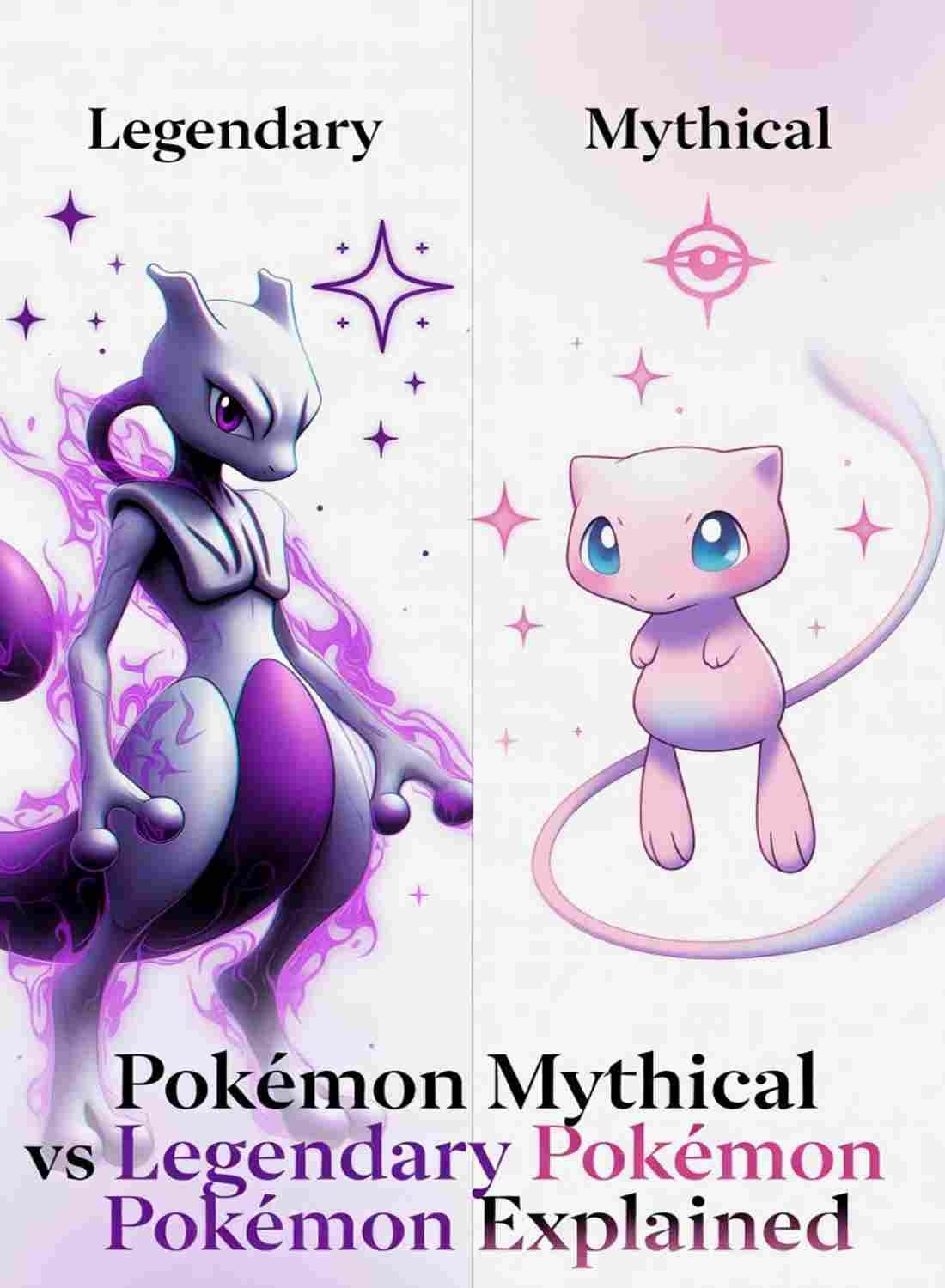
Pokémon Mythical vs Legendary Pokémon Explained
Introduction to Rare Pokémon
The world of Pokémon is vast and filled with creatures of all shapes, sizes, and abilities. While most Pokémon can be found and captured with relative ease, some are far rarer than others. Among these rare Pokémon, Legendary and Mythical Pokémon stand out for their power, rarity, and importance in the Pokémon universe. They are often the most sought-after by trainers, collectors, and fans. Understanding the differences between these two categories can help Pokémon enthusiasts appreciate their uniqueness and importance in games, anime, and other media.
Legendary Pokémon are often central figures in Pokémon games. They are usually tied to the lore of a specific region, acting as guardians, symbols, or key parts of the game’s story. Pokémon such as Mewtwo, Lugia, and Rayquaza are examples of Legendary Pokémon that have captured the imagination of fans worldwide. Their strength, rarity, and role in the Pokémon universe make them highly desirable. Players often encounter these Pokémon as part of main story events or special in-game challenges. Because of their limited availability, catching a Legendary Pokémon can be one of the most exciting moments in a Pokémon adventure.
On the other hand, Mythical Pokémon are even rarer and more secretive. These Pokémon are often not available through normal gameplay. Instead, they are typically distributed during special events, promotions, or story-related missions. Pokémon like Mew, Celebi, and Arceus are considered Mythical because of their extreme rarity and strong connection to Pokémon lore. They often play roles in the mythology of the Pokémon world, representing concepts like time, space, or creation. Mythical Pokémon add an element of mystery and exclusivity that Legendary Pokémon do not always have.
Many Pokémon fans confuse Legendary and Mythical Pokémon because both types are rare and powerful. However, the main difference lies in their accessibility and lore significance. Legendary Pokémon are usually part of the main storylines and can be encountered by most players at some point in the game. Mythical Pokémon, by contrast, require special events or distributions to obtain. Understanding this distinction helps players and collectors know what to expect when searching for these rare Pokémon.
In this guide, we will explore Legendary and Mythical Pokémon in detail. We will look at their defining characteristics, their roles in games and stories, and examples of fan-favorite Pokémon from both categories. By the end, trainers will have a clear understanding of the differences, rarity, and cultural impact of these extraordinary Pokémon. Whether you are a new player or a longtime fan, learning about Legendary and Mythical Pokémon can deepen your appreciation of the Pokémon world and make your collecting journey more exciting.
What Are Legendary Pokémon
Legendary Pokémon are some of the most powerful and iconic creatures in the Pokémon universe. They are unique, rare, and often central to the storylines of Pokémon games. Unlike regular Pokémon, Legendary Pokémon are usually limited to one per game or region, which makes them highly sought-after by trainers and collectors. These Pokémon are often tied to myths, legends, or natural phenomena within the Pokémon world, giving them a sense of importance beyond their battle abilities.
One of the defining features of Legendary Pokémon is their rarity. They are not found in common areas like forests or caves. Instead, players usually encounter them in special locations, after completing significant portions of the game, or through specific story events. Pokémon such as Mewtwo, the genetically enhanced clone of Mew, is an example of a Legendary Pokémon that holds a prominent place in Pokémon lore. Another example is Lugia, the guardian of the seas, who appears in many games and anime episodes as a protector of the ocean. Rayquaza, the sky Pokémon, is known for maintaining balance between Kyogre and Groudon. These examples show how Legendary Pokémon often have roles that go beyond battle power and tie directly into the world’s stories and myths.
Legendary Pokémon are also recognized for their impressive abilities and high stats. They typically have maximum or near-maximum base stats for their level, making them formidable opponents in battles. Trainers who capture these Pokémon gain access to unique moves, abilities, and sometimes forms that are not available to other Pokémon. This strategic advantage makes Legendary Pokémon popular in competitive gameplay, tournaments, and online battles. Their presence often requires careful planning, strategy, and skill to catch and use effectively.
In addition to games, Legendary Pokémon have a significant impact on Pokémon anime, movies, and merchandise. Many Legendary Pokémon have starred in major movie releases, such as Mewtwo in Pokémon: The First Movie or Lugia in Pokémon: The Movie 2000. Their legendary status also makes them popular collectibles in trading cards, figures, and other Pokémon merchandise. Fans often remember Legendary Pokémon not only for their strength but also for their roles in shaping the stories of the Pokémon world.
Overall, Legendary Pokémon are essential to the Pokémon experience. They combine rarity, power, and story significance in ways that make them stand out from other Pokémon. Understanding Legendary Pokémon helps players appreciate their role in games and lore and prepares trainers for the challenge and excitement of capturing them. Whether you are exploring a new region or replaying a favorite game, Legendary Pokémon remain the ultimate goal for many Pokémon enthusiasts.
3. Characteristics of Legendary Pokémon
Legendary Pokémon are not only rare and powerful, but they also have unique characteristics that set them apart from regular and even many rare Pokémon. Understanding these traits helps trainers know why Legendary Pokémon are so highly valued and how they influence both gameplay and the Pokémon world.
One of the most notable characteristics of Legendary Pokémon is their exceptional stats and abilities. Most Legendary Pokémon have higher base stats than regular Pokémon, giving them an advantage in battles. These stats include strong attack, defense, speed, and special abilities, which make them formidable opponents. For example, Mewtwo is known for its extremely high Special Attack and Speed, making it one of the most dangerous Pokémon in battle. Rayquaza’s flying and dragon-type abilities allow it to dominate many opponents in the skies. This combination of strength and unique moves makes Legendary Pokémon a central part of competitive strategy in Pokémon games and tournaments.
Another key characteristic is their connection to regions and lore. Legendary Pokémon are often guardians or symbols of a specific area. Lugia, for instance, protects the seas, while Groudon and Kyogre represent the land and ocean. Many Legendary Pokémon are tied to myths, natural elements, or historical events in the Pokémon world. This gives them significance beyond gameplay. They are often central to the storylines of Pokémon games, appearing during pivotal moments in the plot, such as when maintaining balance in a region or preventing a disaster.
Rarity and exclusivity are also defining traits. Usually, there is only one of each Legendary Pokémon per game. Some may only appear once in the main story, and catching them often requires solving puzzles, exploring hidden areas, or defeating challenging opponents. This limited availability adds to their allure and makes them highly coveted by collectors and trainers who aim to complete their Pokédex.
Finally, Legendary Pokémon have unique appearances and designs that make them memorable. Their size, shape, color, and sometimes mystical aura set them apart from ordinary Pokémon. Many Legendary Pokémon also have signature moves or abilities exclusive to them, like Lugia’s Aeroblast or Zapdos’ Thunder. These features reinforce their special status and make encounters with them exciting and rewarding.
In summary, Legendary Pokémon are distinguished by their high stats, strong abilities, regional connections, rarity, and iconic designs. They play essential roles in gameplay, lore, and Pokémon culture. For trainers, encountering a Legendary Pokémon is always an exciting milestone. Understanding these characteristics helps players appreciate their power, significance, and the challenge they present in the Pokémon world.
What Are Mythical Pokémon
Mythical Pokémon are among the rarest and most mysterious creatures in the Pokémon universe. While Legendary Pokémon are often central to game storylines and accessible through gameplay, Mythical Pokémon are usually secretive and extremely difficult to obtain. They are not found during normal exploration or regular battles. Instead, these Pokémon are distributed through special events, promotions, or limited-time story missions, making them highly exclusive and highly sought after by collectors and trainers.
One defining feature of Mythical Pokémon is their connection to Pokémon lore and mythology. Many Mythical Pokémon are tied to concepts such as creation, time, or cosmic balance. For example, Arceus is considered the creator of the Pokémon universe and is central to many myths in the Pokémon world. Celebi is known as the guardian of time, capable of traveling across eras, while Jirachi is often described as a wish-granting Pokémon. These deep connections to Pokémon lore make Mythical Pokémon not only rare but also highly significant in terms of the stories they represent.
Another key characteristic of Mythical Pokémon is their extreme rarity and exclusivity. Unlike Legendary Pokémon, which players can usually encounter at least once during the main storyline, Mythical Pokémon are almost never encountered through standard gameplay. Trainers typically need to participate in in-game events, special distributions, or online promotions to obtain them. This exclusivity adds a sense of mystery and achievement for those who manage to capture a Mythical Pokémon.
Mythical Pokémon also tend to have powerful stats and unique abilities, similar to Legendary Pokémon. However, their rarity often makes them less common in competitive play since they are only available to those who participate in specific events. Despite this, they remain highly desirable for both battles and collection purposes. Pokémon like Mew, the ancestor of all Pokémon, or Darkrai, a Pokémon that can induce sleep and nightmares, are examples of Mythical Pokémon whose abilities make them fascinating and strategic additions to any trainer’s team.
In addition to games, Mythical Pokémon are celebrated in anime, movies, and merchandise. Many appear in special storylines or movies that highlight their mysterious nature. For example, Mew plays a pivotal role in Pokémon: The First Movie, while Celebi stars in adventures involving time travel and protecting the forest. Their appearances often leave a lasting impression on fans, further increasing their popularity.
Overall, Mythical Pokémon represent the pinnacle of rarity and mystery in the Pokémon world. Their exclusivity, lore significance, and powerful abilities make them treasured additions to any collection. Understanding what Mythical Pokémon are and how they differ from Legendary Pokémon helps trainers and fans appreciate the depth, history, and wonder of the Pokémon universe.
Characteristics of Mythical Pokémon
Mythical Pokémon are some of the most elusive and intriguing creatures in the Pokémon universe. While they share some traits with Legendary Pokémon, Mythicals have characteristics that make them unique, mysterious, and highly valued by trainers and collectors alike. Understanding these traits can help players appreciate why Mythical Pokémon are so rare and why their appearances are always special events.
One defining characteristic of Mythical Pokémon is their extreme rarity. Unlike Legendary Pokémon, which are typically part of the main game storyline, Mythical Pokémon are usually unobtainable through standard gameplay. They are often only available during special events, promotions, or story-related missions. Pokémon like Mew, Celebi, and Jirachi are prime examples. This limited accessibility creates a sense of exclusivity, making Mythical Pokémon highly sought after by trainers who want to complete their Pokédex or own a truly rare Pokémon.
Another important trait is their connection to Pokémon mythology and lore. Many Mythical Pokémon are tied to concepts like creation, time, or cosmic balance. Arceus, often referred to as the creator of the Pokémon universe, represents ultimate power and balance. Celebi is the guardian of time, traveling across different eras to protect forests and ecosystems. Jirachi is known for granting wishes once every thousand years. These story connections make Mythical Pokémon more than just powerful creatures; they are symbols of the Pokémon world’s mysteries and legends.
Mythical Pokémon also have unique abilities and powerful stats. While their availability may limit their use in competitive play, they are often incredibly strong in battles. Darkrai, for example, can manipulate dreams and induce sleep with its special moves, giving it a strategic advantage. Mew possesses the ability to learn almost any move, making it one of the most versatile Pokémon in existence. These distinctive abilities contribute to their allure and make them valuable additions to any trainer’s team.
In addition to their rarity and strength, Mythical Pokémon often have memorable designs and signature moves that set them apart. They tend to have striking appearances that reflect their legendary status, often glowing, ethereal, or mystical. Their signature moves are frequently tied to their lore, enhancing their connection to the myths and stories in which they appear.
Overall, Mythical Pokémon are defined by their rarity, lore significance, unique abilities, and iconic designs. These characteristics make them not only challenging to obtain but also fascinating and highly desirable. Trainers who encounter a Mythical Pokémon experience a rare and exciting moment, further highlighting the special place these Pokémon hold in the world of Pokémon.
Legendary vs Mythical Pokémon: Key Differences
Legendary and Mythical Pokémon are both rare and powerful, but they have distinct differences that every trainer should understand. While fans sometimes use the terms interchangeably, these Pokémon categories serve different purposes in the Pokémon universe, have different availability, and play unique roles in games and lore.
The most obvious difference is availability. Legendary Pokémon are usually part of the main storyline in Pokémon games. Players often encounter them as part of key story events, region challenges, or post-game missions. Examples include Mewtwo in the Kanto region and Lugia in Johto. Trainers can typically capture these Pokémon through normal gameplay if they follow the game’s plot. Mythical Pokémon, however, are much harder to obtain. They are almost always available only during special events, online promotions, or unique distributions. Mew, Celebi, and Jirachi are examples of Mythical Pokémon that cannot be encountered in the wild without participating in a special event. This difference in accessibility makes Mythical Pokémon significantly rarer than Legendary Pokémon.
Another key difference is lore and story significance. Legendary Pokémon are often tied to regions, natural phenomena, or historical events within the Pokémon world. They may serve as guardians, maintain balance, or symbolize a region’s power. Rayquaza maintains the balance between Groudon and Kyogre, while Lugia protects the seas. Mythical Pokémon, on the other hand, often have deeper or more abstract mythological roles. Arceus is considered the creator of the Pokémon universe, Celebi travels through time, and Jirachi grants wishes. These story roles make Mythical Pokémon feel more mysterious and mystical compared to their Legendary counterparts.
Gameplay mechanics also set them apart. Legendary Pokémon usually appear during gameplay in fixed locations or events, and trainers can plan to catch them using in-game strategies. They are often used in battles and tournaments due to their high stats and abilities. Mythical Pokémon are often excluded from standard competitive play because they are event-exclusive. Their rarity makes them more of a collector’s prize, although some Mythicals like Darkrai or Mew have special abilities that make them strategically valuable when available.
Finally, fan perception and cultural impact differ. Legendary Pokémon are often iconic, appearing in multiple games, anime episodes, and merchandise. Mythical Pokémon carry a sense of mystery and exclusivity, and their appearances in events or movies create lasting excitement among fans. Both types are celebrated, but Mythicals are often more secretive and coveted because of their extreme rarity.
In summary, the differences between Legendary and Mythical Pokémon are clear. Legendary Pokémon are rare, story-linked, and accessible within gameplay. Mythical Pokémon are even rarer, secretive, and tied to deeper lore or mythology. Knowing these distinctions helps trainers understand, capture, and appreciate the unique value of each Pokémon type.
Fan-Favorite Mythical Pokémon
Mythical Pokémon are among the rarest and most mysterious creatures in the Pokémon universe, and certain Mythicals have earned a special place in the hearts of fans. Their exclusivity, unique abilities, and deep connections to Pokémon lore make them highly coveted, not only for gameplay but also for collection and storytelling purposes.
One of the most beloved Mythical Pokémon is Mew. Mew is considered the ancestor of all Pokémon and has the ability to learn any move, making it incredibly versatile in battles. Beyond its strength, Mew has a playful and mysterious personality, which is highlighted in movies like Pokémon: The First Movie. Its rarity and significance in Pokémon history make it a legendary figure among Mythicals, despite technically being classified as Mythical.
Celebi, the guardian of time, is another fan favorite. Celebi can travel through time and protect forests and ecosystems, giving it a unique role in both gameplay and Pokémon lore. Its appearances in games, such as in Johto events, and in movies, where it interacts with trainers to prevent disasters, showcase its significance. Celebi’s mystical abilities and connection to time make it a fascinating Pokémon that captivates fans of all ages.
Jirachi is celebrated for its wish-granting powers. Known as the “Wish Pokémon,” Jirachi awakens once every thousand years to grant wishes, according to Pokémon mythology. Its cute and small appearance contrasts with its powerful abilities, creating a memorable combination that makes trainers eager to capture it during special events. Jirachi’s rarity and story tie-ins contribute to its popularity among collectors and fans alike.
Other popular Mythical Pokémon include Darkrai, Manaphy, and Arceus. Darkrai is known as the Nightmare Pokémon, capable of putting opponents to sleep and inducing dreams, which gives it a unique strategic role. Manaphy, the Prince of the Sea, can bond with any Pokémon and is often featured in special events, while Arceus is revered as the creator of the Pokémon universe, holding unparalleled lore significance.
The appeal of Mythical Pokémon goes beyond battles. Their rarity, story significance, and appearances in movies, games, and promotional events make them highly sought after. Trainers feel a sense of accomplishment when capturing a Mythical Pokémon, and fans cherish their connection to the deep mythology of the Pokémon world. These Pokémon are celebrated for their mystery, power, and the excitement they bring whenever they appear.
In summary, Mythical Pokémon like Mew, Celebi, Jirachi, Darkrai, and Arceus are adored for their rarity, lore, and unique abilities. Their elusive nature makes them exciting to discover, and their stories enhance the depth of the Pokémon universe. Fans treasure these Pokémon not only for their strength but also for the wonder and mystery they represent.
How Legendary and Mythical Pokémon Impact Gameplay
Legendary and Mythical Pokémon are not only rare and powerful but also have a significant impact on gameplay in the Pokémon universe. Their presence can change the way players approach battles, strategy, and collection. Understanding how these Pokémon influence gameplay helps trainers make the most of their teams and enjoy the Pokémon world more fully.
Legendary Pokémon are often central to game storylines and challenges. They usually appear in special locations after a series of key events or puzzles. Capturing a Legendary Pokémon often requires strategy, patience, and preparation. Pokémon like Mewtwo, Rayquaza, and Lugia are examples where trainers must prepare their teams carefully, as these Pokémon have high stats, strong moves, and unique abilities. Their availability in the main storyline ensures that most players encounter and interact with them, making them an essential part of both casual and competitive gameplay.
Mythical Pokémon, on the other hand, impact gameplay in a more exclusive way. Because they are event-exclusive, players can only obtain them through special promotions, distributions, or story missions. Pokémon like Mew, Celebi, and Darkrai are typically unavailable in standard game encounters. This exclusivity adds value to Mythical Pokémon, as they often bring unique abilities, rare moves, and special effects that other Pokémon cannot provide. Trainers who obtain a Mythical Pokémon can gain a strategic advantage in battles, while also having a Pokémon that is rare and highly collectible.
Both Legendary and Mythical Pokémon influence competitive play and team building. Legendary Pokémon, with their high stats and diverse move sets, are popular choices in tournaments and online battles. Trainers often build strategies around their abilities and type advantages. Mythical Pokémon, when available, can provide unexpected advantages due to unique abilities, signature moves, and versatile stats. Their rarity and strength encourage players to think creatively and adapt their strategies to incorporate these Pokémon effectively.
Collecting Legendary and Mythical Pokémon also impacts the completion of the Pokédex. Trainers aiming to complete their Pokédex must seek out both types, often participating in in-game challenges, events, and online distributions. This encourages exploration, engagement with special promotions, and interaction with the broader Pokémon community. Obtaining these Pokémon can be a rewarding experience that adds depth and excitement to gameplay.
In summary, Legendary and Mythical Pokémon play a crucial role in gameplay. Legendary Pokémon enhance storylines, battles, and strategic planning, while Mythical Pokémon provide exclusivity, rare abilities, and unique opportunities for collectors and competitive players. Their presence enriches the Pokémon experience, making gameplay more challenging, exciting, and rewarding for trainers of all levels.
Pokémon Lore and Storytelling
Legendary and Mythical Pokémon are more than just powerful creatures. They are deeply connected to the lore and storytelling of the Pokémon universe. Their histories, roles, and mysteries add depth to games, movies, and the overall Pokémon world, making them memorable and exciting for trainers and fans alike.
Many Legendary Pokémon are tied to regional myths and natural phenomena. For example, Groudon represents the land, Kyogre controls the seas, and Rayquaza governs the skies, maintaining balance between the two. Lugia protects the oceans, while Zapdos, Articuno, and Moltres are associated with elemental forces like electricity, ice, and fire. These Pokémon often appear during significant story events, such as stopping disasters or restoring balance, which gives them a strong narrative role in the games. Their appearances are not random; they are carefully woven into the story to enhance immersion and engagement.
Mythical Pokémon contribute to storytelling in a more mysterious and symbolic way. Pokémon like Mew, Celebi, and Arceus are often linked to creation, time, and cosmic forces. Arceus is considered the creator of the Pokémon universe, shaping the world and other Pokémon. Celebi travels through time to protect forests and maintain natural order. Mew is regarded as the ancestor of all Pokémon, carrying the genetic blueprint for every species. These Mythical Pokémon often appear in rare events or movies, emphasizing their secretive nature and reinforcing the idea that the Pokémon world has layers of history and mystery waiting to be discovered.
The lore surrounding Legendary and Mythical Pokémon also enhances gameplay experiences. Trainers often feel a sense of awe and excitement when encountering these Pokémon, as their backstories make battles more meaningful. Knowing that a Pokémon is not just strong but also a guardian of a region or a time-traveling protector makes capturing it more rewarding. Storytelling adds context to their power, giving players a narrative connection that goes beyond simple stats or abilities.
Additionally, Pokémon lore strengthens fan engagement and community discussions. Fans speculate about origins, legends, and mysteries, often sharing theories about how Legendary and Mythical Pokémon shape the world. Movies, anime episodes, and special events expand this storytelling, creating memorable experiences that resonate with players of all ages.
In summary, Legendary and Mythical Pokémon are central to Pokémon lore and storytelling. Their roles as guardians, creators, and mystical beings enrich the games, enhance battles, and deepen the world’s mythology. Understanding their stories adds excitement, wonder, and a stronger connection to the Pokémon universe for every trainer and fan.
Conclusion: Appreciating Legendary and Mythical Pokémon
Legendary and Mythical Pokémon represent the pinnacle of rarity, power, and mystique in the Pokémon universe. While both are sought after by trainers and collectors, they offer unique experiences that make the Pokémon world richer, more exciting, and full of wonder. Understanding their differences and significance allows fans to appreciate the depth and creativity behind these extraordinary creatures.
Legendary Pokémon are typically central to game storylines and regional myths. They are powerful, rare, and often act as guardians or symbols of balance within the Pokémon world. Pokémon like Mewtwo, Lugia, and Rayquaza are examples of Legendary Pokémon that have left lasting impressions on fans through games, anime, and merchandise. Their accessibility through gameplay allows trainers to experience the thrill of encountering and capturing them while also participating in the stories and legends they represent.
Mythical Pokémon, in contrast, are even rarer and more secretive. They often appear only through special events, promotions, or story-related missions, making them exclusive and highly coveted. Pokémon like Mew, Celebi, and Arceus are tied to deep lore, representing creation, time, or cosmic balance. Their mysterious nature and unique abilities make them fascinating for both collectors and competitive players. Capturing a Mythical Pokémon is not just a gameplay achievement but a special event that connects trainers to the rich mythology of the Pokémon world.
Both Legendary and Mythical Pokémon have significant cultural and community impact. Fans celebrate these Pokémon in tournaments, fan art, movies, and trading cards. Legendary Pokémon are often iconic figures, while Mythicals bring mystery and exclusivity. Collecting, battling, and learning about these Pokémon allows trainers to connect with the broader Pokémon community, share experiences, and engage with the history and lore of the franchise.
In conclusion, Legendary and Mythical Pokémon are essential to the Pokémon experience. They combine rarity, power, and storytelling in ways that enhance gameplay, spark imagination, and inspire fan dedication. Trainers who understand the differences between these two categories gain a deeper appreciation for their roles, their challenges, and their significance. Whether you are battling with Mewtwo, exploring the time-traveling adventures of Celebi, or marveling at the cosmic presence of Arceus, these Pokémon add excitement, strategy, and wonder to the Pokémon universe.
By recognizing the uniqueness of Legendary and Mythical Pokémon, trainers can fully enjoy the thrill of discovery, the satisfaction of collection, and the joy of experiencing some of the most extraordinary creatures ever created in the Pokémon world.