
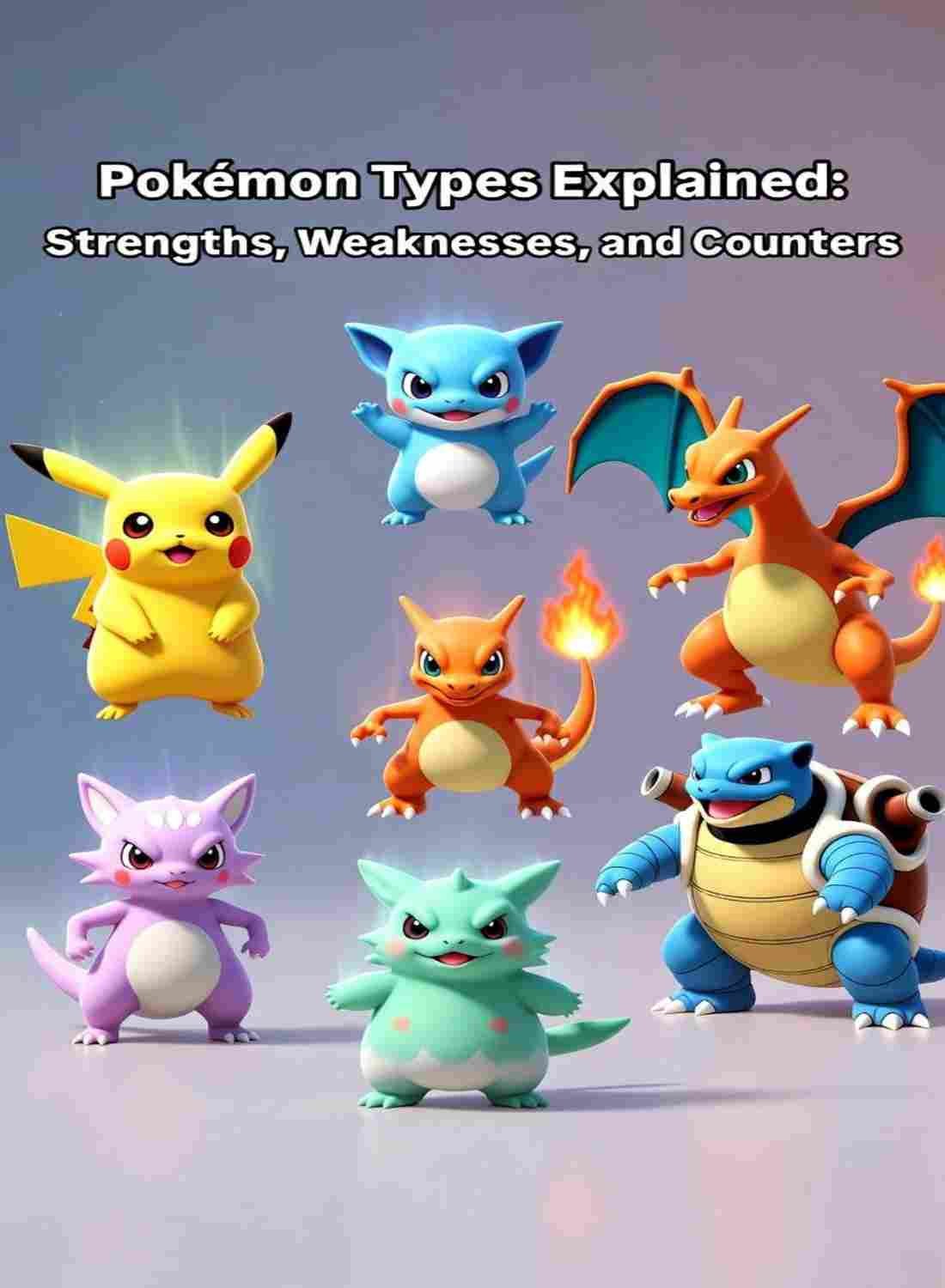
Pokémon Types Explained: Strengths, Weaknesses, and Counters
Pokémon battles are not just about power. They are about strategy. Every Pokémon belongs to a specific type. These types define how strong a Pokémon is against other types. Understanding Pokémon types is essential for both casual players and competitive trainers. It helps trainers choose the right Pokémon and plan effective battle strategies.
There are 18 Pokémon types. Each type has strengths, weaknesses, resistances, and vulnerabilities. Some Pokémon have dual types. This combination adds complexity to battles. A strong understanding of Pokémon types gives trainers an advantage. Knowing which types counter others can help win battles quickly and efficiently.
This guide provides a complete overview of Pokémon types. It explains how each type works, its strengths and weaknesses, and effective counters. Trainers will learn how to build balanced teams, exploit opponents’ weaknesses, and defend against threats. Whether you play casually or compete online, this guide will help you become a smarter Pokémon trainer.
Understanding Type Matchups
Type matchups determine the outcome of many Pokémon battles. Attacks have different levels of effectiveness depending on the target’s type. There are three main categories of effectiveness.
- Super effective: Attacks deal double damage to the target.
- Not very effective: Attacks deal half damage to the target.
- No effect: Some attacks do no damage at all to certain types.
For example, Water-type moves are super effective against Fire-type Pokémon. Fire-type moves are not very effective against Water-type Pokémon. Ground-type moves have no effect on Flying-type Pokémon.
Understanding counters is essential. A Water-type Pokémon can easily defeat a Fire-type Pokémon. Trainers who ignore type matchups often lose battles. Knowing type advantages allows trainers to plan their teams strategically.
Type matchups can be complex with dual-type Pokémon. For example, Charizard is Fire and Flying. It takes double damage from Rock moves but resists Grass moves. This complexity adds depth to battles. Trainers must carefully consider type combinations when selecting Pokémon for their team.
The 18 Pokémon Types and Their Characteristics
Fire Type
- Strengths: Grass, Bug, Ice, Steel
- Weaknesses: Water, Rock, Ground
- Resistances: Fire, Grass, Ice, Bug, Steel, Fairy
- Vulnerabilities: Water, Ground, Rock
- Example Pokémon: Charizard, Arcanine
Fire types are strong against Grass and Bug Pokémon. They are weak against Water and Rock types. Fire moves are effective in battles where opponents rely on plants or ice Pokémon. Trainers should avoid sending Fire types against Water or Rock Pokémon. Fire types often excel in offensive roles and can burn opponents to gain extra damage over time.
Water Type
- Strengths: Fire, Ground, Rock
- Weaknesses: Electric, Grass
- Resistances: Fire, Water, Ice, Steel
- Vulnerabilities: Electric, Grass
- Example Pokémon: Blastoise, Vaporeon
Water types are versatile. They can counter Fire, Rock, and Ground Pokémon easily. Trainers should be cautious of Electric and Grass types. Water Pokémon often have moves like Surf and Hydro Pump, which are powerful in battles. They are also common in competitive play due to their broad coverage and high defensive stats.
Grass Type
- Strengths: Water, Ground, Rock
- Weaknesses: Fire, Ice, Poison, Flying, Bug
- Resistances: Water, Electric, Grass, Ground
- Vulnerabilities: Fire, Ice, Poison, Flying, Bug
- Example Pokémon: Venusaur, Sceptile
Grass Pokémon are strong against Water and Ground types. They struggle against Fire and Flying Pokémon. Grass moves often include status effects like Leech Seed or Sleep Powder. Trainers use Grass Pokémon strategically to weaken Water-type opponents and support the team with healing or status moves.
Electric Type
- Strengths: Water, Flying
- Weaknesses: Ground
- Resistances: Electric, Flying, Steel
- Vulnerabilities: Ground
- Example Pokémon: Pikachu, Jolteon
Electric types are ideal against Water Pokémon. They are ineffective against Ground Pokémon because Ground types are immune. Trainers often use Electric Pokémon in combination with Flying types to cover weaknesses. Speed is an advantage for Electric types, allowing them to strike first in battles.
Ice Type
- Strengths: Grass, Ground, Flying, Dragon
- Weaknesses: Fire, Fighting, Rock, Steel
- Resistances: Ice
- Vulnerabilities: Fire, Fighting, Rock, Steel
- Example Pokémon: Glaceon, Weavile
Ice Pokémon are useful against Dragon, Grass, and Ground types. They have many vulnerabilities and require careful planning. Trainers often pair Ice Pokémon with other types to cover weaknesses. Ice moves can freeze opponents, which can turn the battle in the trainer’s favor.
Fighting Type
- Strengths: Normal, Rock, Steel, Ice, Dark
- Weaknesses: Flying, Psychic, Fairy
- Resistances: Bug, Rock, Dark
- Vulnerabilities: Flying, Psychic, Fairy
- Example Pokémon: Machamp, Lucario
Fighting types excel against Normal and Rock Pokémon. They struggle against Flying and Psychic Pokémon. Fighting moves often deal high damage but require strategic timing. Trainers use Fighting Pokémon as offensive powerhouses to break through defensive opponents.
Poison Type
- Strengths: Grass, Fairy
- Weaknesses: Ground, Psychic
- Resistances: Grass, Fighting, Poison, Bug, Fairy
- Vulnerabilities: Ground, Psychic
- Example Pokémon: Nidoking, Gengar
Poison Pokémon are strong against Grass types. They are weak against Ground and Psychic Pokémon. Poison moves can inflict status effects like poison or badly poisoned. Trainers use Poison types for both offense and support, gradually weakening opponents while maintaining team control.
Ground Type
- Strengths: Fire, Electric, Poison, Rock, Steel
- Weaknesses: Water, Ice, Grass
- Resistances: Poison, Rock
- Vulnerabilities: Water, Ice, Grass
- Example Pokémon: Garchomp, Groudon
Ground types counter Electric Pokémon perfectly because Electric moves have no effect. They are vulnerable to Water and Grass types. Trainers often use Ground Pokémon to protect Electric teammates and to control the battlefield with strong physical attacks.
Flying Type
- Strengths: Grass, Fighting, Bug
- Weaknesses: Electric, Ice, Rock
- Resistances: Grass, Fighting, Bug
- Vulnerabilities: Electric, Ice, Rock
- Example Pokémon: Pidgeot, Talonflame
Flying Pokémon are fast and effective against Grass and Fighting types. Trainers must avoid Electric and Rock attacks. Flying moves like Aerial Ace allow Pokémon to strike from a distance. Flying Pokémon are often paired with Ground Pokémon to cover weaknesses.
Psychic Type
- Strengths: Fighting, Poison
- Weaknesses: Bug, Ghost, Dark
- Resistances: Fighting, Psychic
- Vulnerabilities: Bug, Ghost, Dark
- Example Pokémon: Alakazam, Mewtwo
Psychic Pokémon dominate Fighting types. They struggle against Dark and Ghost Pokémon. Trainers use Psychic Pokémon to control battles with status effects like confusion or hypnosis. High special attack makes them strong in long-range combat.
Bug Type
- Strengths: Grass, Psychic, Dark
- Weaknesses: Fire, Flying, Rock
- Resistances: Grass, Fighting, Ground
- Vulnerabilities: Fire, Flying, Rock
- Example Pokémon: Scizor, Heracross
Bug types are effective against Grass and Psychic Pokémon. They are often underestimated but can provide strong support in battles. Trainers use Bug Pokémon for tactical strikes and status effects.
Rock Type
- Strengths: Fire, Ice, Flying, Bug
- Weaknesses: Water, Grass, Fighting, Ground, Steel
- Resistances: Normal, Fire, Poison, Flying
- Vulnerabilities: Water, Grass, Fighting, Ground, Steel
- Example Pokémon: Tyranitar, Golem
Rock Pokémon are strong against Fire and Flying types. They have many weaknesses and require protection from teammates. Trainers often use Rock types to control battlefield positions and absorb physical attacks.
Ghost Type
- Strengths: Psychic, Ghost
- Weaknesses: Dark, Ghost
- Resistances: Normal, Fighting, Poison, Bug
- Vulnerabilities: Dark, Ghost
- Example Pokémon: Gengar, Giratina
Ghost types are unique. They are immune to Normal and Fighting attacks. Trainers use them strategically to counter Psychic Pokémon. Ghost Pokémon often have high speed and special attack stats, making them dangerous opponents.
Dragon Type
- Strengths: Dragon
- Weaknesses: Ice, Dragon, Fairy
- Resistances: Fire, Water, Electric, Grass
- Vulnerabilities: Ice, Dragon, Fairy
- Example Pokémon: Dragonite, Salamence
Dragon Pokémon are strong against other Dragon types. They are rare and often have high stats. Trainers use them as late-game attackers to finish off strong opponents.
Dark Type
- Strengths: Psychic, Ghost
- Weaknesses: Fighting, Bug, Fairy
- Resistances: Ghost, Dark
- Vulnerabilities: Fighting, Bug, Fairy
- Example Pokémon: Tyranitar, Umbreon
Dark Pokémon counter Psychic types effectively. They are vulnerable to Fighting and Fairy attacks. Trainers use Dark Pokémon for strategic offense and to exploit opponents’ mental weaknesses.
Steel Type
- Strengths: Ice, Rock, Fairy
- Weaknesses: Fire, Fighting, Ground
- Resistances: Normal, Grass, Ice, Flying, Psychic, Bug, Rock, Dragon, Steel, Fairy
- Vulnerabilities: Fire, Fighting, Ground
- Example Pokémon: Metagross, Aegislash
Steel types are highly defensive. They resist many attacks. Trainers use Steel Pokémon to protect teammates and absorb damage. They are effective against Ice, Rock, and Fairy types.
Fairy Type
- Strengths: Fighting, Dragon, Dark
- Weaknesses: Poison, Steel
- Resistances: Fighting, Bug, Dark
- Vulnerabilities: Poison, Steel
- Example Pokémon: Sylveon, Gardevoir
Fairy Pokémon counter Dragon types and are strong against Dark and Fighting Pokémon. Trainers often include Fairy Pokémon to balance teams and cover threats from Dragons and Dark types.
Strengths and Weaknesses of Each Type
Type charts are essential tools. They allow trainers to see all advantages and disadvantages at a glance. Beginners often make mistakes by ignoring type weaknesses. For example, using a Grass-type Pokémon against a Fire-type opponent usually leads to defeat. Psychic types can dominate Fighting Pokémon but must avoid Ghost or Dark opponents.
Type synergy is important. Trainers should balance their teams with Pokémon that cover each other’s weaknesses. Dual-type Pokémon add complexity. For example, Garchomp is Ground and Dragon. It resists Fire attacks but is vulnerable to Ice. Understanding type combinations improves both defensive and offensive strategies.
Effective Counters and Team Strategies
To counter popular Pokémon, trainers must consider type strengths. Water-types defeat Fire-types. Flying-types counter Bug and Grass Pokémon. Ghost and Dark Pokémon are strong against Psychic types. Teams should include a variety of types to handle different opponents.
Example team setup for a single battle:
- Lead: Electric-type for speed and coverage
- Tank: Steel-type to absorb damage
- Offense: Fire-type to handle Grass and Bug Pokémon
- Support: Psychic or Fairy-type for status control
Double battles require even more planning. Trainers must anticipate opponents’ moves and combine type strengths for maximum effect. Strategic switches and predictive play make the difference between victory and defeat.
Type Interactions Across Generations
Type interactions have evolved across generations. Fairy type was introduced in Generation 6 to balance Dragon Pokémon. Some move effects were nerfed or buffed over time. Competitive play has changed as a result. Trainers must stay updated on type adjustments to maintain an edge.
Understanding generational changes is crucial for online battles. Older strategies may no longer be effective. Trainers who adapt to changes in type interactions can outperform opponents who rely on outdated tactics.
Tips for Competitive Play
Predicting opponent moves is key in competitive battles. Trainers should exploit type weaknesses and anticipate attacks. Status effects like paralysis, sleep, and burn can influence outcomes. Team roles are important. Attackers deal damage, tanks absorb it, and support Pokémon provide buffs or healing.
Pro tips for competitive play:
- Keep a balanced team with type coverage
- Exploit double-type weaknesses
- Focus on movesets, not just Pokémon type
- Use predictive switches to counter strong opponents
- Adapt strategies based on opponents’ team composition
Real-Game Examples and Case Studies
Example 1: Charizard vs Venusaur. Charizard’s Fire type attacks are super effective against Venusaur’s Grass type. Using Flamethrower or Fire Blast allows Charizard to gain the upper hand.
Example 2: Blastoise in a Rock-type-heavy team. Blastoise’s Water moves can counter Rock Pokémon efficiently. Surf or Hydro Pump provides coverage and keeps the team safe.
Step-by-step analysis helps trainers understand why type knowledge is essential. These scenarios illustrate the importance of strategy, counters, and team composition.
Understanding Pokémon types is essential for success in battles. Each type has strengths, weaknesses, resistances, and vulnerabilities. Trainers who study type interactions can build balanced teams, exploit opponents’ weaknesses, and defend against threats.
Strategy matters more than raw power. Predicting opponent moves and planning type counters can turn the tide of any battle. Trainers should apply this knowledge in both casual and competitive play.
Check out a full Pokémon type chart and build your ultimate team. With the right strategy, any trainer can gain an advantage in battles and become a Pokémon master.