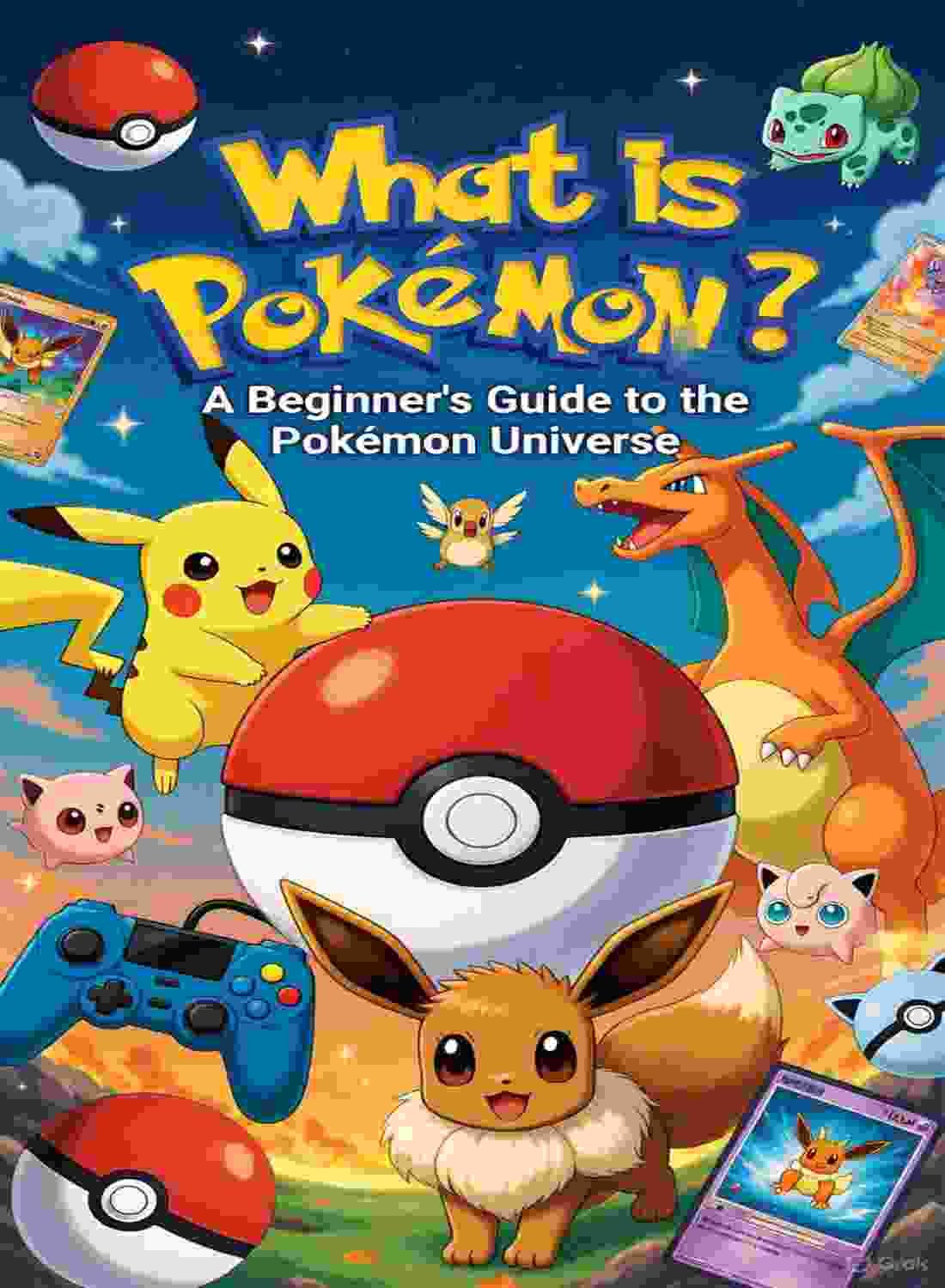
What Is Pokémon? A Beginner’s Guide to the Pokémon Universe
Pokémon is one of the most popular and recognizable franchises in the world. Since its debut in the 1990s, it has captured the imagination of millions of fans. From video games to trading cards, movies, and TV shows, Pokémon has grown into a global phenomenon. For newcomers, however, the Pokémon universe can seem overwhelming. With hundreds of creatures, multiple regions, and a variety of games and rules, it is easy to feel lost at first.
This beginner’s guide will help you understand the basics of Pokémon. You will learn about its origin, the main aspects of the franchise, and how the games, cards, and shows work. By the end, you will have the confidence to start your Pokémon journey. Whether you want to play the games, watch the anime, or collect Pokémon cards, this guide will give you a solid foundation.
The Origin of Pokémon
The Birth of a Phenomenon
Pokémon was created by Satoshi Tajiri and first released in Japan in 1996 as a pair of video games for the Nintendo Game Boy. Tajiri was inspired by his childhood hobby of collecting insects. He wanted to create a game that allowed players to experience the joy of collecting and trading creatures.
The first games, Pokémon Red and Green, were an instant success in Japan. They introduced the idea of capturing, training, and battling creatures called Pokémon. The franchise quickly expanded globally with the release of Pokémon Red and Blue in North America in 1998. Today, Pokémon includes hundreds of video games, a trading card game, a long-running anime series, movies, and merchandise.
The Core Concept
At the heart of Pokémon is the relationship between humans, called Pokémon Trainers, and the creatures they capture and train. Each Pokémon has unique abilities, types, and moves. Trainers raise their Pokémon to battle other Trainers, complete challenges, and explore the world.
Pokémon evolve as they grow, becoming stronger or changing form. Some Pokémon evolve naturally with experience, while others evolve using special items or conditions. Battles are turn-based and require strategy. Trainers must consider the strengths and weaknesses of their Pokémon, the types of their opponents, and the moves they choose.
Exploring the Pokémon Universe
Pokémon Video Games
The Pokémon franchise began as video games and continues to be its core. The main series games, including Pokémon Red, Blue, Yellow, and the modern Pokémon Scarlet and Violet, follow a similar formula. Players explore regions, catch Pokémon, challenge Gym Leaders, and compete in the Pokémon League.
In addition to the main series, Pokémon has many spin-off games. Pokémon Go allows players to catch Pokémon in the real world using augmented reality. Pokémon Mystery Dungeon lets players experience adventures as Pokémon themselves. Pokémon Snap lets players photograph Pokémon in their natural habitats. These games expand the Pokémon universe and appeal to different types of players.
The Pokémon Trading Card Game (TCG)
The Pokémon Trading Card Game, or TCG, is a collectible card game that has been popular since 1996. Players build decks of Pokémon cards, each representing a different Pokémon with unique moves and abilities. The goal is to battle other players, reduce their Pokémon’s health points, and win prizes.
The TCG introduces strategy in a different way than video games. Players must consider energy cards, Pokémon types, and abilities to create a strong deck. Tournaments are held worldwide, allowing fans to compete and connect with the Pokémon community.
Pokémon Animated Series and Movies
The Pokémon animated series follows the adventures of Ash Ketchum, a young Pokémon Trainer, and his partner Pikachu. The show introduces new regions and Pokémon as Ash travels, battles Gym Leaders, and competes in Pokémon leagues. The anime has inspired millions to start playing the games or collecting Pokémon cards.
Pokémon movies often accompany the series, showcasing legendary Pokémon and unique adventures. Each movie explores themes of friendship, courage, and teamwork. Watching the anime or movies can help beginners understand Pokémon battles, types, and the world itself in a visual and entertaining way.
Understanding Pokémon Mechanics
Pokémon Types and Matchups
There are 18 Pokémon types, including Fire, Water, Grass, Electric, Psychic, and Dragon. Each type has strengths and weaknesses against other types. For example, Water Pokémon are strong against Fire Pokémon, but weak against Electric Pokémon. Understanding type matchups is crucial for battles.
Here is a simple example:
- Fire is strong against Grass
- Water is strong against Fire
- Grass is strong against Water
Types also affect moves. Each Pokémon move has a type, and using the right type against an opponent gives extra damage. Beginners can start with a few basic type combinations and gradually learn the full chart.
Evolution and Growth
Evolution is how Pokémon grow stronger. Some Pokémon evolve after gaining experience points in battles. Others require special items, trade conditions, or reaching a certain level.
Special evolutions include:
- Mega Evolution, which temporarily transforms Pokémon during battles.
- Gigantamax, which changes a Pokémon’s appearance and boosts power.
- Regional forms, which are variations of Pokémon found in specific regions.
Evolution increases stats, unlocks new moves, and can change a Pokémon’s type or abilities. Understanding evolution is essential for building strong teams.
Abilities, Moves, and Battles
Every Pokémon has abilities and moves. Abilities provide passive effects, like immunity to certain attacks or extra damage. Moves are the actions Pokémon use in battles. They can deal damage, heal, or cause status effects like paralysis.
Battles are turn-based. Trainers select moves, consider type advantages, and plan strategies. Stats such as attack, defense, and speed determine outcomes. Beginners should start with simple strategies and gradually experiment with more complex tactics as they learn the game.
Gyms, Leagues, and Competitions
Gyms are locations where Trainers challenge Gym Leaders to earn badges. Each Gym specializes in certain types of Pokémon. Collecting badges allows Trainers to participate in the Pokémon League, the ultimate test of skill.
Competitions are not limited to single-player games. Online tournaments, battle events, and TCG competitions provide platforms for beginners and experienced players to compete and learn.
Collecting and Building Your Pokémon Team
Catching Pokémon
Catching Pokémon is central to the games. Trainers explore different regions to find wild Pokémon. Using Poké Balls, they can capture Pokémon to add to their collection. Some Pokémon are common, while others are rare or legendary.
Legendary Pokémon, like Mewtwo or Lugia, are powerful and usually only appear once per game. Collecting a variety of Pokémon ensures flexibility in battles and adds to the fun of exploring the world.
Building a Balanced Team
A strong team balances Pokémon types and moves. For example, pairing a Fire Pokémon with a Water Pokémon covers weaknesses and allows for versatile strategies. Trainers also consider complementary moves, abilities, and roles within the team, such as attackers, defenders, or supporters.
Beginners can start with three or four Pokémon of different types and gradually expand their team. A balanced team is crucial for tackling Gym challenges and competing in battles.
Exploring Different Regions
The Pokémon world is divided into regions, each with unique Pokémon, landscapes, and cultures. Key regions include:
- Kanto: the original region with classic Pokémon like Pikachu and Bulbasaur.
- Johto: introduces new Pokémon and evolutions.
- Hoenn: features diverse environments and abilities.
- Sinnoh: includes Legendary Pokémon and challenging dungeons.
- Galar: modern region inspired by the United Kingdom, with new mechanics like Gigantamax.
Exploring regions allows Trainers to catch new Pokémon and experience different stories in each game.
How to Start Your Pokémon Journey
Recommended Games for Beginners
For new Trainers, starting games are key to learning the basics. Recommended games include:
- Pokémon Let’s Go: a simplified version ideal for beginners.
- Pokémon Sword and Shield: modern graphics and mechanics.
- Pokémon Scarlet and Violet: new regions and mechanics for 2025.
- Pokémon Go: mobile game that encourages exploration.
These games provide tutorials and beginner-friendly challenges, making it easier to start your journey.
Helpful Apps and Online Communities
Many apps and websites provide guides, databases, and tips. Examples include:
- Pokémon Database: detailed info on Pokémon, moves, and evolutions.
- Online forums: Reddit and Discord communities for sharing strategies.
- Official Pokémon website: news, events, and learning resources.
These resources help beginners navigate the complex Pokémon universe and connect with other fans.
Tips for Enjoying the Adventure
Begin your Pokémon journey at your own pace. Explore regions, catch Pokémon, and enjoy battles without pressure. Collecting Pokémon is rewarding, even if you do not compete online. Try different strategies, experiment with moves, and have fun discovering new Pokémon in every game or region.
Why Pokémon Remains Popular
Pokémon has lasted for decades because it appeals to multiple generations. Adults enjoy the nostalgia, while new fans are attracted to modern games and content. The franchise adapts to new technologies, media, and global trends while maintaining its core theme of adventure, friendship, and strategy.
The combination of video games, trading cards, movies, and anime keeps the franchise engaging. Pokémon encourages collecting, exploring, and challenging yourself, which ensures its ongoing popularity.
Conclusion
Pokémon is a world full of adventure, strategy, and fun. Understanding its core concepts, games, and mechanics helps beginners start confidently. Whether you want to play video games, collect cards, or watch the anime, Pokémon offers something for everyone.
Start your journey today. Explore regions, catch Pokémon, and build your team. The Pokémon universe is waiting for new Trainers to embark on their adventures. With this guide, you now have the foundation to enjoy Pokémon at your own pace.