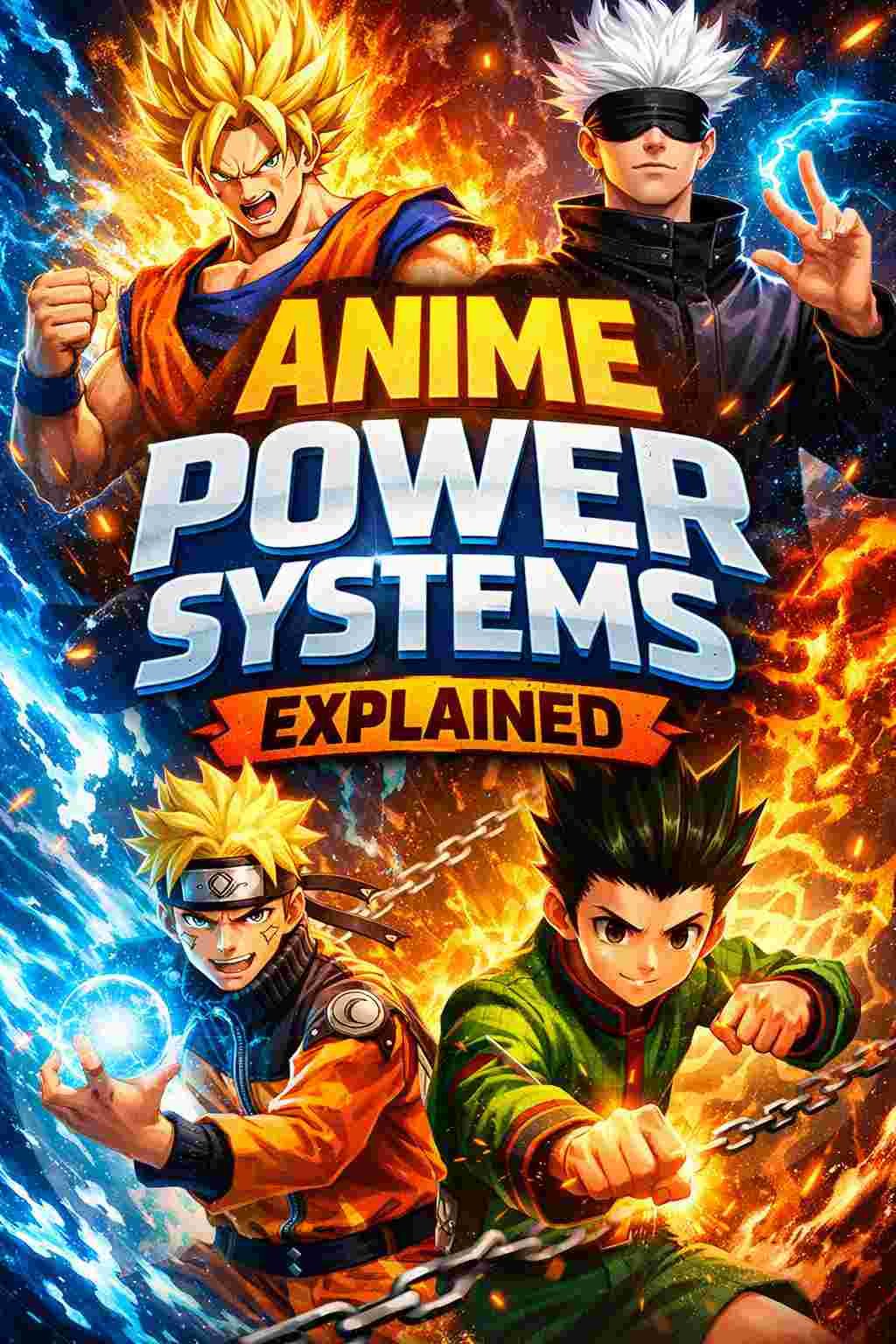
Anime Power Systems Explained
Why Anime Power Systems Are So Addictive
Anime battles often feel different from action scenes in many other shows or movies. The excitement does not come only from powerful attacks or dramatic visuals. It comes from the systems behind those abilities. These systems explain why characters can fight, how they gain strength, and what limits their powers. This structure is what makes anime power systems so engaging for viewers.
In many anime series, battles are built on clear rules. Characters train to control a specific type of energy or ability. They learn techniques step by step and improve over time. Because of this, fights feel meaningful instead of random. The audience understands the rules, so every move and strategy becomes important.
Some of the best anime power systems appear in well known series like Naruto, Hunter x Hunter, Jujutsu Kaisen, and Dragon Ball. Each of these anime introduces a unique system that controls how powers work in its world. In one story, characters may use chakra to perform ninja techniques. In another, fighters may rely on spiritual energy, magical contracts, or personal abilities shaped by strict rules.
These systems do more than create exciting battles. They help define the entire world of the story. A well designed power system explains who holds power, how conflicts happen, and what characters must do to grow stronger. This makes the world feel consistent and believable.
Another reason anime power systems are so addictive is the sense of progression. Viewers watch characters start from a basic level and slowly improve their abilities. Training arcs, new techniques, and difficult battles all show this progress. When a character finally unlocks a stronger ability, the moment feels earned because the audience understands the journey behind it.
In this guide to anime power systems explained, we will explore how these systems work and why they play such a major role in anime storytelling. We will look at the rules that shape abilities, the different types of systems used in popular series, and how they influence character development and battle strategy.
Once you understand how anime power systems work, watching anime fights becomes even more exciting. Every move, technique, and decision starts to reveal the deeper structure behind the action.
What Is an Anime Power System?
To understand why anime battles feel so unique, it is important to understand what a power system actually is. In simple terms, an anime power system is a set of rules that explains how abilities function within a fictional world. These rules define how characters gain power, how they use it, and what limits their abilities.
In many anime series, power is not random. It comes from a specific energy source or ability that characters must learn to control. These energy sources form the foundation of many anime power systems. Some common examples include chakra, cursed energy, ki, and Nen.
For example, in Naruto, ninja use chakra to perform techniques such as ninjutsu and genjutsu. In Jujutsu Kaisen, sorcerers use cursed energy that is created from negative human emotions. In Dragon Ball, fighters control ki to enhance their strength and perform powerful attacks. Meanwhile, the Nen system in Hunter x Hunter introduces a complex structure where abilities depend on strict rules and personal conditions.
Another important part of how anime power systems work is the presence of rules and limitations. Strong abilities often come with restrictions. These limits make the system more balanced and interesting. When characters must follow certain rules, battles become more strategic. A powerful technique might require a large amount of energy or a specific condition before it can be used.
Training and progression are also key components of anime power systems. Characters do not become powerful instantly. They improve through practice, experience, and emotional growth. Training arcs are a common feature in many anime stories because they show how characters develop their abilities step by step.
This structure is one reason why anime power systems are so effective in storytelling. The audience can follow the logic behind each new ability or upgrade. Instead of sudden unexplained power increases, viewers see how characters reach new levels of strength through effort and determination.
When anime ability systems are explained clearly, the world of the story feels more real. The rules create a framework that supports the plot, the battles, and the development of the characters.
Why Power Systems Make Anime Battles Better
Anime power systems play a major role in making battles more exciting and meaningful. Instead of relying only on visual action, these systems create structure behind every fight. When viewers understand the rules that govern abilities, each battle becomes a contest of skill, strategy, and determination.
One important reason anime power systems improve battles is that they encourage strategy instead of random fighting. In many series, victory does not always go to the strongest character. Intelligence and planning can make a major difference. A good example appears in Hunter x Hunter, where characters must carefully analyze their opponent’s abilities before acting. Even a weaker fighter can win if they use their powers creatively and take advantage of the enemy’s weaknesses.
Another benefit of strong power systems is the connection between abilities and character growth. As characters train and overcome challenges, their abilities evolve. This makes each new technique feel like part of the character’s journey. In Naruto, the progress of Naruto Uzumaki shows how mastering chakra is tied to determination and personal development. His growth as a ninja reflects his emotional growth as a person.
Power systems also play an important role in world building. They help explain how the fictional society operates and who holds power within that world. In Jujutsu Kaisen, sorcerers dedicate their lives to controlling cursed energy and protecting people from dangerous curses. This system defines the roles of different characters and the structure of the story’s universe.
Similarly, in Dragon Ball, fighters rely on ki to enhance their strength and perform powerful attacks. The constant pursuit of greater power shapes the culture of martial arts within the series.
Because of these elements, anime power systems create battles that are not only exciting but also meaningful. Each fight becomes part of a larger story about growth, strategy, and the limits of human potential.
The Most Common Types of Anime Power Systems
Anime power systems are not all the same. Different series use different types of systems to make battles interesting and strategic. Understanding these types helps explain why some fights feel smarter, more creative, or more intense. In general, most anime power systems fall into three main categories: energy based, rule based, and transformation based systems. Each has unique characteristics that shape the story, the battles, and the characters.
Energy Based Power Systems
Energy based systems are one of the most common types in anime. These systems rely on an internal life force or energy that characters must learn to control. This energy can be used to enhance physical abilities, perform supernatural attacks, or manipulate the environment. Training and emotional control are usually essential to mastering these powers.
Chakra in Naruto
In Naruto, chakra is the fundamental energy that every ninja uses. Chakra combines physical and spiritual energy. With proper training, ninjas can perform techniques like ninjutsu, genjutsu, and taijutsu. The system includes clear rules, such as limits on how much chakra can be used at one time. Characters must improve their chakra control to increase the strength and precision of their techniques.
Chakra also connects deeply to the character’s growth. For example, Naruto’s journey shows not only technical mastery but also emotional development. His increasing chakra control reflects his determination, resilience, and bonds with others.
Cursed Energy in Jujutsu Kaisen
In Jujutsu Kaisen, cursed energy comes from negative human emotions such as fear, anger, or hatred. Sorcerers learn to control and manipulate this energy for attacks, defense, and complex techniques. Characters like Satoru Gojo and Yuji Itadori demonstrate how mastering cursed energy allows for versatile combat strategies.
Energy based systems often reward both technical skill and emotional awareness. Understanding and channeling your energy can turn the tide of battle, making fights feel both tactical and emotionally impactful.
Rule Based Power Systems
Rule based systems focus on abilities governed by strict conditions and limits. These systems are highly strategic because knowing and exploiting the rules often determines victory. Power does not simply scale with strength; creativity, planning, and strategy are just as important.
Nen in Hunter x Hunter
The Nen system in Hunter x Hunter is a prime example of a rule based power system. Nen allows users to manipulate their life energy, but abilities are constrained by six categories: enhancement, emission, manipulation, conjuration, transmutation, and specialization. Each category has its own rules and strengths.
Characters like Gon Freecss and Hisoka show how strict adherence to Nen rules creates complex battles. The system encourages careful planning and creative use of abilities. Even a weaker fighter can defeat a stronger one with clever strategy and understanding of the limitations.
Rule based systems make fights more cerebral. Every ability has conditions, risks, and counters. Audiences enjoy not only the spectacle but also the logic and strategy behind each encounter.
Transformation Based Power Systems
Transformation based systems focus on characters unlocking stronger forms over time. Power growth is often visible through physical or visual changes, making these systems exciting and easy to follow.
Dragon Ball Z Transformations
In Dragon Ball Z, characters like Goku increase their power by transforming into stronger forms, such as Super Saiyan levels. Each transformation comes with greater strength, speed, and new abilities. Training and intense battles are usually required to achieve these upgrades.
Transformation systems create hype moments in the story. Audiences feel anticipation and excitement whenever a character reaches a new form. The visual changes, combined with rising power levels, emphasize the stakes and make climactic battles memorable.
These three main types—energy based, rule based, and transformation based—are the foundation of most anime power systems. Some series may combine elements of all three, but understanding these categories helps explain how abilities are structured and why battles feel meaningful.
How Power Systems Shape Character Development
Anime power systems are more than just tools for fights. They often reflect a character’s personality, growth, and mindset. How a character learns and applies their abilities can reveal who they are and how they evolve over the course of the story.
Nen Reflects Personality
In Hunter x Hunter, Nen abilities are deeply personal. Each user’s power is shaped by their character traits, goals, and experiences. For example, Kurapika creates chains that enforce his vow of revenge. His abilities are tied to his emotional state and personal mission, making his fights highly strategic and meaningful.
Techniques Reflect Identity
In Jujutsu Kaisen, abilities are closely linked to the user’s identity. Megumi Fushiguro uses shadow techniques that reflect his thoughtful and tactical personality. These powers are not only tools for combat but also expressions of who the character is and how they think.
Training, growth, and unlocking new abilities are often tied to emotional or mental progress. This approach makes battles feel like milestones in the character’s personal journey rather than simple physical contests.
Power systems, therefore, serve a dual purpose: they create engaging fights and act as mirrors for character development. Viewers can witness emotional growth, strategic thinking, and personal transformation through the way powers are learned and used.
Strategy vs Raw Power in Anime Battles
Anime battles often fall into two broad styles: strategy-focused fights and raw power escalation. Each style approaches combat differently and influences how characters interact, grow, and overcome challenges. Understanding these approaches helps explain why some fights feel clever and tactical while others feel epic and overwhelming.
Strategy Focused Systems
In strategy-focused systems, victory depends as much on intelligence and planning as it does on strength. A great example appears in Hunter x Hunter. Characters must analyze their opponent’s abilities, understand limitations, and exploit weaknesses to win. Even a physically weaker character can succeed with clever use of their power.
These systems reward creativity. A character may combine different abilities in unexpected ways or manipulate their environment to gain an advantage. Battles become mental contests as much as physical confrontations. Fans often enjoy predicting the moves and thinking through strategies alongside the characters.
Strategy-focused systems also deepen character development. A fighter’s approach to battle can reveal patience, intelligence, and problem-solving skills. For example, Leorio and Killua Zoldyck demonstrate that success is not just about raw energy but how abilities are applied in context.
Power Escalation Systems
In contrast, power escalation systems focus on constantly increasing strength. Characters push their limits, unlock new forms, and become progressively more powerful over time. Dragon Ball is a classic example. Characters such as Goku and Vegeta achieve higher Super Saiyan transformations or master new techniques after intense training or critical battles.
These systems create dramatic and visually spectacular moments. The tension rises because every fight could escalate to a higher level, and fans anticipate new abilities with excitement. Power escalation emphasizes growth, determination, and the thrill of surpassing limits.
Comparing the Two
Both approaches have advantages. Strategy-focused systems provide depth and intellectual engagement. Power escalation systems deliver spectacle and emotional excitement. Many anime combine elements of both to keep battles dynamic. Understanding which system is in play allows viewers to appreciate the stakes, the risks, and the meaning behind each fight.
Ultimately, whether the fight is cerebral or explosive, anime power systems ensure that every battle feels significant. They create a framework that supports the story, the characters, and the excitement that keeps audiences coming back.
Hard Power Systems vs Soft Power Systems
Anime power systems can also be categorized as hard or soft, based on how strictly rules are defined. These approaches affect storytelling, strategy, and audience engagement.
Hard Power Systems
Hard power systems are clearly defined with strict rules and limitations. Every ability has boundaries, energy requirements, or specific conditions for use. This makes the system predictable yet strategic. Audiences can understand the rules and anticipate possible outcomes, which adds intellectual satisfaction to battles.
Examples of hard systems include the Nen system in Hunter x Hunter and cursed energy in Jujutsu Kaisen. In these systems, fights are governed by logical constraints. Users must plan, strategize, and creatively exploit the rules. Fans enjoy watching not only the action but also how characters think and adapt to the limitations of their powers.
Hard systems are ideal for strategic storytelling. They encourage tactical battles and meaningful progression. Every new ability or upgrade has a clear impact and fits into the world’s rules, which makes the story coherent and engaging.
Soft Power Systems
Soft power systems are more flexible and mysterious. Abilities may not have defined limits or clear rules. This allows writers to introduce new powers spontaneously, creating surprises and dramatic moments. Soft systems often appear in fantasy-oriented series where the focus is on storytelling, mythology, or magical spectacle.
The downside is that battles in soft systems can feel less predictable. Without clear boundaries, some fights rely heavily on plot convenience. However, mystery can also enhance the narrative, allowing moments of awe, wonder, or suspense. Soft systems encourage imagination and wonder, giving characters unique abilities that can evolve freely.
Choosing the Right System
Whether an anime uses a hard or soft system depends on the story’s needs. Hard systems work well for tactical, battle-focused anime where strategy matters. Soft systems are better suited for fantasy or adventure series where creativity and surprises drive the plot. Some anime blend both approaches to maintain flexibility while preserving logical consistency.
Why Some Anime Power Systems Become Legendary
Certain anime power systems are remembered long after the series ends. These legendary systems combine clarity, creativity, balance, and a connection to character identity, making them unforgettable for fans.
Clear Rules
Iconic systems define abilities with understandable rules. Viewers can see how powers operate, which makes battles logical and satisfying. For example, the Nen system in Hunter x Hunter establishes strict categories and limitations, giving fans a clear framework to analyze fights and predict outcomes.
Creativity and Uniqueness
Legendary systems introduce unique mechanics that make abilities stand out. Chakra in Naruto allows for diverse techniques like shadow clones and elemental attacks. Cursed energy in Jujutsu Kaisen connects emotions to combat, offering originality and depth to fights.
Balance
A great system balances strength and limitations. Overpowered abilities without restrictions can make battles predictable or dull. Systems like Nen or cursed energy give characters advantages but also impose costs or conditions, ensuring that victories feel earned.
Connection to Characters
Finally, legendary power systems reflect characters’ personalities and growth. Fans remember powers that tell a story about the user. Kurapika’s chains, Naruto’s mastery of chakra, and Gojo’s manipulation of limitless energy all reveal traits, goals, and emotional journeys.
Influence on New Anime
These systems inspire future series. Writers often build on successful mechanics, creating new abilities while keeping logical structure. Legendary power systems show that well-designed rules, creativity, and character integration make battles meaningful and memorable.
The Secret Behind Anime’s Most Exciting Battles
Anime power systems are more than just flashy techniques or visually striking attacks. They provide a framework that makes battles logical, strategic, and emotionally engaging. Understanding how these systems work allows viewers to appreciate the thought and creativity behind every fight. The structure of a power system connects the characters, their abilities, and the world they inhabit, making each conflict feel meaningful.
A well-designed anime power system serves multiple purposes. First, it creates strategic battles. Characters cannot rely solely on strength; they must think, plan, and adapt. Even a weaker character can succeed with creativity, skill, and proper use of abilities. This makes fights more exciting and unpredictable.
Second, power systems deepen character development. As characters train, overcome obstacles, and unlock new abilities, audiences witness growth not just in strength but in personality and decision-making. In Hunter x Hunter, Nen abilities reflect the user’s mindset, strategy, and personal traits. In Jujutsu Kaisen, cursed energy techniques express the sorcerer’s emotions and identity. These systems make battles a window into the characters’ inner world.
Third, they build immersive worlds. Whether it is chakra in Naruto, cursed energy in Jujutsu Kaisen, or ki in Dragon Ball, energy and power systems define the rules of the universe. They explain how conflicts arise, who holds influence, and what limitations exist, giving the audience a clear sense of the stakes and the environment.
When combined, these elements make anime battles memorable and rewarding. Fans enjoy not only the visual spectacle but also the logic, strategy, and emotional resonance behind each fight. The best anime power systems balance rules, creativity, and character identity, which is why they leave a lasting impression.
In summary, understanding anime power systems enhances the viewing experience. They transform what could be simple fights into complex, meaningful encounters. They create tension, excitement, and connection to the characters. Behind every epic battle is a carefully crafted system that turns simple conflicts into unforgettable moments of storytelling.