
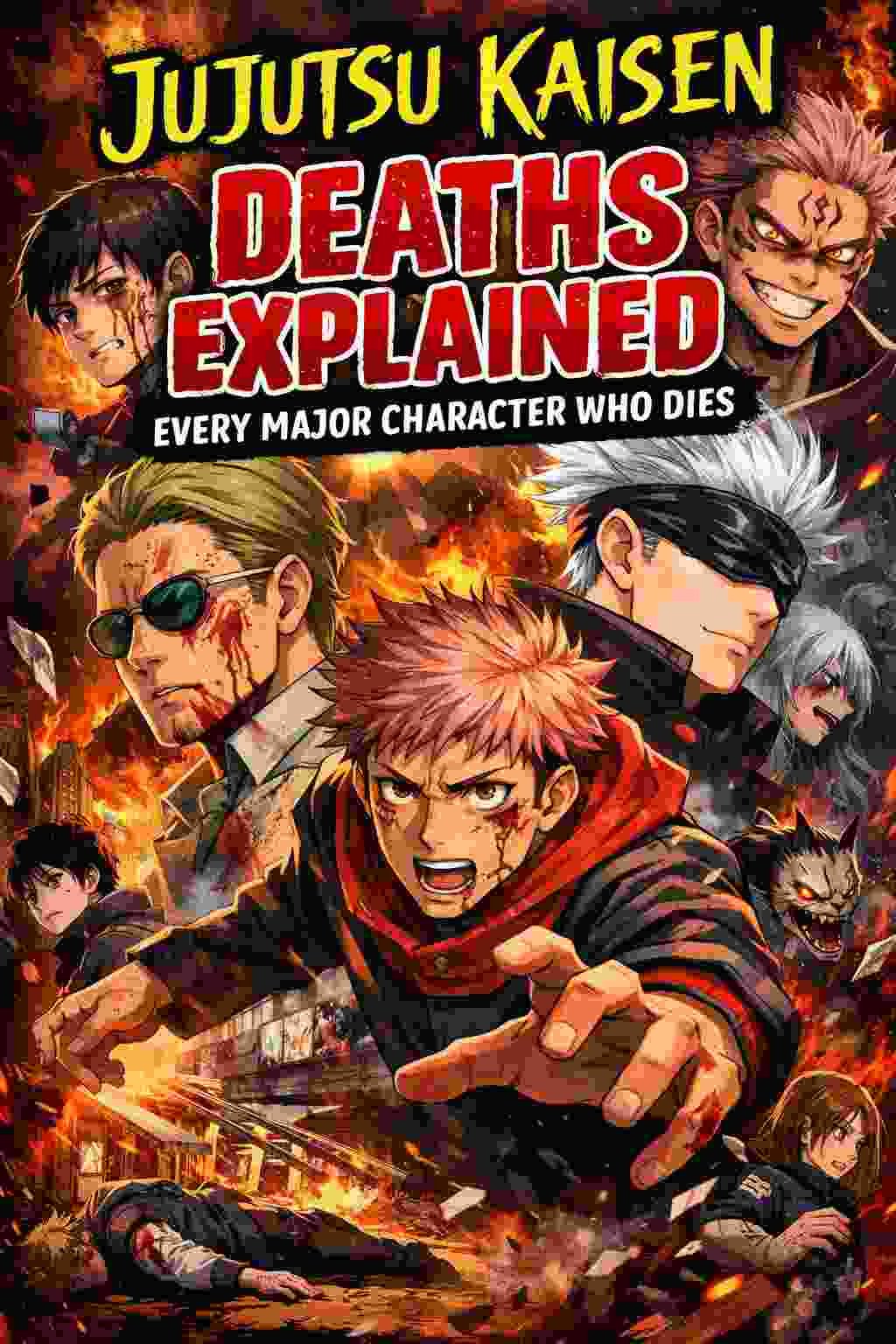
Jujutsu Kaisen Deaths Explained: Every Major Character Who Dies
The High Stakes of Death in Jujutsu Kaisen
Death is everywhere in Jujutsu Kaisen and no character is truly safe. From students of Jujutsu High to powerful sorcerers and deadly curses, every loss leaves a lasting impact on the story. The series combines dark themes, high-stakes battles, and unpredictable threats to create a world where survival is never guaranteed. Fans of the anime and manga often find themselves shocked by how suddenly major characters can die. Understanding these deaths is important for following character development and the overall plot.
The world of Jujutsu Kaisen is built on cursed energy and dangerous missions. Sorcerers face curses that can destroy anyone in seconds. These threats make the deaths of characters meaningful and often emotional. When a student or mentor dies, it changes the path of the story and influences the decisions of the remaining characters. Every death adds tension and reminds viewers that strength alone does not ensure safety.
Major character deaths also serve as a tool for narrative growth. Yuji Itadori, for example, is constantly shaped by the losses of those around him. The death of a mentor, ally, or even a villain forces him and other characters to confront their limits, make tough choices, and grow stronger. These events also emphasize the cost of fighting curses and the stakes involved in every battle.
This blog will cover every significant death in Jujutsu Kaisen. It will start with the students of Jujutsu High, move on to mentors and sorcerers, then explore villain deaths and their consequences. The Shibuya Incident will be highlighted as the darkest and most impactful arc for character losses. Finally, we will examine the emotional and narrative impact of these deaths. This guide will help fans understand why each death matters and how it affects the story.
By exploring these deaths, readers will gain insight into the themes of courage, sacrifice, and the harsh realities of life as a sorcerer. Each section will explain who dies, how they die, and the significance of their loss. The goal is to provide a clear and detailed resource for fans who want to track the high-stakes events of Jujutsu Kaisen and appreciate the emotional weight behind each major character death.
Deaths of Jujutsu High Students
The students of Jujutsu High face constant danger in their missions. Even young sorcerers must confront powerful curses that threaten their lives. Some deaths are sudden and shocking, while others come after heroic actions. Each student death teaches the audience about the dangers of the jujutsu world and the sacrifices needed to fight curses.
Junpei is one of the first notable student deaths. He is introduced as an ordinary teenager who becomes involved with curses. Junpei’s death is tragic because he represents vulnerability and the consequences of underestimating cursed energy. His loss deeply affects Yuji Itadori, motivating him to become a stronger sorcerer. Junpei’s death also emphasizes empathy, showing that even minor characters can leave a lasting impact on the story.
During the Kyoto Goodwill Event, students face intense battles against rivals from Kyoto Jujutsu High. While some survive, there are casualties that illustrate the high stakes of inter-school conflicts. These deaths highlight the importance of teamwork, strategy, and courage in battle. Even when the fights are friendly competitions, the risk of injury or death is always present.
The Shibuya Incident is the most devastating for Jujutsu High students. Several young sorcerers die protecting others or fighting beyond their limits. Their deaths showcase bravery and sacrifice and leave a permanent mark on surviving characters. The losses during Shibuya demonstrate that courage alone is not enough and that survival depends on skill, experience, and sometimes luck.
Overall, student deaths in Jujutsu Kaisen set the tone for the series. They introduce readers to the dangers of cursed energy, highlight the importance of growth and teamwork, and create emotional stakes for the main characters. By understanding these deaths, fans can appreciate the challenges Yuji and his classmates face and the weight of their ongoing battles. Keywords such as Jujutsu Kaisen student deaths, Kyoto Goodwill Event, and Shibuya Incident casualties reflect the focus on major character losses in the story.
Deaths of Major Sorcerers and Mentors
The deaths of experienced sorcerers and mentors in Jujutsu Kaisen carry heavy narrative weight. These characters are often skilled, strategic, and moral guides for younger sorcerers. Their deaths shock both the audience and the main characters, forcing growth and change. Losing a mentor demonstrates that even the strongest sorcerers are vulnerable in a world dominated by cursed energy.
Kento Nanami is one of the most notable mentor deaths. He acts as a moral compass and guide for Yuji Itadori, providing both advice and support during dangerous missions. Nanami’s death occurs during a battle against Mahito, where he fights valiantly but is ultimately overpowered. His loss is heartbreaking because it represents the harsh reality that experience and skill do not guarantee survival. Nanami’s death pushes Yuji to confront his limits and take responsibility for his own actions. It also emphasizes the theme of sacrifice, showing that protecting others often comes at the highest cost.
Other mentors and senior sorcerers also face perilous situations. Characters like Principal Yaga, Shoko Ieiri, and Gojo Satoru (in certain arcs) influence the story through their guidance and interventions. While some survive, many mentor deaths or near-deaths drive younger characters to grow. These losses highlight lessons about courage, responsibility, and the importance of relying on others in dangerous missions. They also reinforce the narrative stakes, reminding readers that no one is invincible.
Mentor deaths serve multiple purposes in the story. They heighten tension, make battles feel more dangerous, and provide turning points for character development. For example, Yuji’s determination grows stronger with each loss, and other students must adapt to the absence of experienced guidance. These moments also add emotional depth, making the audience feel the weight of sacrifice and the fragility of life.
Overall, the deaths of mentors in Jujutsu Kaisen underline the dangers of cursed energy and the price of heroism. They are key to both the story’s emotional resonance and the growth of main characters. Keywords such as Jujutsu Kaisen mentor deaths, Nanami death explained, and Yuji growth naturally tie into these events, highlighting their significance in the series.
Villain Deaths and Their Narrative Impact
Villains in Jujutsu Kaisen are not immune to death, and their defeats often carry significant narrative consequences. The death of an antagonist can shift the balance of power, alter strategies, and motivate heroes to evolve. Major villains like Mahito and special-grade curses present constant threats, and their deaths are often pivotal moments in the story.
Mahito is one of the most memorable villains whose death has major implications. As a curse with the ability to manipulate souls, he poses a constant threat to students and sorcerers alike. His death comes after intense battles where heroes must outsmart and overpower him. Eliminating Mahito shifts the dynamic of future confrontations and allows protagonists like Yuji to grow from the experience. It also reinforces the theme that hubris and overconfidence can lead to downfall, even for powerful curses.
Other special-grade curses, such as Jogo, Hanami, and ultimately Sukuna, face death or temporary defeat under specific conditions. Sukuna’s case is unique, as his survival depends on intricate rules, but other curses’ deaths are more straightforward. Each villain’s death demonstrates that even overwhelming power has limits. These events also serve as lessons for both heroes and the audience, highlighting the unpredictability of cursed energy battles.
Villain deaths are not just about ending a threat. They create emotional and strategic consequences for the heroes. Removing a dangerous enemy can free characters from immediate danger but also introduce new challenges, such as power vacuums or revenge-seeking allies. These deaths raise stakes in every arc, making battles more intense and engaging for the audience.
In conclusion, villain deaths in Jujutsu Kaisen are crucial plot devices. They alter story trajectories, teach moral lessons, and push protagonists to evolve. Using keywords like Jujutsu Kaisen villain deaths, Mahito death explained, and Sukuna battles emphasizes their narrative importance while keeping the content SEO-friendly.
Shibuya Incident: The Death Epicenter
The Shibuya Incident is the darkest and most intense arc in Jujutsu Kaisen. It is a large-scale event where heroes, allies, and even minor characters face life-threatening battles against curses and villainous sorcerers. The scale of destruction during this incident is unparalleled, and the sheer number of deaths makes it a turning point in the series. The Shibuya Incident not only reshapes the balance of power in the jujutsu world but also has long-lasting emotional consequences for surviving characters.
This arc begins with a carefully orchestrated attack on Shibuya, trapping civilians and sorcerers alike in a chaotic environment. Many characters die protecting innocents or confronting powerful curses. Students from Jujutsu High, including those who survived previous arcs, find themselves in situations where skill alone is not enough to guarantee survival. Their deaths highlight the risks inherent in being a sorcerer and the personal sacrifices required to fight evil.
Major characters such as Kento Nanami, who acts as both a mentor and moral guide, die heroically during the incident. His death is one of the most impactful, leaving Yuji Itadori and others to grapple with the loss of experience and guidance. Other heroes and allies also perish, each loss adding to the narrative weight of the arc. Even minor characters who die in the Shibuya Incident serve to emphasize the high stakes, showing that no one is immune from the dangers of cursed energy.
The incident also forces surviving characters to adapt quickly. Yuji, Megumi, and other main characters face not only external threats but also internal challenges, including grief, guilt, and the pressure to carry on without their mentors. These deaths drive significant character development, illustrating themes of courage, responsibility, and resilience in the face of overwhelming odds.
In addition to the emotional impact, the Shibuya Incident significantly changes the narrative trajectory of Jujutsu Kaisen. Alliances shift, strategies are reevaluated, and the balance of power among sorcerers and curses is altered. Keywords like Shibuya Incident deaths, Jujutsu Kaisen Shibuya arc explained, and student and mentor casualties emphasize the importance of this arc in understanding the series’ high-stakes storytelling.
Overall, the Shibuya Incident represents the ultimate test for Jujutsu High students and sorcerers. The sheer number of deaths and their consequences make this arc central to understanding the risks of the jujutsu world and the emotional and narrative weight of major character losses.
Emotional and Narrative Consequences of Deaths
Deaths in Jujutsu Kaisen are not just shocking moments. They carry deep emotional and narrative consequences that drive the story forward. Each death influences surviving characters, reshapes alliances, and motivates revenge or redemption arcs. The series uses death as a tool to highlight courage, mortality, and the personal cost of fighting curses.
For protagonists like Yuji Itadori, the deaths of friends, mentors, and allies act as powerful motivators. They force him to confront mortality, make difficult decisions, and grow both emotionally and strategically. For example, the loss of Kento Nanami during the Shibuya Incident leaves Yuji struggling with grief but also instills a sense of responsibility to fight stronger and smarter. These experiences create depth in his character, showing that heroism comes with both sacrifice and pain.
Death also shapes the narrative structure of the series. By removing key characters at critical moments, Jujutsu Kaisen creates tension, uncertainty, and high stakes in each battle. The unpredictability of who survives ensures that audiences remain engaged and emotionally invested. Minor character deaths also contribute to this effect, as they demonstrate that every life in the series carries value and consequences.
The emotional weight of deaths is often tied to thematic lessons. Characters learn about the fragility of life, the cost of heroism, and the necessity of teamwork. These themes resonate with audiences, making each death meaningful beyond the immediate plot. Readers can reflect on courage, responsibility, and personal growth while following the story.
Additionally, deaths influence character relationships. Surviving sorcerers must navigate grief, adjust to the absence of mentors or allies, and sometimes confront moral dilemmas about life and duty. This adds layers of emotional realism to the series and ensures that each loss is felt across the narrative.
Thematic Analysis: Why Death Shapes Jujutsu Kaisen
Death in Jujutsu Kaisen is more than a plot device. It is a central theme that shapes the story, influences character growth, and defines the stakes of the jujutsu world. The series uses death to highlight the fragility of life, the cost of heroism, and the personal sacrifices required to fight curses. Every major loss carries emotional, strategic, and narrative weight.
One of the key ways death shapes the series is by raising tension and stakes in battles. When mentors, allies, or students die, the audience is reminded that no character is invincible. This unpredictability keeps viewers engaged and makes each fight feel dangerous and urgent. For example, the deaths during the Shibuya Incident create high tension because even strong sorcerers like Kento Nanami and others are not safe. This establishes a realistic and perilous world where survival requires more than power.
Death also drives character development. Protagonists like Yuji Itadori, Megumi Fushiguro, and Nobara Kugisaki grow through their encounters with loss. Grief and responsibility force them to become stronger and more resilient. The series uses these moments to show that personal growth often comes at a significant cost. Each death becomes a lesson in courage, sacrifice, and the importance of teamwork.
Another thematic aspect is moral exploration. Villain deaths, for example, often highlight the consequences of hubris and evil choices. Characters such as Mahito and other special-grade curses demonstrate that power without moral restraint can lead to downfall. This juxtaposition of heroism and villainy underscores the series’ broader themes about morality, responsibility, and the consequences of one’s actions.
Recurrent deaths also reinforce the nature of the jujutsu world itself. Cursed energy is unpredictable and lethal, making survival uncertain. The series emphasizes that strength, strategy, and experience are necessary but not always sufficient to avoid tragedy. This constant threat adds emotional weight to every arc and encourages readers to appreciate the courage and sacrifice of surviving characters.
Fan Reactions and Controversial Deaths
The deaths in Jujutsu Kaisen have sparked widespread discussion and strong reactions among fans. Some losses are celebrated as heroic sacrifices, while others generate shock, anger, or even controversy. These reactions demonstrate the emotional connection fans have with the characters and the series’ effectiveness in storytelling.
Certain deaths, such as Kento Nanami’s, stand out as particularly impactful. Fans often discuss how his loss affected Yuji and the narrative. His death sparked debates about whether the series is too brutal, highlighting the unpredictability of the jujutsu world. Other student or ally deaths also evoke strong emotional responses, emphasizing the cost of battles against powerful curses.
Villain deaths, like Mahito’s, also receive significant attention. Fans analyze how these deaths change the dynamics of the story and influence the protagonists’ growth. Sukuna’s unique case, where his survival depends on specific conditions, has led to many theories and discussions about future arcs and potential consequences. These debates keep audiences engaged and contribute to the series’ popularity.
Controversial deaths often drive fan theories and predictions. Some viewers speculate about possible resurrections, hidden survival, or alternate outcomes. These discussions increase engagement, encourage rewatching or rereading, and deepen understanding of the series’ complex world. Social media platforms, forums, and fan communities frequently analyze the timing, significance, and emotional impact of these deaths.
Overall, fan reactions highlight the importance of deaths as storytelling tools. The discussions around heroism, sacrifice, and strategy demonstrate how Jujutsu Kaisen balances emotional impact with plot development. Keywords such as Jujutsu Kaisen fan reactions, Yuji death theories, and controversial anime deaths capture the attention of both new and returning fans. These reactions show that the series does more than entertain; it engages viewers in moral reflection and emotional investment.
Death as a Driving Force in Jujutsu Kaisen
Deaths in Jujutsu Kaisen are central to the story’s emotional and narrative impact. From students of Jujutsu High to powerful mentors and dangerous villains, every major character loss carries weight. These deaths shape character development, influence the plot, and highlight the dangerous nature of the jujutsu world. By examining each loss, fans can better understand the stakes, sacrifices, and themes that make the series so compelling.
Student deaths, such as Junpei and those lost during the Shibuya Incident, emphasize vulnerability and courage. They remind viewers that even young sorcerers face real danger and must make difficult choices. Mentor deaths, like Kento Nanami’s, show the cost of experience and guidance in a perilous world. These moments push protagonists like Yuji Itadori to grow, confront responsibility, and develop both emotionally and strategically.
Villain deaths also carry significant narrative weight. The fall of powerful curses like Mahito and the unique case of Sukuna shift the balance of power, provide moral lessons, and test the heroes’ skills and resolve. These events keep the story unpredictable and maintain high tension in every arc. The Shibuya Incident, in particular, serves as a turning point, reshaping alliances, strategies, and character motivations.
Beyond plot, deaths in Jujutsu Kaisen highlight themes of sacrifice, mortality, and the value of life. They elicit strong emotional responses from fans, spark discussions, and create lasting memories within the audience. Each loss reinforces the harsh reality of the jujutsu world and the courage required to navigate it.
In summary, Jujutsu Kaisen character deaths are more than shocking moments. They drive the story, develop characters, and deepen the thematic resonance of the series. Understanding these deaths enhances appreciation of the anime and manga, and shows why this series stands out in terms of storytelling, stakes, and emotional depth. Fans are left reflecting on courage, growth, and the cost of survival in a world where no one is safe.